
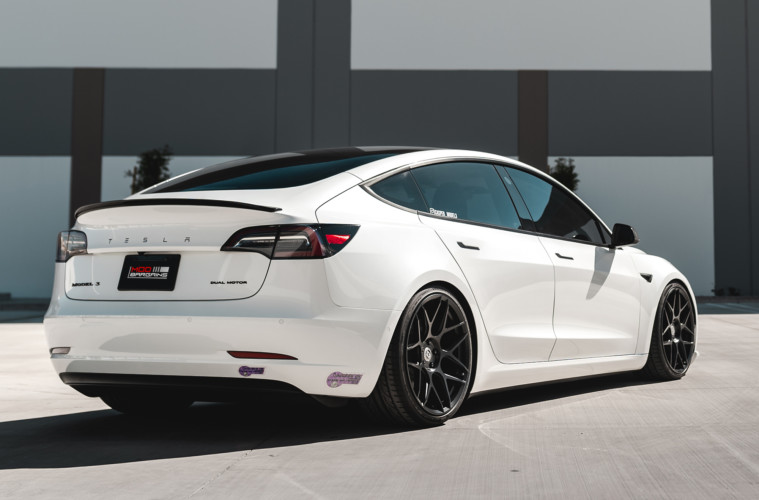
It is hard to deny the Tesla Model 3 is one of the hottest cars on the market. Now with any newer vehicle one of the most common questions people ask us is: “Will these wheels fit my car?” (or something to that effect). We realize the information out there can be both confusing and a little hard to sort through, so we wanted to put together a comprehensive wheel fitment guide to help you choose the best wheels for your Model 3. With this guide you’ll have a better understanding of what fits, what doesn’t, why it will or won’t, and what kind of effects different wheel setups can have on your Model 3. We realize some of this is elementary to a few of our readers, so bear with us through some of the details you may already know/understand.
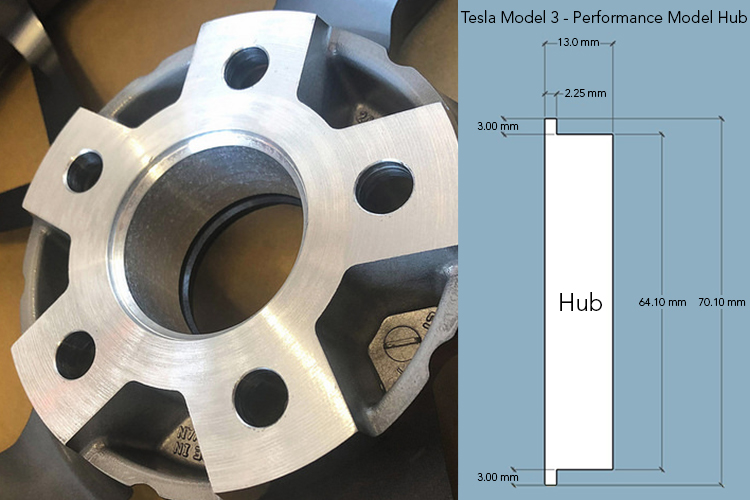
Warning! If you have a Performance Model you will need to be careful when selecting wheels. The Performance Model comes with a slightly different hub center that is stepped. Unfortunately there are currently no hub rings that work with a multi diameter hub. Therefore, the hub center of your wheels must be custom machined which is not possible with all manufacturers.
Index:
Stock Fitments (Page 1)
Effects of lowering on fitments (Page 1)
How different setups will affect the Model 3’s Performance and Range (page 2)
Wheel Spacers (page 3)
Stock Height Fitments (page 4)
Lowered Fitments (page 5)
Aggressive (lowered) Fitments (page 6)
Recommended Wheel Brands & Models (page 7)
Tire sizing & types (compounds) (page 8)
Stock Fitments:
To give you a reference of what your Model 3 is equipped with from the factory we will list the stock wheel specifications. If you do not have a firm understanding of what wheel offsets are and how they affect where the wheel sits in relationship to the fender here are the basics:
- A higher offset (large positive numerical value) moves the wheel towards the inside of the vehicle.
- A lower offset (smaller positive numerical value) moves the wheel towards the outside of the vehicle.
Model 3 Factory Wheel Sizes (diameter x width) + offset | Weight (in lbs each) | Tire Sizes | Tire Weight:
- 18×8.5 +40 | 21.60 lbs | 235/45R18 (Michelin Primacy MXM4*) | 25 lbs
These wheels weigh 23.00 lbs with the Aero Cover
- 19×8.5 +40 | 25.00 lbs | 235/40R19 (Continental ProContact RX) | 23 lbs
- 20×8.5 +40 | 28.75 lbs | 235/35R20 (Michelin Pilot Sport 4S) | 24 lbs
- 20×8.5 +35 | 28-29 lbs | 235/30R20 (Michelin Pilot Sport 4S) | 24 lbs (Dual Motor Front)
- 20×8.5 +35 | 28-29 lbs | 275/30R20 (Michelin Pilot Sport 4S) | 28 lbs (Dual Motor Rear)
Wider rear tire size is only for Performance and Long Range Dual Motor Models sold in warm climate areas. You will need to check your rear tire size to know if your Model 3 came equipped with this size rear wheel and tire.
* These are the most common tires in this size, but depending on your region (climate based) you could also have Michelin PS4 (Summer – for warm climates), Michelin MXM4 (All-Season – for moderate climates).
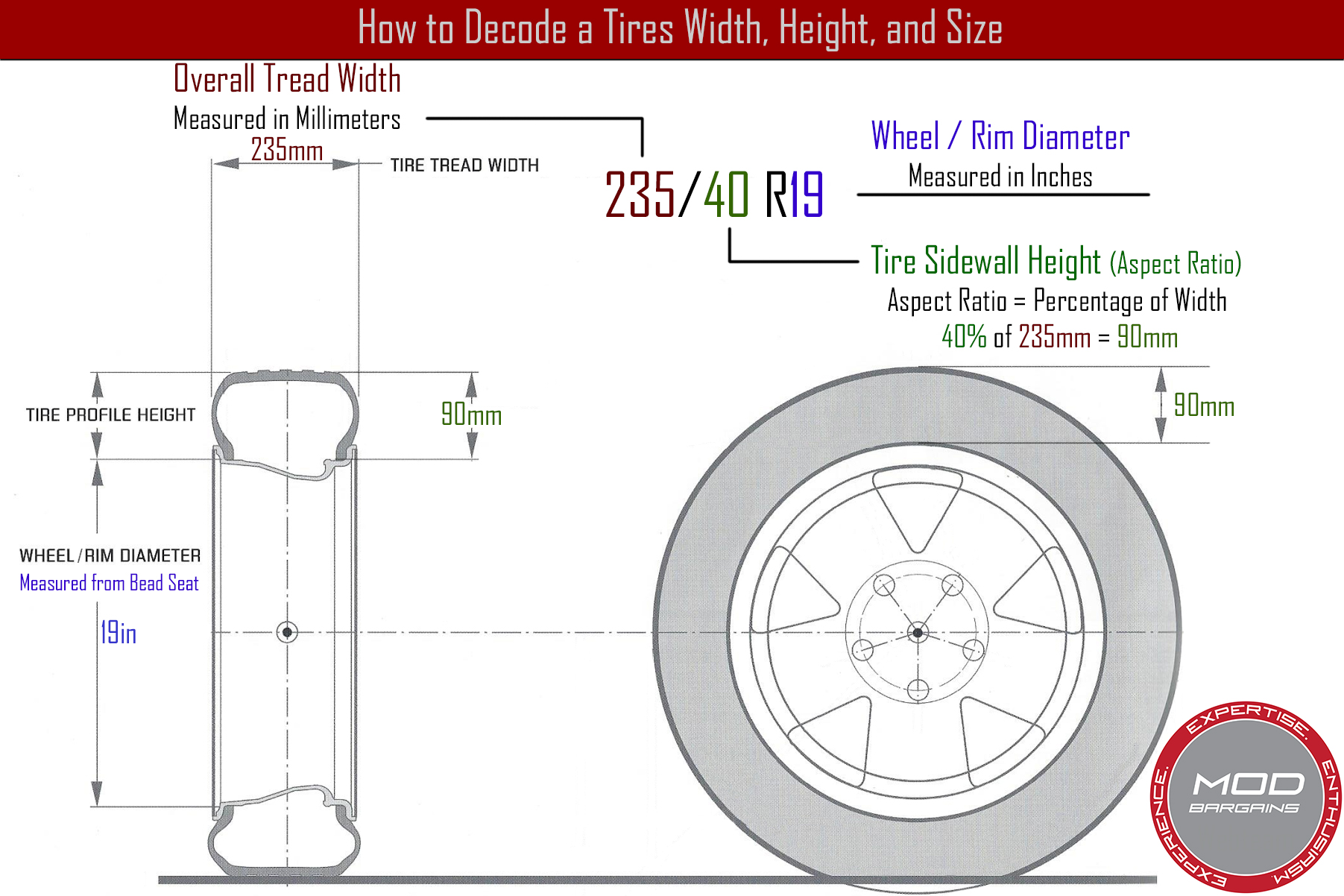
It is important to note that the change in overall diameter of each size differs by only 0.4%. When we are selecting aftermarket tire sizes, we ideally would like to keep the new tires as close to the factory diameters as possible. If you do not know how to calculate overall diameters of tires, the formula is simply “[(width x aspect ratio *as percentage* x 2) + inner diameter].”
Example: 235/40R19
The width is 235mm with an aspect ratio of 40% (0.40) and an inner diameter of 19 inches (or 482.6mm)
[((235mm x 0.40) x 2) + 482.6mm] = 670.6mm or 26.4 inches
There are several ways of achieving a more “flush fitment” (outside of the wheel lines up with the fender). You can lower the offset, increase the wheel width, or both.
Effects of Lowering on Fitments:
Now let’s get the ball rolling with a question: why have we included fitments for both lowered and stock height Model 3s? Simple, the wheels will look better when paired with their intended configuration, and lowering the Model 3 actually has a significant effect on the static position of the wheels within the fenders. We recognize that not everyone will want to lower their Model 3 (although they should) so it is recommended that you only shop for lowered fitments if your car is either already lowered or you are planning to lower it.
Obviously right now you’re wondering “Well why does lowering have a significant effect on the static position of the wheels within the fenders?” Great question! The Model 3 uses a front A-Arm suspension which many of you are familiar with. As you lower the vehicle the A-Arm geometry shifts up and effectively moves the wheels inboard. This creates more clearance between the wheel/tire and fender (see diagram).
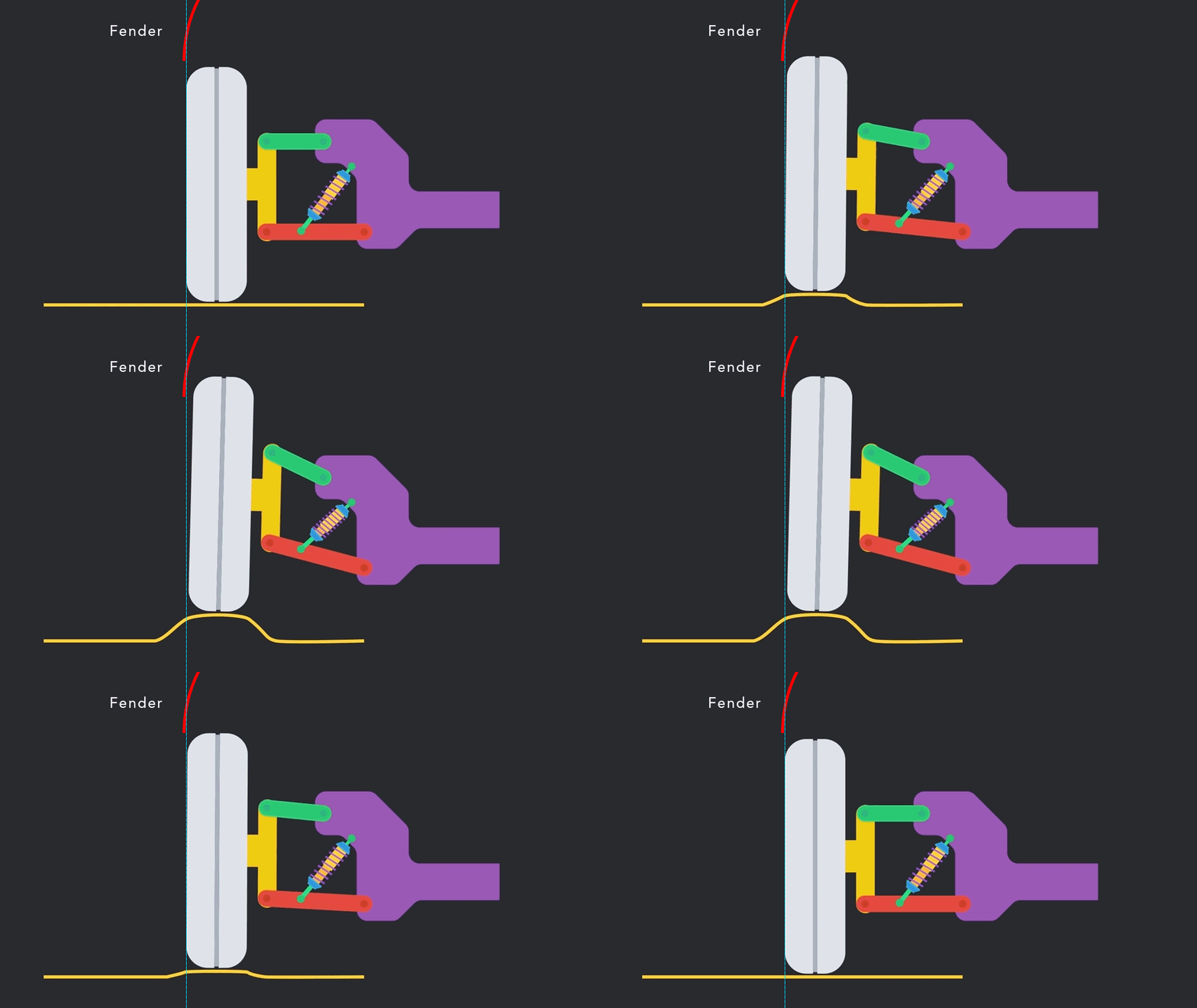
The rear uses a multi-link suspension so it will behave in a similar way creating a little more clearance between the wheel and fender once lowered.
Naturally there are several lowering options available for the Model 3 already, but many of them are from companies whose products we are not familiar with so we cannot fairly comment on the quality or performance of them. The being said, if you are interested in lowering your Model 3 you can check out the Model 3 suspension section of our website to see our recommended lowering solutions. This page is constantly being updated so be sure to check back periodically to see what new parts we have available.
Stock Fitments (Page 1)
Effects of lowering on fitments (Page 1)
How different setups will affect the Model 3’s Performance and Range (page 2)
Wheel Spacers (page 3)
Stock Height Fitments (page 4)
Lowered Fitments (page 5)
Aggressive (lowered) Fitments (page 6)
Recommended Wheel Brands & Models (page 7)
Tire sizing & types (compounds) (page 8)
[nextpage]
How different setups will affect the Model 3’s Performance and Range:
Before we get into fitments, we first want you to have a firm understanding of how different fitments will affect your Model 3 in regards to Acceleration, Braking, Handling, Comfort, and Range (if you would like to read the details & physics explanations of how different wheels affect your Model 3 you can learn all about it in the “Physics Reference Section”). We want to consider each of these factors in regards to how you will be using your Model 3 and what you want out of your new wheel setup. The factory wheels and tires were selected for a balance between all 4 of those categories. The 235 wide tires provide a decent contact patch for performance while offering limited rolling resistance to keep your range favorable.
For Fitment’s Sake: Only Looks Matter
Some enthusiasts want to run a specific size wheel and tire combo to achieve a very specific level of fitment, or to achieve a wider wheel and tire setup than everyone else. These fitments typically have an adverse effect on performance, but the owners don’t seem to mind (or at least say they don’t). With this in mind, before you pick a fitment just because of the way it looks you should be aware of the downsides.
Skinny wheel with a low offset:
An example of this would be a 18×8.5 or 19×8.5 front and rear with a low offset (see lowered fitment guide section for offset reference). While this may achieve that flush look you wanted, it will have a drawback on handling (see why in our Physics Reference Section). On the upside, you will not hurt your Model 3’s Acceleration, Braking, or Range.
Wide Wheels:
An extreme example of this could be a 20×10.0 front and 20×11.0 rear (see aggressive fitment guide section for offset reference). You may want to run some extra wide wheels and tires for that meaty aggressive look that you might find on a BMW M3 or Mercedes C63 AMG. The drawbacks here are going to be a negative impact on Range, Acceleration, and Braking (the effects on acceleration and braking can be offset to an extent with lightweight wheels and choosing the right tires – see why in our Physics Reference Section). On the upside, your Model 3 will look super aggressive and handling may be improved (less so with 20s than with wide 18s or 19s).
Form and Function: Performance and Good Looks
Many enthusiasts fall into this category and make up the majority of the customers we see. These setups are all about balance between form and function. This doesn’t mean these setups are not without their drawbacks, but they will tend to be more acceptable.
Modest Plus Sizing:
An example of this would be something like a 19×9.5 square setup (same size front and rear) with a flush offset (see fitment guide section for offset references). The majority of Model 3’s come with 18 or 19 inch wheels which can definitely be improved upon. A 19×9.5, especially in flow formed or forged construction, gives you a nice balance of weight, width for wider tires, and improved fitment to look flush and aggressive. The drawback of a setup like this is a slight decrease in range (see why in our Physics Reference Section) and you would need to buy new tires.
Another example of this would be something like 20×9.0 front and 20×10.0 rear with a flush offset (see fitment guide section for offset references) on a dual motor model. Again this gives you a nice balance of weight, width for wider tires, and improved fitment to look flush and aggressive. There are really no drawbacks here as the tire sizes would be similar to if not the same as a staggered tire equipped performance model. If you have a square tire setup you would simply need to purchase new rear tires.
Practical and Stylish:
If range is your top priority and you want to be as efficient as possible but you still don’t want to have your car look like a muffin top (see render below for reference), read on.
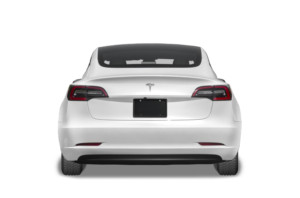
We know this is a daily driver for many people and efficiency can be a big priority.
A good example would be an 18×8.5 or 19×8.5 with a modest offset (see fitment guide section for offset references). You can keep the same size tires that normally come equipped on a Model 3, but you can save extra weight by choosing a flow formed or forged wheel which will improve your range and even ride quality (see why in our Physics Reference Section). If you do not increase your wheel diameter you can easily reuse your factory tires for cost savings. When you are ready for new tires you can also go the “extra mile” and select something with a low rolling resistance for ultimate economy like the Michelin Energy Saver A/S. The only drawbacks here will be no improvement in traction for performance and some negative impact on handling.
Stock Fitments (Page 1)
Effects of lowering on fitments (Page 1)
How different setups will affect the Model 3’s Performance and Range (page 2)
Wheel Spacers (page 3)
Stock Height Fitments (page 4)
Lowered Fitments (page 5)
Aggressive (lowered) Fitments (page 6)
Recommended Wheel Brands & Models (page 7)
Tire sizing & types (compounds) (page 8)
[nextpage]
Wheel Spacers: The not so final frontier
Obviously you cannot increase the width of a factory wheel, but you can change the offset with a wheel spacer. Knowing that all the factory wheel options are the same widths and offsets, we can easily recommend wheel spacers to achieve a more “flush fitment” very cost effectively.
We will be recommending anything between a 10-20mm spacer front and rear. We do not recommend running staggered spacers as changing the wheel track on a non-staggered wheel setup is generally not ideal for handling. 10-15mm will be better suited to a stock height Model 3 and 15-20mm will be recommended for a lowered Model 3 (the suspension moves inboard as the car in lowered creating more room to move the wheels out – reference the diagram in the “Effects of Lowering on Fitments” section). A 15mm spacer on a stock height Model 3 and a 20mm on a lowered one will be on the more aggressive side so keep that in mind. It is also important to note that 10mm spacers will require or come with extended lug studs so the install cost of these could be significantly higher. Most 15mm + spacers can be purchased as a “bolt on” type so they are quick and easy to install.
If you have a performance model you will not be able to use anything larger than a 5mm spacer because of the stepped hub ring. Because of the lower offset of the performance wheels though it will still improve the look and be similar to adding 10mm spacers to the non performance wheels. For the performance model you would use a 5mm spacer with a 70.1 mm center bore.
Stock Fitments (Page 1)
Effects of lowering on fitments (Page 1)
How different setups will affect the Model 3’s Performance and Range (page 2)
Wheel Spacers (page 3)
Stock Height Fitments (page 4)
Lowered Fitments (page 5)
Aggressive (lowered) Fitments (page 6)
Recommended Wheel Brands & Models (page 7)
Tire sizing & types (compounds) (page 8)
[nextpage]
Stock Height Wheel Fitment Guide:
We have seen way too many Model 3’s running around with poorly fitted aftermarket wheels. This is likely not the fault of the owners, sleazy wheel shops will try to push whatever inventory they have on unaware buyers, generally not taking proper fitment or build quality into consideration. So here we are going to break down some basic fitments that will give your Model 3 a better look and be what most people would consider “flush” at stock height (we highly recommend lowering though).
Starting with the stock wheel sizes and offsets we know what the 18/19/20×8.5 +40 looks like.
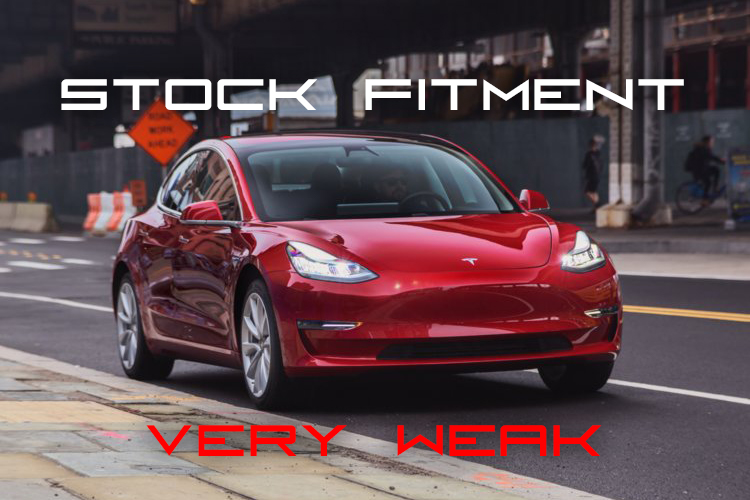
So with all this room, we generally do not recommend simply adding 5mm of offset to the front wheels as it won’t be a significant change (we say this because a lot of shops and some wheel manufacturers have been recommending 18/19/20×8.5 +35 for the front wheels and even sometimes the rear). It will look okay, but we want to look good, not simply okay (examples below – sorry one is on a lowered Model 3, but you get the picture).
[metaslider id=36175]
So here are our suggested fitments for a non-lowered Model 3 by width with tire size recommendations. The “et” indicates offset while the numbers are the offset range. For example et30-32 mean that an offset of 30, 31, and 32 are all recommended for a stock suspension setup that will be fairly flush.
Stock Height Square Setups – same size front (f) and rear (r):
All the following fitments will have a similar flushness with the fender.
- 18 inch
- 18×8.5 et30-32 | 235/45R18
- 18×9.0 et35-38 | 245/45R18*
- 18×9.5 et38-40 | 265/40R18 (test fit pending)
*235/45R18 (f) also acceptable for these fitments.
- 19 inch
- 19×8.5 et30-32 | 235/40R19
- 19×9.0 et35-38 | 245/40R19*
- 19×9.5 et38-40 | 265/35R19
*235/40R19 (f) also acceptable for these fitments.
- 20 inch
- 20×8.5 et30-32 | 235/35R20
- 20×9.0 et35-38 | 245/35R20*
- 20×9.5 et38-40 | 265/30R20
*235/35R20 (f) also acceptable for these fitments.
Stock Height Square Setup Example Images:
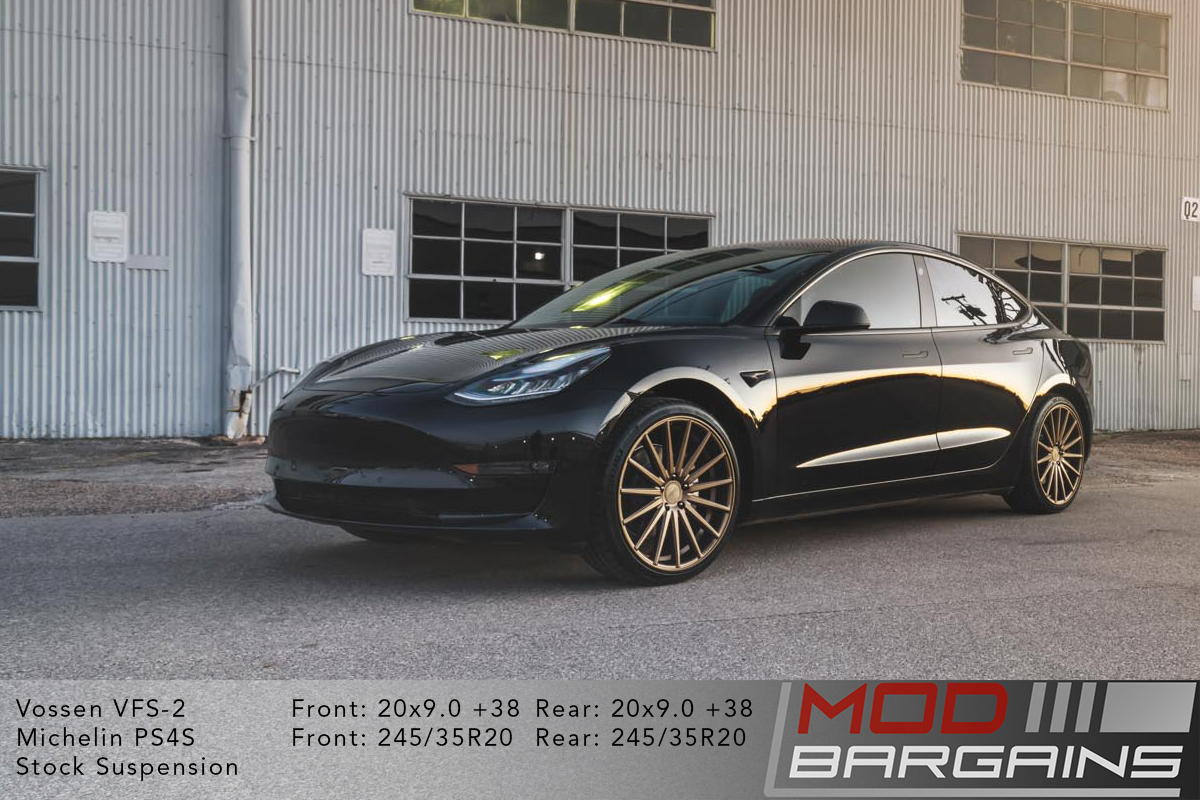
Vossen VFS-2 – 20×9.0 et35 – Square Setup
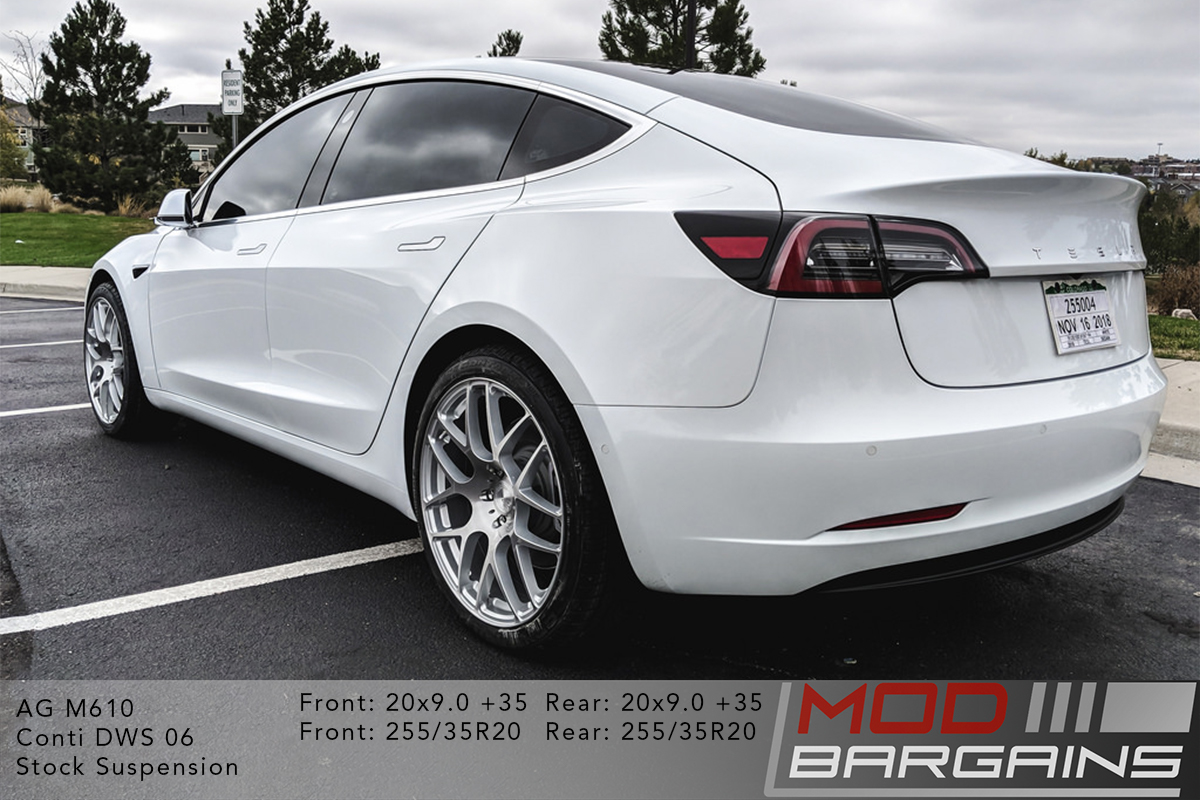
Avant Garde (AG) – M610 20×9.0 et35 – Square Setup
Stock Height Staggered Setups- wider rear (r) than front (f):
All the following fitments will have a similar flushness with the fender.
- 18 Inch
- 18×8.5 et30-32 (f) and 18×9.5 et35-40 (r) | 235/45R18 (f) and 265/40R18 (r)
- 18×8.5 et30-32 (f) and 18×10.0 et40-45 (r) | 235/45R18 (f) and 265/40R18 (r)
- 18×9.0 et35-38 (f) and 18×10.0 et40-45 (r) | 245/45R18* (f) and 275/40R18 (r)
- 18×9.0 et35-38 (f) and 18×10.5 et45-50 (r) | 245/45R18* (f) and 275/40R18 (r)
- 18×9.5 et38-40 (f)** and 18×10.5 et45-50 (r) | 245/45R18 (f) and 275/40R18 (r)
*235/45R18 (f) also acceptable for these fitments.
**pending test fit.
- 19 Inch
- 19×8.5 et30-32 (f) and 19×9.5 et35-40 (r) | 235/40R19 (f) and 265/35R19 (r)
- 19×8.5 et30-32 (f) and 19×10.0 et40-45 (r) | 235/40R19 (f) and 265/35R19 (r)
- 19×9.0 et35-38 (f) and 19×10.0 et40-45 (r) | 245/40R19* (f) and 275/35R19 (r)
- 19×9.0 et35-38 (f) and 19×10.5 et45-50 (r) | 245/40R19* (f) and 275/35R19 (r)
- 19×9.5 et38-40 (f) and 19×10.5 et45-50 (r) | 245/40R19 (f) and 275/35R19 (r)
*235/40R19 (f) also acceptable for these fitments.
- 20 Inch
- 20×8.5 et30-32 (f) and 20×9.5 et35-40 (r) | 235/35R20 (f) and 265/30R20 (r)
- 20×8.5 et30-32 (f) and 20×10.0 et40-45 (r) | 235/35R20 (f) and 265/30R20 (r)
- 20×9.0 et35-38 (f) and 20×10.0 et40-45 (r) | 245/35R20* (f) and 275/30R20 (r)
- 20×9.0 et35-38 (f) and 20×10.5 et45-50 (r) | 245/35R20* (f) and 275/30R20 (r)
- 20×9.5 et38-40 (f) and 20×10.5 et45-50 (r) | 245/35R20 (f) and 275/30R20 (r)
*235/35R20 (f) also acceptable for these fitments.
Stock Height Staggered Setup Example Images:
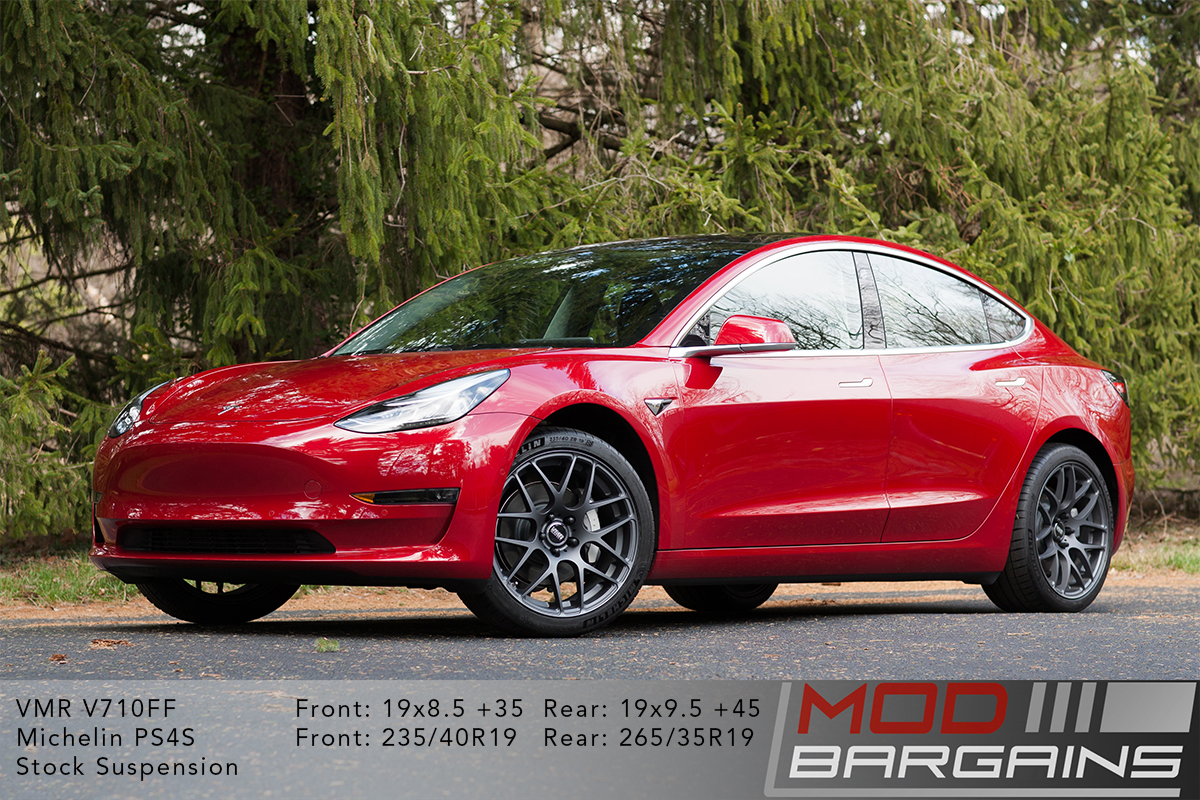
VMR V710FF – 19×8.5 et35 front and 19.9.5 et45 rear
(you can see the fitment is a little weak even with the wheel turned to hide it)
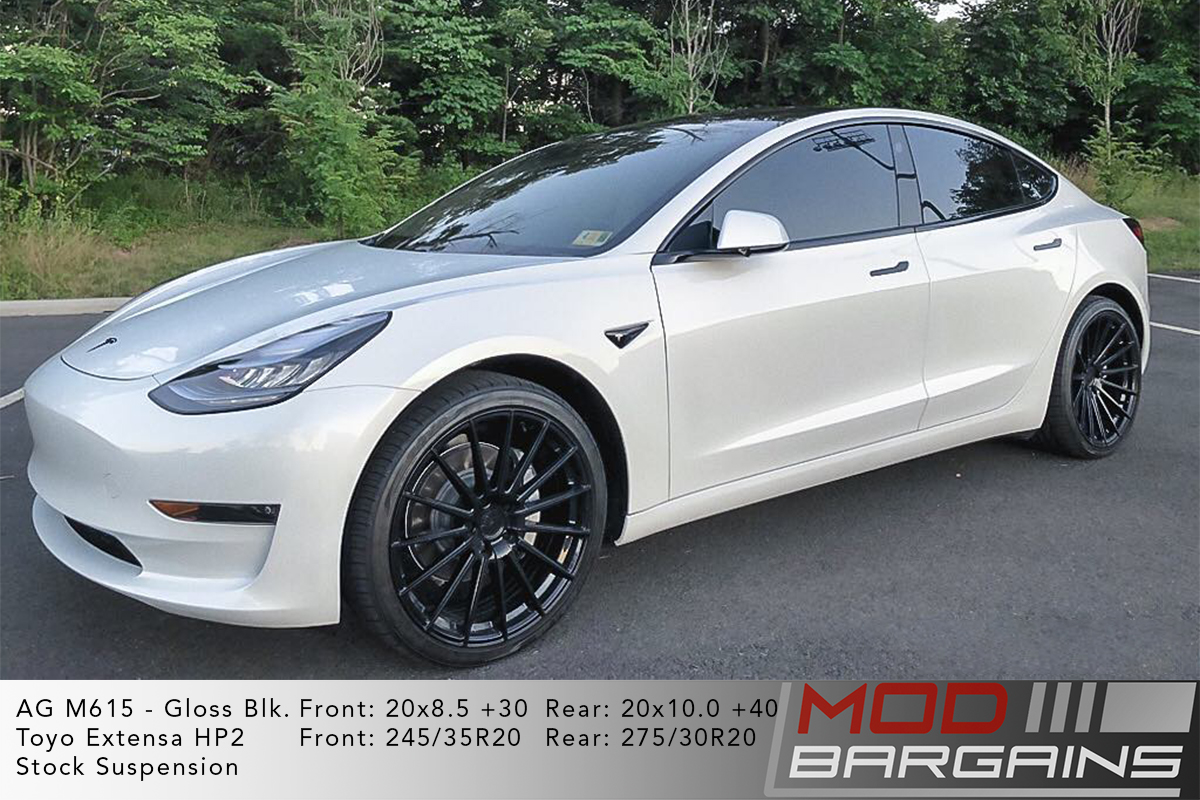
Avant Garde (AG) M615 – 20×8.5 et30 front and 20×10.0 et40 rear
You can run a stock height fitment on a lowered Model 3. However, as we stated in the Effects of Lowering on Fitments section, the fitment will be more conservative look.
Stock Fitments (Page 1)
Effects of lowering on fitments (Page 1)
How different setups will affect the Model 3’s Performance and Range (page 2)
Wheel Spacers (page 3)
Stock Height Fitments (page 4)
Lowered Fitments (page 5)
Aggressive (lowered) Fitments (page 6)
Recommended Wheel Brands & Models (page 7)
Tire sizing & types (compounds) (page 8)
[nextpage]
Lowered Wheel Fitment Guide:
Again, we have seen way too many Model 3’s running around with poorly fitted aftermarket wheels and lowering the car makes it much more obvious. You can comb through forums and Facebook posts but in the end, almost everyone wants a nice flush fitment that won’t rub. Trust our guide and we guarantee you won’t be disappointed with extra wheel gap or rubbing.
Don’t be like these unfortunate souls:
[metaslider id=36179]
So here are our suggested fitments for a lowered Model 3 by width with tire size recommendations. The “et” indicates offset while the numbers are the offset range. For example et30-33 means that an offset of 30, 31, 32, and 33 are all recommended for a lowered Model 3 and will look flush.
Lowered Square Setups – same size front (f) and rear (r):
All the following fitments will have a similar flushness with the fender.
- 18 inch
- 18×8.5 et25-28 | 235/45R18
- 18×9.0 et30-33 | 245/45R18*
- 18×9.5 et32-36 | 265/40R18
*235/45R18 also acceptable for these fitments.
- 19 inch
- 19×8.5 et25-28 | 235/40R19
- 19×9.0 et30-33 | 245/40R19*
- 19×9.5 et32-36 | 265/35R19
*235/40R19 also acceptable for these fitments.
- 20 inch
- 20×8.5 et25-28 | 235/35R20
- 20×9.0 et30-33 | 245/35R20*
- 20×9.5 et32-36 | 265/30R20
*235/35R20 also acceptable for these fitments.
Lowered Square Setup Example Images:
Images coming soon
Lowered Staggered Setups- wider rear (r) than front (f):
All the following fitments will have a similar flushness with the fender.
- 18 Inch
- 18×8.5 et25-28 (f) and 18×9.5 et30-35 (r) | 235/45R18 (f) and 265/40R18 (r)
- 18×8.5 et25-28 (f) and 18×10.0 et35-40 (r) | 235/45R18 (f) and 265/40R18 (r)
- 18×9.0 et30-33 (f) and 18×10.0 et35-40 (r) | 245/45R18* (f) and 275/40R18 (r)
- 18×9.0 et30-33 (f) and 18×10.5 et40-45 (r) | 245/45R18* (f) and 275/40R18 (r)
- 18×9.5 et32-36 (f) and 18×10.5 et40-45 (r) | 245/45R18 (f) and 275/40R18 (r)
*235/45R18 (f) also acceptable for these fitments.
- 19 Inch
- 19×8.5 et25-28 (f) and 19×9.5 et30-35 (r) | 235/40R19 (f) and 265/35R19 (r)
- 19×8.5 et25-28 (f) and 19×10.0 et35-40 (r) | 235/40R19 (f) and 265/35R19 (r)
- 19×9.0 et30-33 (f) and 19×10.0 et35-40 (r) | 245/40R19* (f) and 275/35R19 (r)
- 19×9.0 et30-33 (f) and 19×10.5 et40-45 (r) | 245/40R19* (f) and 275/35R19 (r)
- 19×9.5 et32-36 (f) and 19×10.5 et40-45 (r) | 245/40R19 (f) and 275/35R19 (r)
*235/40R19 (f) also acceptable for these fitments.
- 20 Inch
- 20×8.5 et25-28 (f) and 20×9.5 et30-35 (r) | 235/35R20 (f) and 265/30R20 (r)
- 20×8.5 et25-28 (f) and 20×10.0 et35-40 (r) | 235/35R20 (f) and 265/30R20 (r)
- 20×9.0 et30-33 (f) and 20×10.0 et35-40 (r) | 245/35R20* (f) and 275/30R20 (r)
- 20×9.0 et30-33 (f) and 20×10.5 et40-45 (r) | 245/35R20* (f) and 275/30R20 (r)
- 20×9.5 et32-36 (f) and 20×10.5 et40-45 (r) | 245/35R20 (f) and 275/30R20 (r)
*235/35R20 (f) also acceptable for these fitments.
Lowered Staggered Setup Example Images:
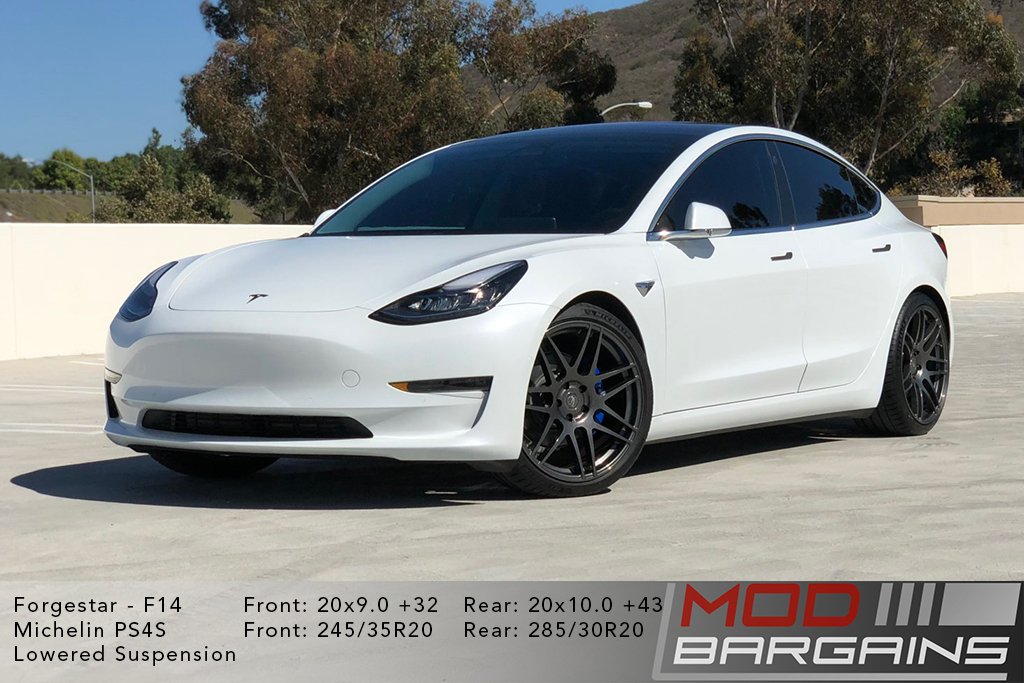
Forgestar F14 – 20×9.0 et32 and 20×10.0 et43
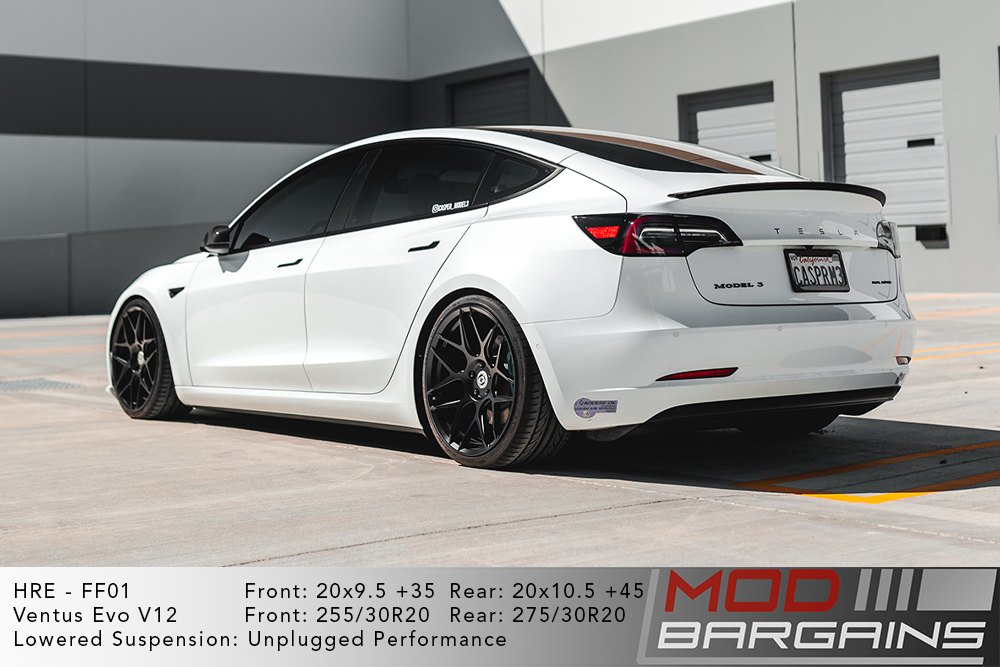
HRE FF01 – 20×9.5 et35 and 20×10.5 et45
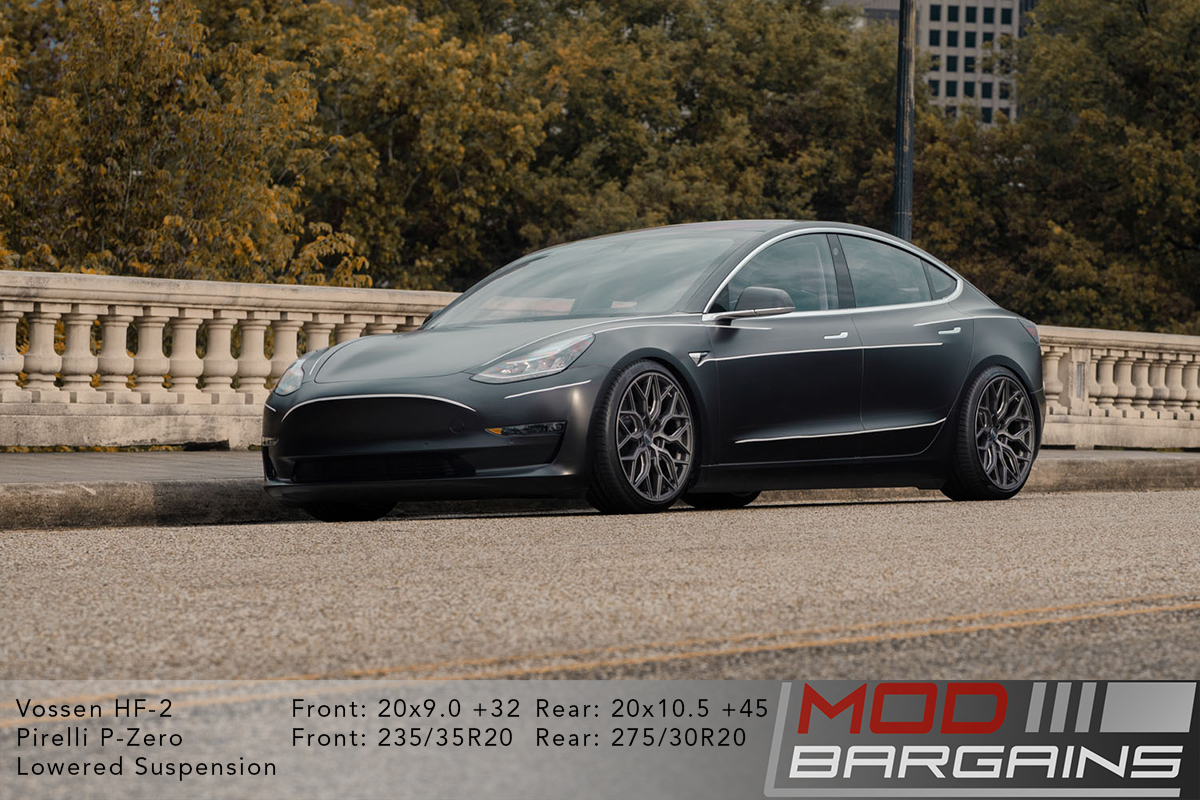
Vossen HF-2 – 20×9.0 +32 front and 20×10.5 +45 rear
Stock Fitments (Page 1)
Effects of lowering on fitments (Page 1)
How different setups will affect the Model 3’s Performance and Range (page 2)
Wheel Spacers (page 3)
Stock Height Fitments (page 4)
Lowered Fitments (page 5)
Aggressive (lowered) Fitments (page 6)
Recommended Wheel Brands & Models (page 7)
Tire sizing & types (compounds) (page 8)
[nextpage]
Aggressive Wheel Fitment Guide:
Here is where things get interesting. We realize aggressive fitments aren’t for everyone, so if you don’t want to deal with dialing in extra camber or possibly rolling your fenders to avoid rubbing, feel free to skip ahead to our Recommended Wheel Brands & Models section.
We are going to define aggressive fitments as pushing the limits of what will fit the car (within reason). This will NOT require any cutting or trimming of parts off your Model 3, but you may need aftermarket suspension components to achieve the proper amount of camber. These fitments are all made with lowering in mind.
We will not be recommending any width smaller than 9.0 because of the adverse effects on steering feedback and handling, along with a look that from most angles is anything but aggressive (see example render below).
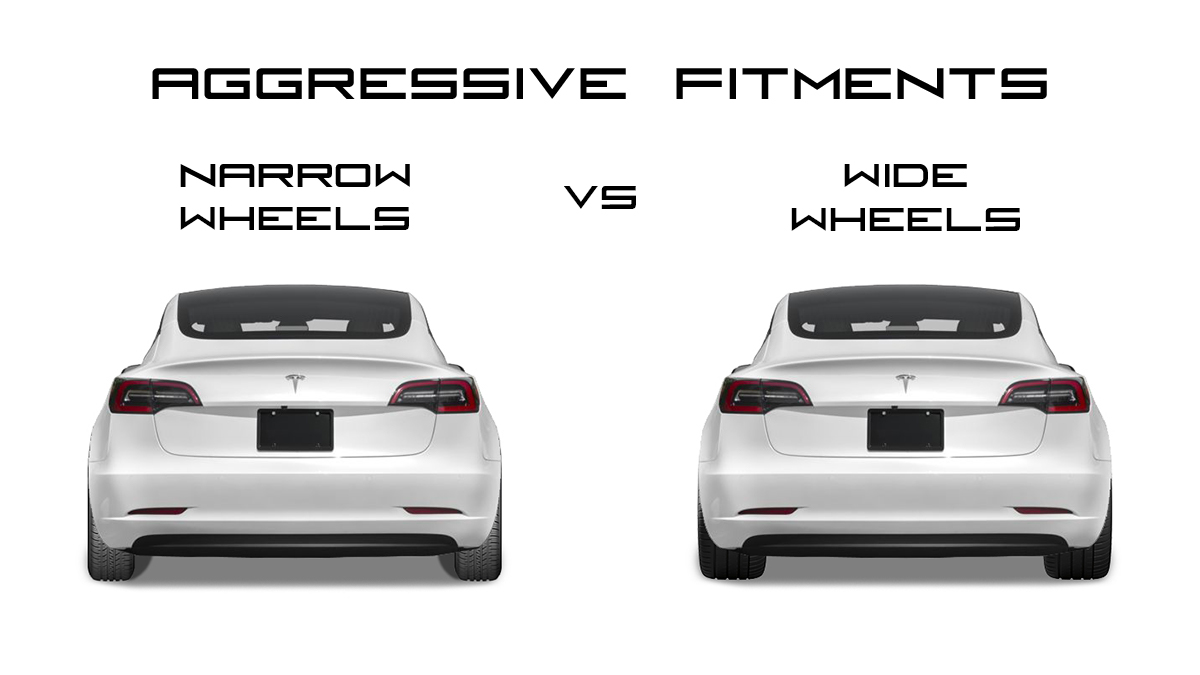
Aggressive Square Setups – same size front (f) and rear (r):
All the following fitments will have a similar flushness with the fender.
- 18 inch
- 18×9.0 et25-28 | 245/45R18*
- 18×9.5 et30-32 | 265/40R18
- 18×10.0 et35 | 275/40R18 (pending test fit)
*235/45R18 also acceptable for these fitments.
- 19 inch
- 19×9.0 et25-28 | 245/40R19*
- 19×9.5 et30-32 | 265/35R19
- 19×10.0 et35 | 275/35R19
*235/40R19 also acceptable for these fitments.
- 20 inch
- 20×9.0 et25-28 | 245/35R20*
- 20×9.5 et30-32 | 265/30R20
- 20×10.0 et35 | 275/30R20
- 20×10.5 – We are looking to test fit this as there might be clearance with a 20 inch specifically but we cannot say for sure at this time if it will fit. Stay tuned for updates!
*235/35R20 also acceptable for these fitments.
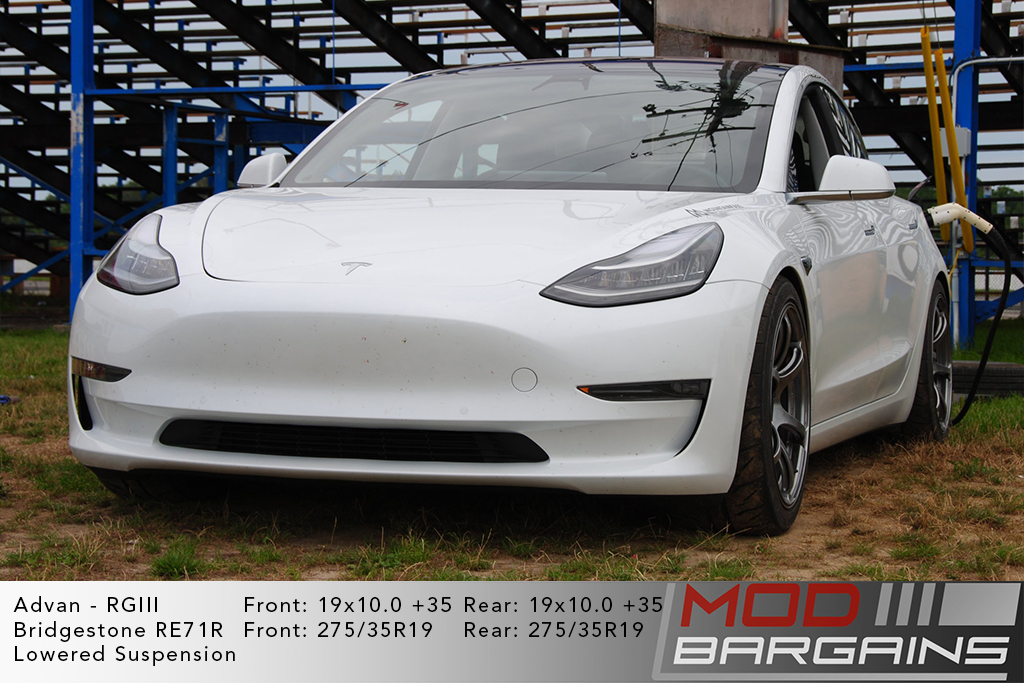
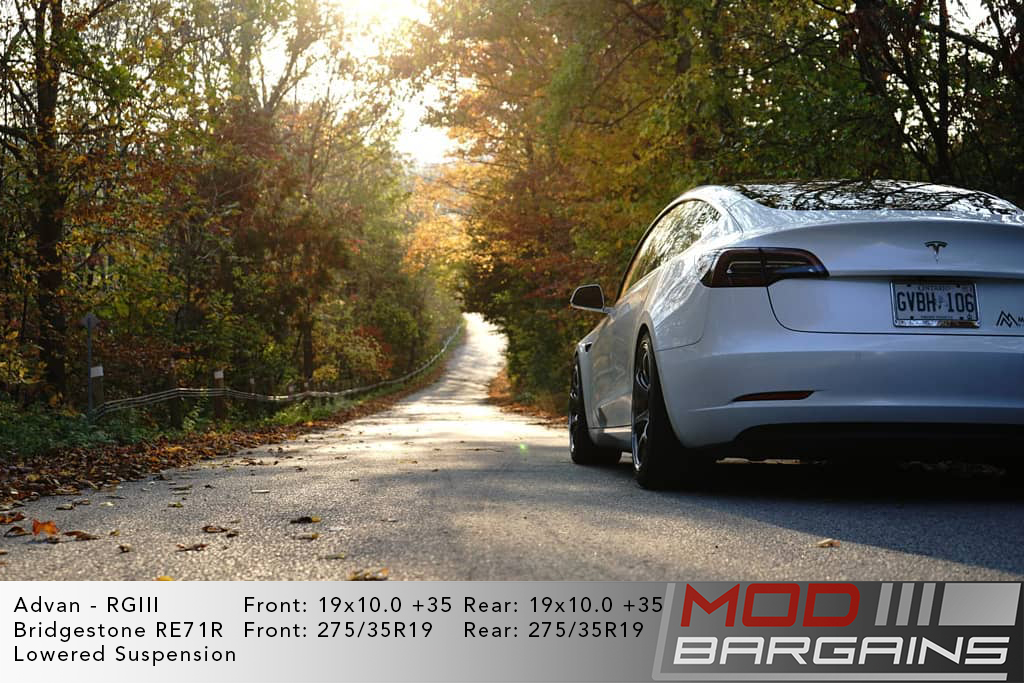
Aggressive Square Setup Example Images:
Aggressive Staggered Setups- wider rear (r) than front (f):
All the following fitments will have a similar flushness with the fender.
- 18 Inch
- 18×9.0 et25-28 (f) and 18×10.0 et32-35 (r) | 245/45R18* (f) and 275/40R18 (r)
- 18×9.0 et25-28 (f) and 18×10.5 et38-40 (r) | 245/45R18* (f) and 275/40R18 (r)
- 18×9.5 et30-32 (f) and 18×10.5 et38-40 (r) | 245/45R18 (f) and 275/40R18 (r)
- 18×10.0 et35 (f) and 18×11.0 et45 (r)** | 275/40R18 (f) and 305/35R18 (r)
*235/45R18 (f) also acceptable for these fitments.
**11.0 inch wide rear fitment still pending test fit.
- 19 Inch
- 19×9.0 et25-28 (f) and 19×10.0 et32-35 (r) | 245/40R19* (f) and 275/35R19 (r)
- 19×9.0 et25-28 (f) and 19×10.5 et38-40 (r) | 245/40R19* (f) and 275/35R19 (r)
- 19×9.5 et30-32 (f) and 19×10.5 et38-40 (r) | 245/40R19 (f) and 275/35R19 (r)
- 19×10.0 et35 (f) and 19×11.0 et45 (r)** | 275/35R19 (f) and 305/30R19 (r)
*235/40R19 (f) also acceptable for these fitments.
**11.0 inch wide rear fitment still pending test fit.
- 20 Inch
- 20×9.0 et25-28 (f) and 20×10.0 et32-35 (r) | 245/35R20* (f) and 275/30R20 (r)
- 20×9.0 et25-28 (f) and 20×10.5 et38-40 (r) | 245/35R20* (f) and 275/30R20 (r)
- 20×9.5 et30-32 (f) and 20×10.5 et38-40 (r) | 245/35R20 (f) and 275/30R20 (r)
- 20×10.0 et35 (f) and 20×11.0 et45 (r)** | 275/30R20 (f) and 305/25R20 (r)
*235/35R20 (f) also acceptable for these fitments.
**11.0 inch wide rear fitment still pending test fit.
Aggressive Staggered Setup Example Images:
Images coming soon
Stock Fitments (Page 1)
Effects of lowering on fitments (Page 1)
How different setups will affect the Model 3’s Performance and Range (page 2)
Wheel Spacers (page 3)
Stock Height Fitments (page 4)
Lowered Fitments (page 5)
Aggressive (lowered) Fitments (page 6)
Recommended Wheel Brands & Models (page 7)
Tire sizing & types (compounds) (page 8)
[nextpage]
Recommended Wheel Brands & Models:
We know what you’re thinking, “This is great! Now I know what size wheels I need. If only I knew what wheel brands I could trust.” Say no more, we’ve got you covered. ModBargains has years of experience with wheels of all different shapes, sizes, and even colors.
This should go without saying, but the Best Wheels for your Model 3 will be the Flow Formed options. They offer optimal strength while saving weight. Best of all you won’t have to worry about wheels exploding (which we’ve seen happen to cheap/no name cast wheels) when you hit a bump or small pothole. All of the wheel brands we recommend here offer a flow formed line of wheels or are exclusively flow form wheel manufacturers.
We have worked with countless wheel manufacturers and these are our top recommendations for Quality, Design, and Performance (in no particular order).
Forgestar:
Forgestar Wheels is a well known name in the industry. They were the first to offer fully custom rotary forged (flow formed) wheels and they have more options than ever! With 12 standard color options and 13 optional finishes, you can have a truly unique set of wheels. They are even backed by a lifetime lifetime structural warranty. You can check out the full Forgestar line up for the Tesla Model 3 here: http://www.modbargains.com/forgestar-wheels-tesla.htm
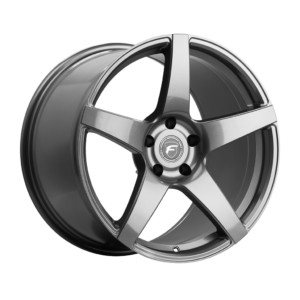
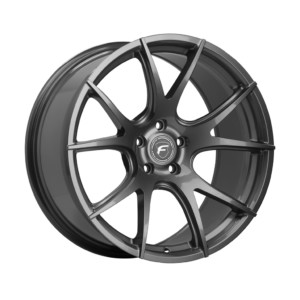
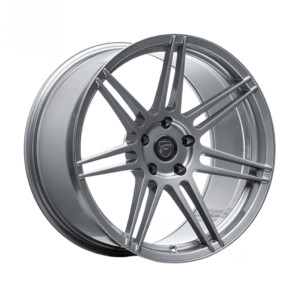
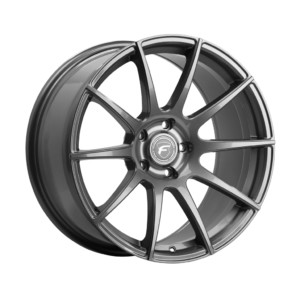
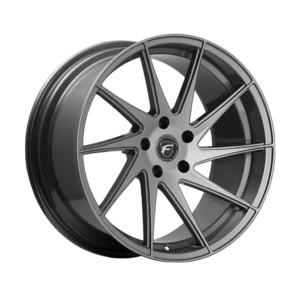
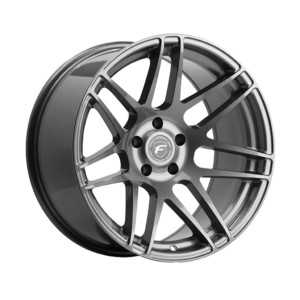
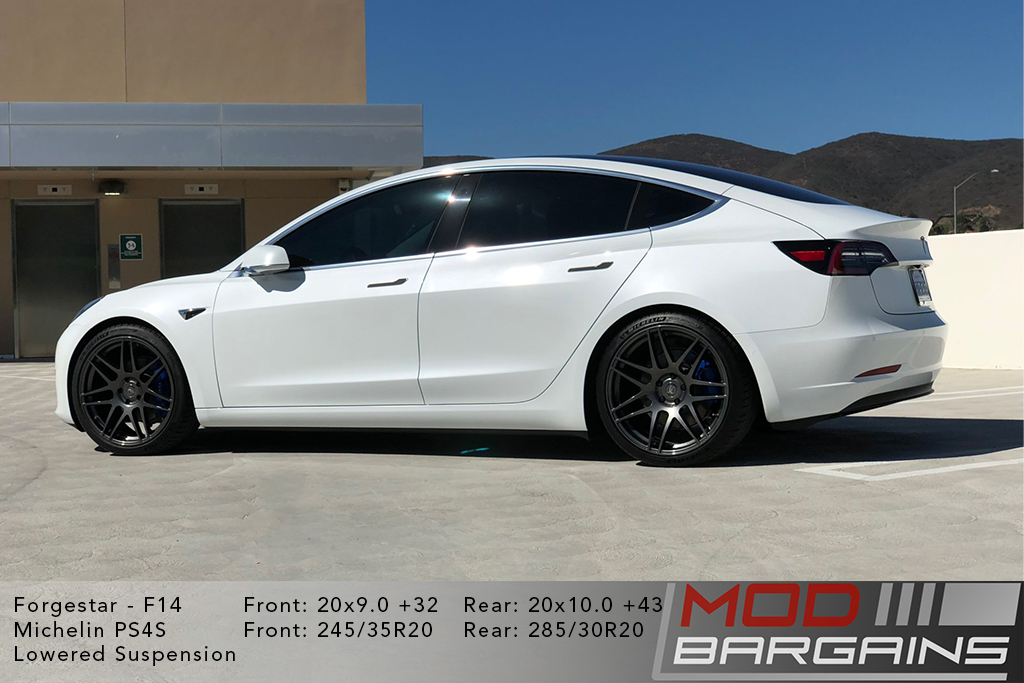
Forgestar F14 – 20×9.0 et32 front and 20×10.0 et43 rear
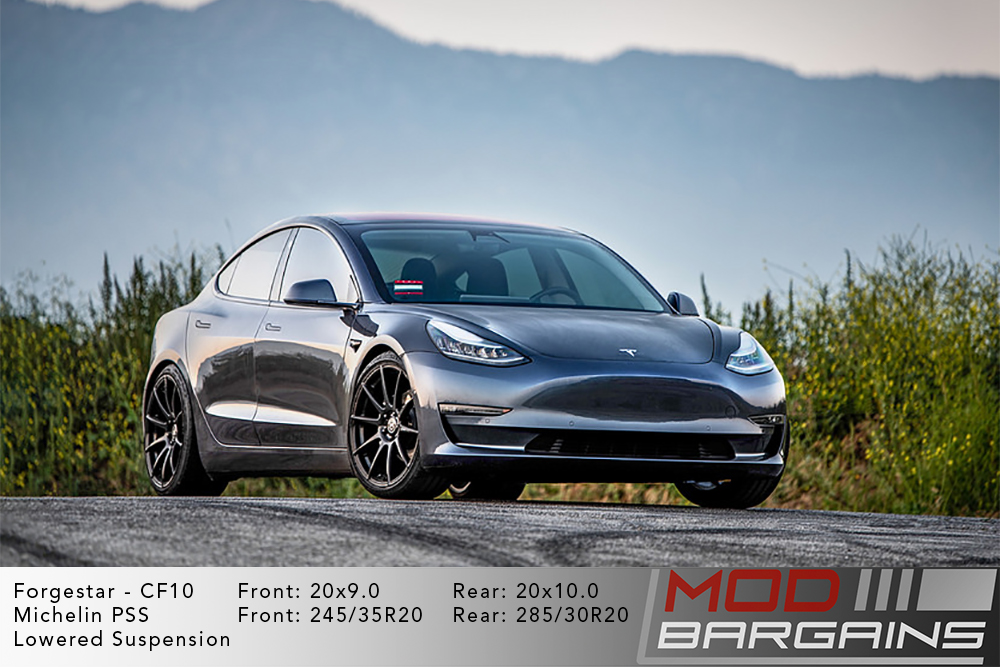
Forgestar CF10 – 20×9.0 front and 20×10.0 rear
VMR (Velocity Motoring):
We have been working with VMR since their earliest days and have watched them grow into the amazing company they are today. VMR offers quality wheels (both cast and flow formed construction) at affordable pricing with unique styles that everyone loves. They offer great fitment options for the Model 3 on almost all of their wheels so we know you’ll get the look you want! You can check out their full line up here: http://www.modbargains.com/vmr-wheels-for-tesla.htm
Flow Formed Wheels:
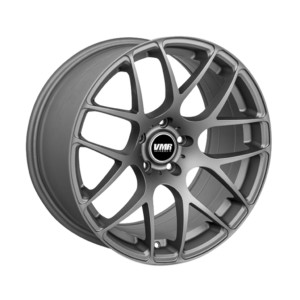
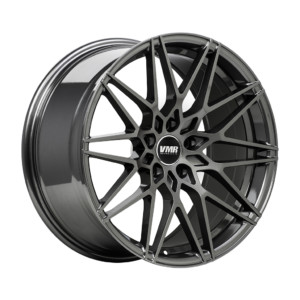
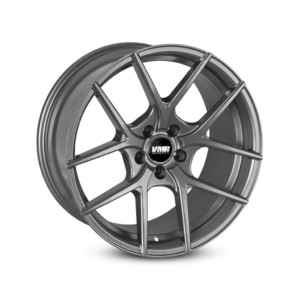
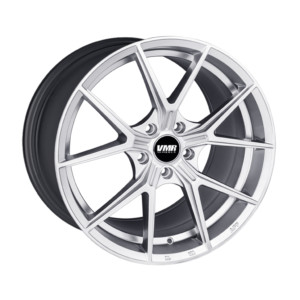
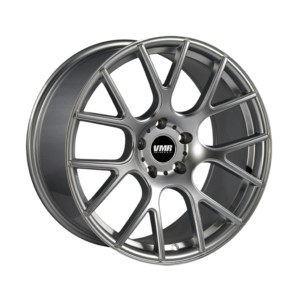
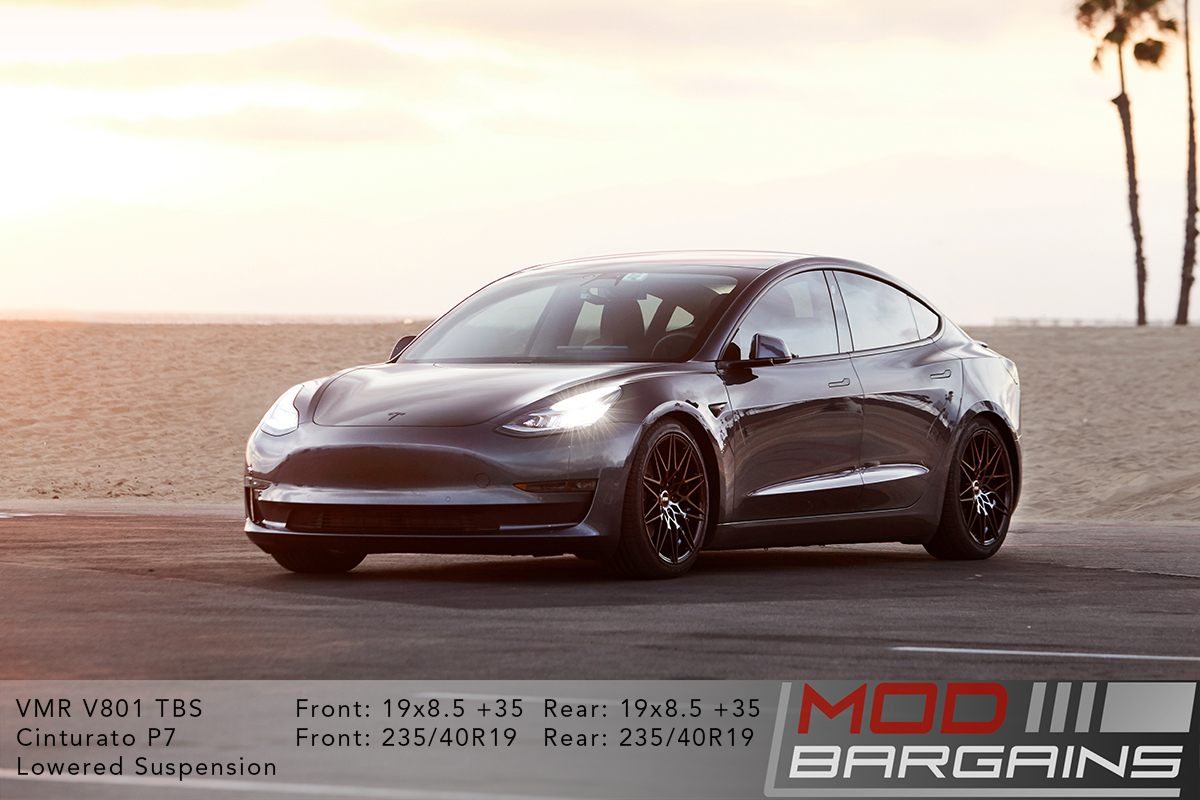
VMR V801 – 19×8.5 et35 front and rear
VMR V710FF – 19×8.5 et35 front and 19×9.5 et45 rear
Luxury (Cast) Wheels:
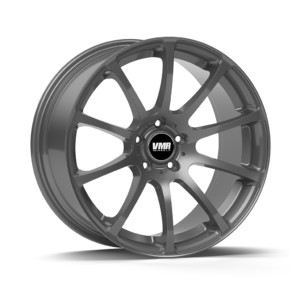
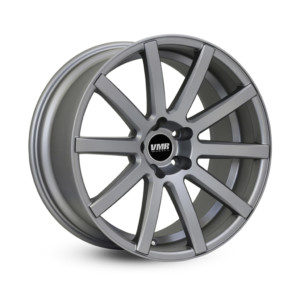
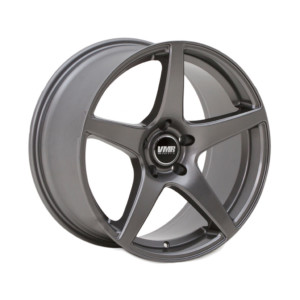
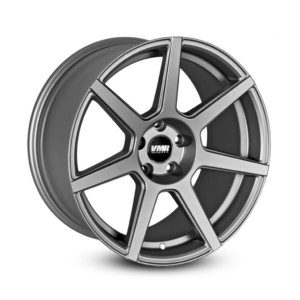
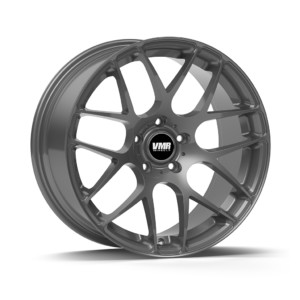
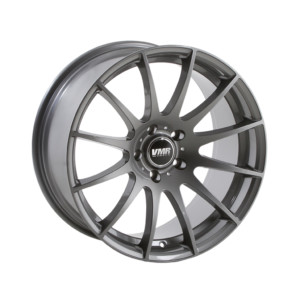
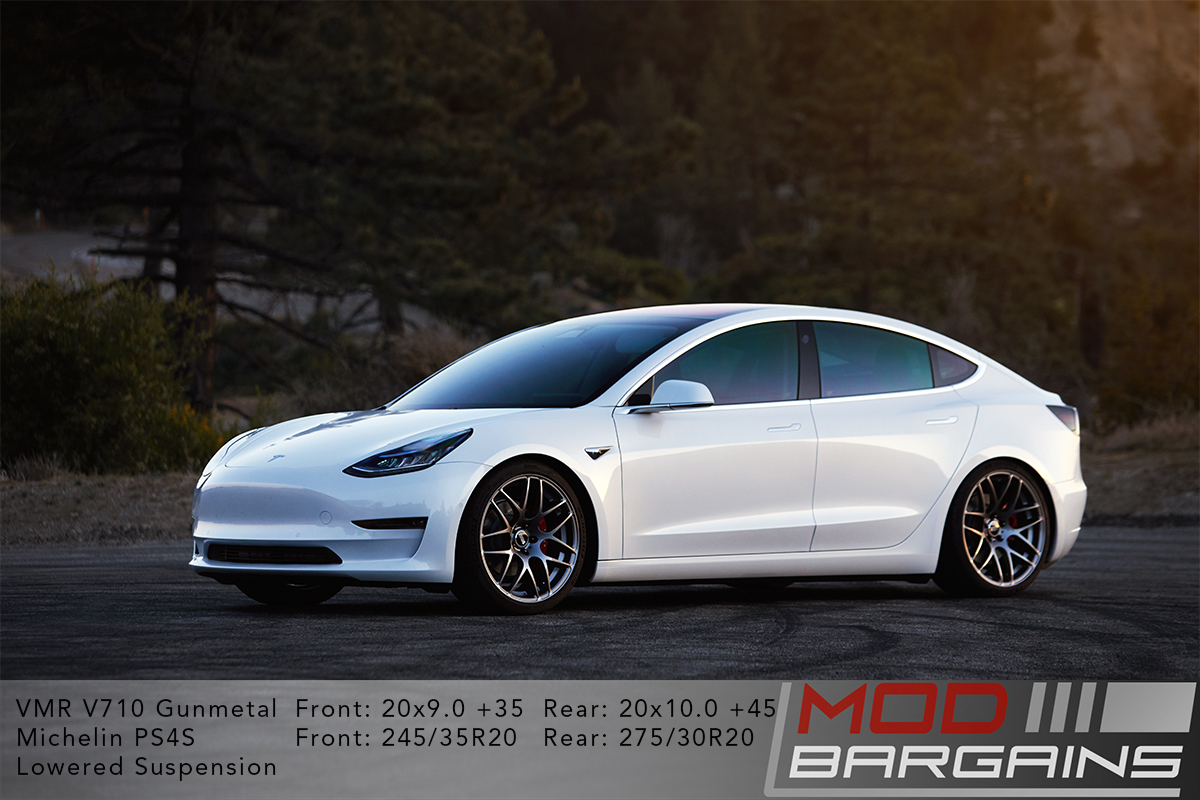
VMR V710 – 20×9 et35 front 20×10 et45 rear
HRE FlowForm:
One of the oldest names in the wheel game, HRE is a powerhouse for forged and flow form wheels. HRE balances performance and style with Flow Form designs inspired by their legendary forged line. Currently only 1 of the FlowForm models is available in Model 3 fitments, but it fits perfectly and looks fantastic. We also know HRE is going to release 3 new FlowForm models this year (2019) so we will definitely see some additional offerings from them.
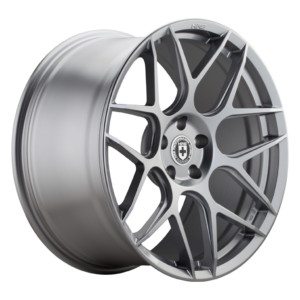
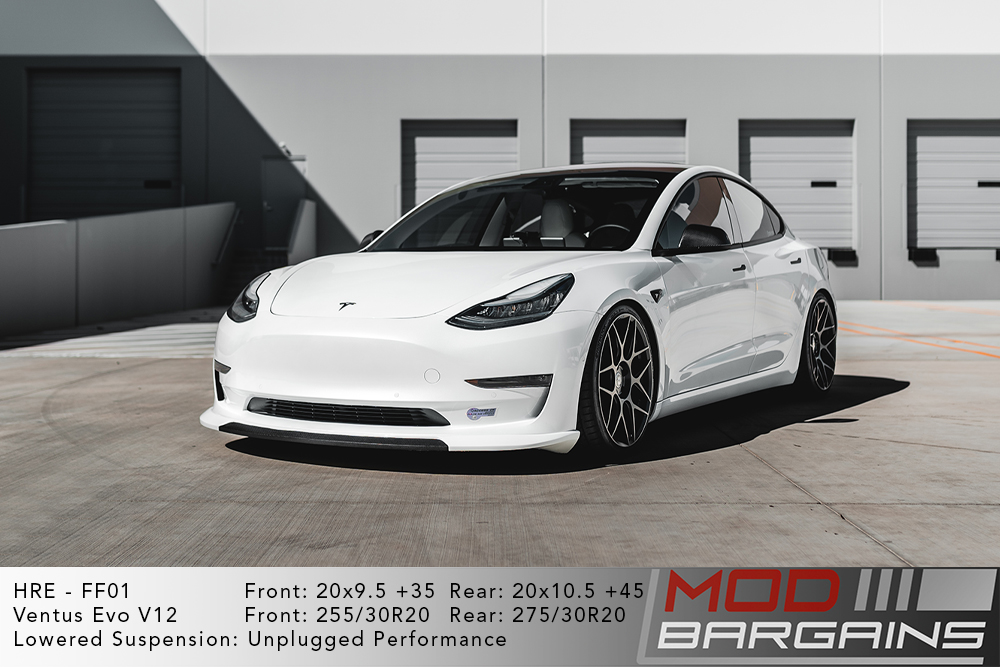
HRE FF01 – 20×9.5 et35 front and 20×10 et45 rear
If you are interested in any of their forged models please contact us about ordering as they are 100% custom and we want to personally walk you through each step of the ordering process.
Email – sales@modbargains.com | Phone – 715-582-3330 | Live Chat – modbargains.com
Vossen:
If you are looking for Quality, Style, and Prestige we have to talk about Vossen Wheels. Vossen is well known for their unique and progressive designs for wheels of all types of construction: Cast, Hybrid Forged (Flow Formed), Monoblock Forged, 3-Piece Forged, and even 2-Piece collaborations with Work Wheels. Backed by one of the industry’s best warranties of Lifetime Structural and 5 Year Workmanship, you can be confident you are getting a quality wheel. You can check out their full line up of Cast and Hybrid Forged wheels for the Model 3 here: http://www.modbargains.com/vossen-wheels-for-tesla.htm
Hybrid Forged (Flow Formed) Wheels:
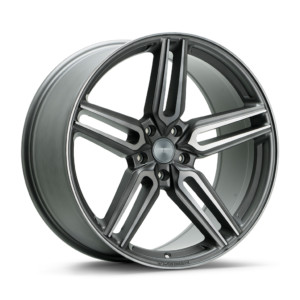
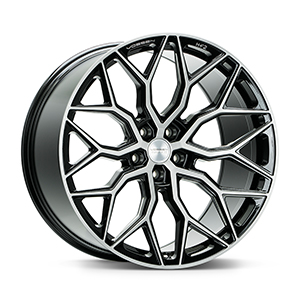
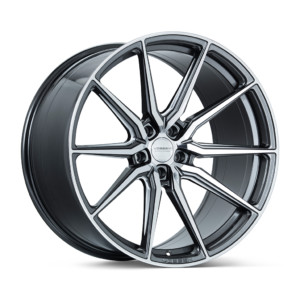
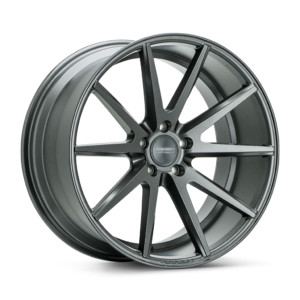
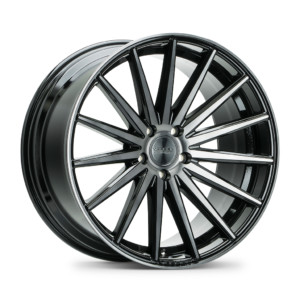
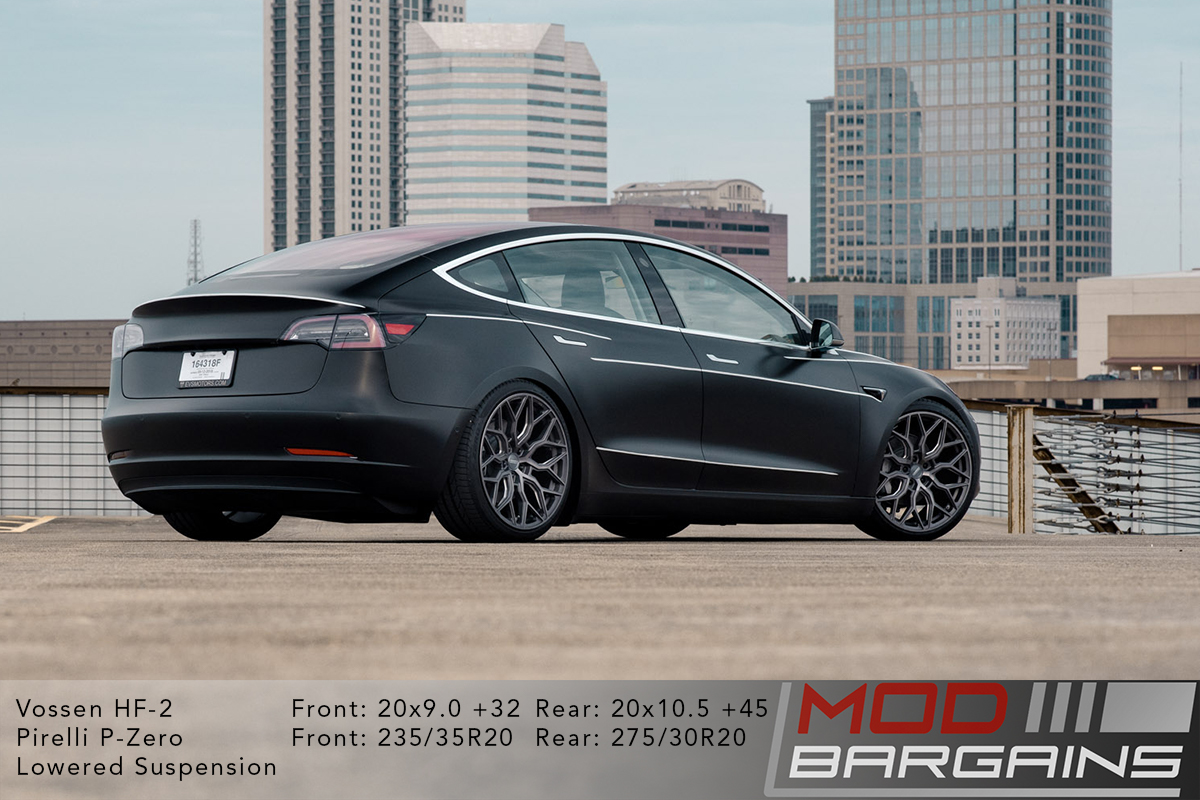
Vossen HF-2 – 20×9.0 et32 front and 20×10.5 et45 rear
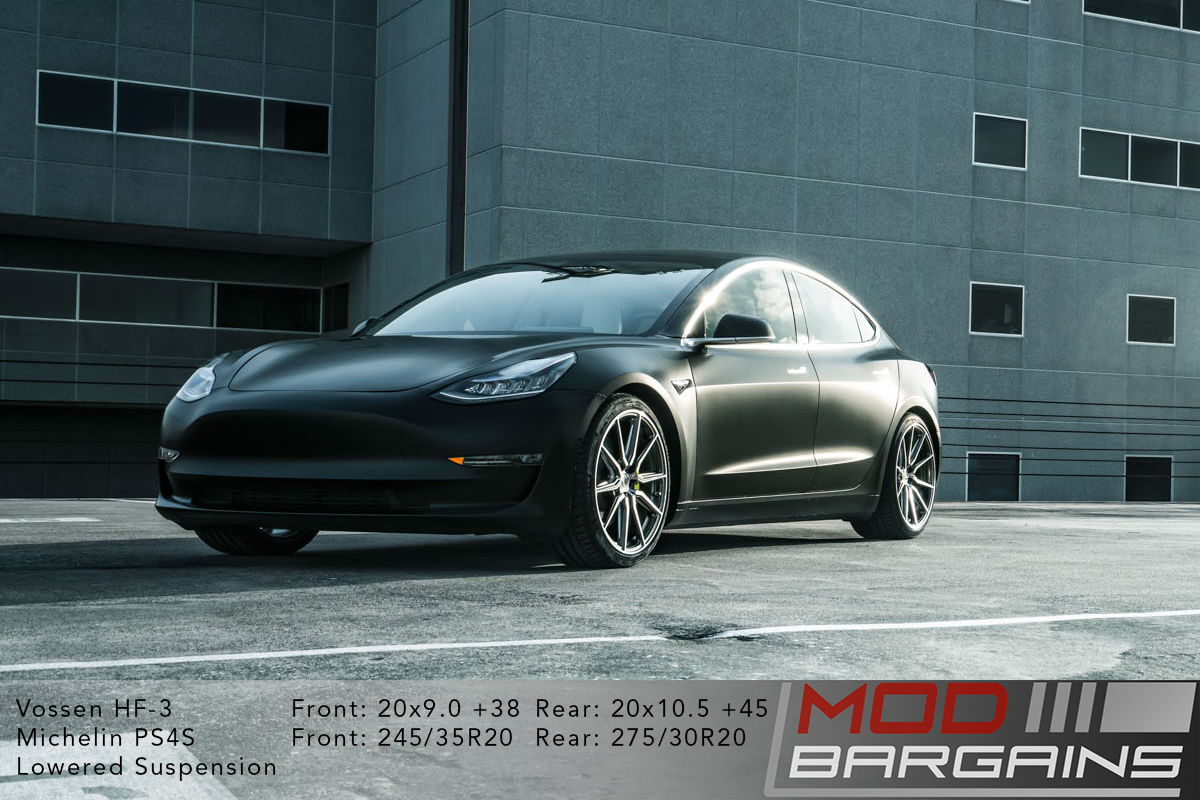
Vossen HF-3 – 20×9.0 et38 front and 20×10.5 et45 rear
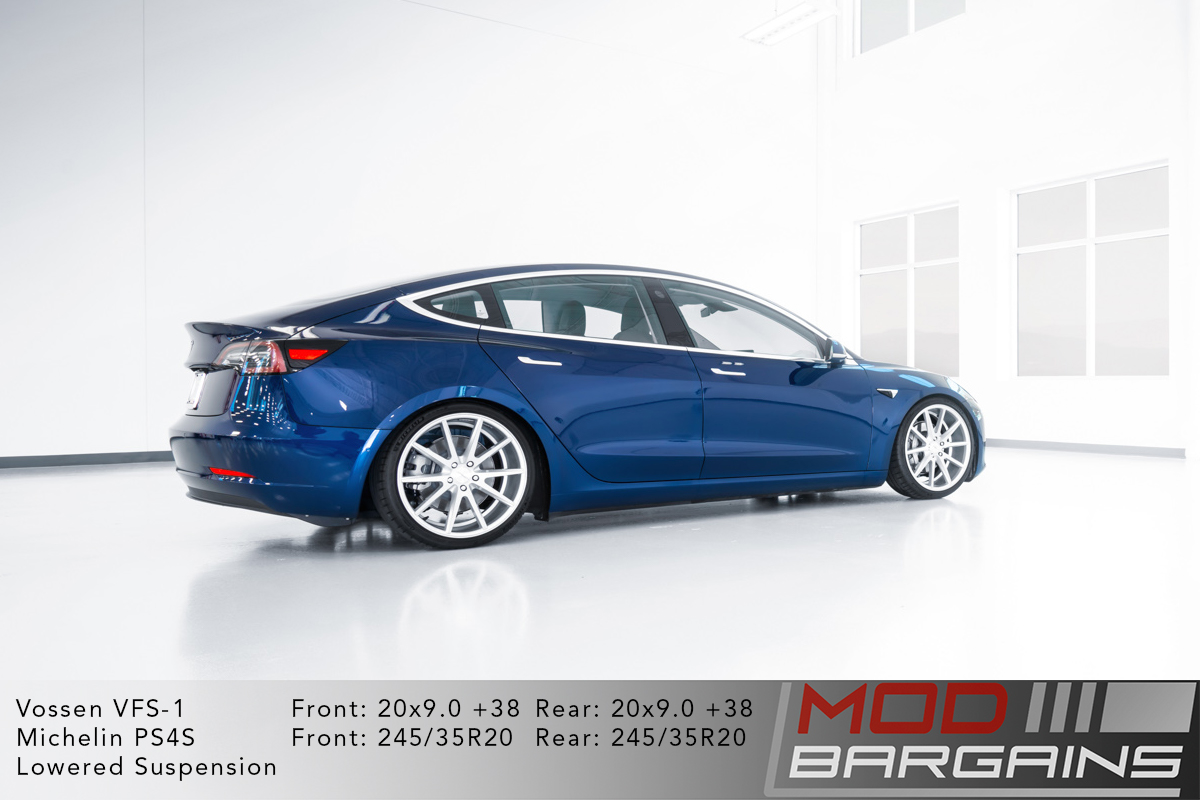
Vossen VFS-1 – 20×9.0 et38 front and rear
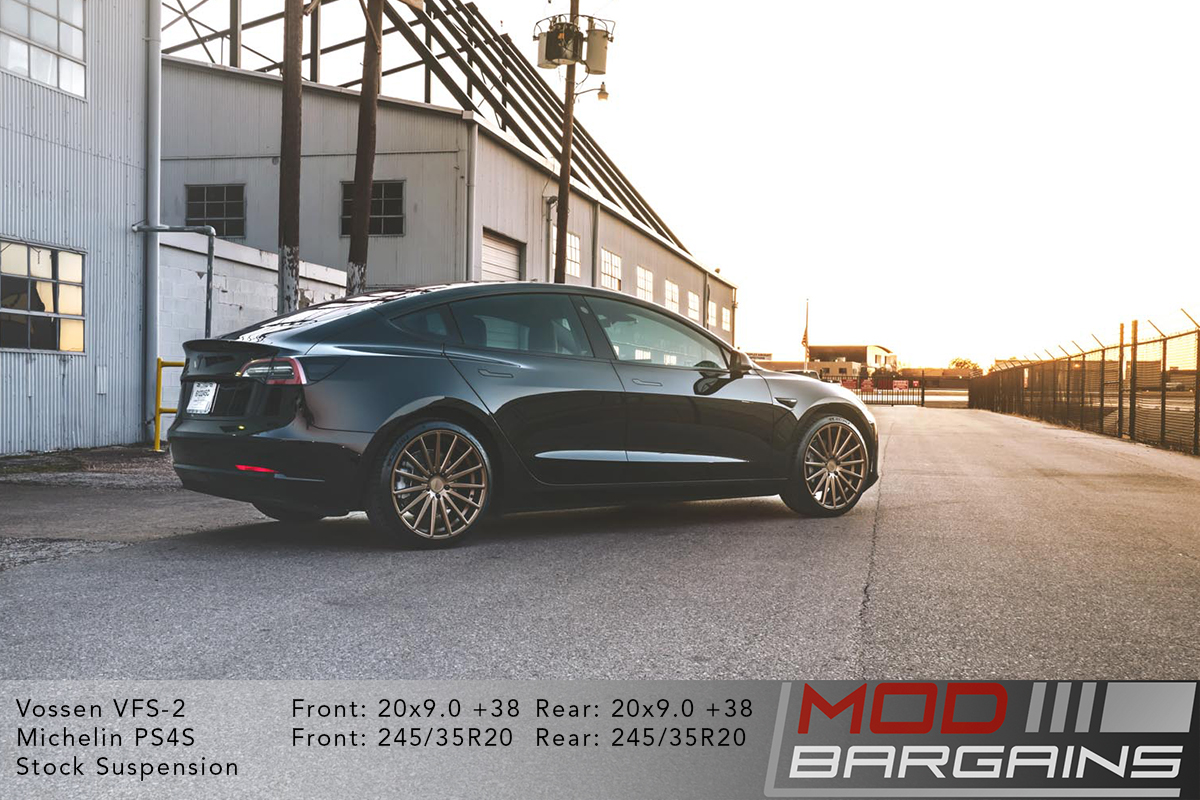
Vossen VFS-2 – 20×9.0 et38 front and rear
CV (Cast) Wheels:
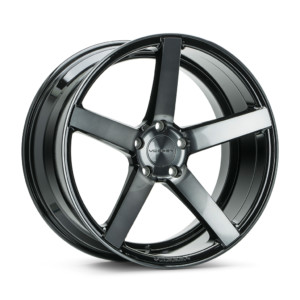
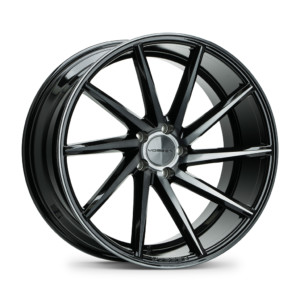
If you are interested in any of their forged models please contact us about ordering as they are 100% custom and we want to personally walk you through each step of the ordering process.
Email – sales@modbargains.com | Phone – 715-582-3330 | Live Chat – modbargains.com
Avant Garde (AG):
Avant Garde really live up to their name setting a lot of wheel design trends with their progressive and unique designs. You might think a company with such a name and reputation could do some damage to your wallet, but AG offers stunning designs at very reasonable prices in both Cast and ART (Flow Formed) construction. You can check out their full lineup for the Model 3 here: http://www.modbargains.com/Avant-Garde-Wheels-Tesla.htm
ART (Flow Formed) Wheels:
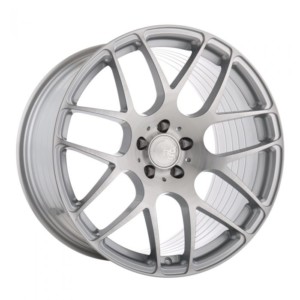
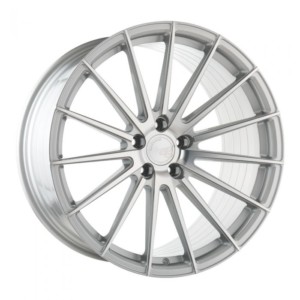
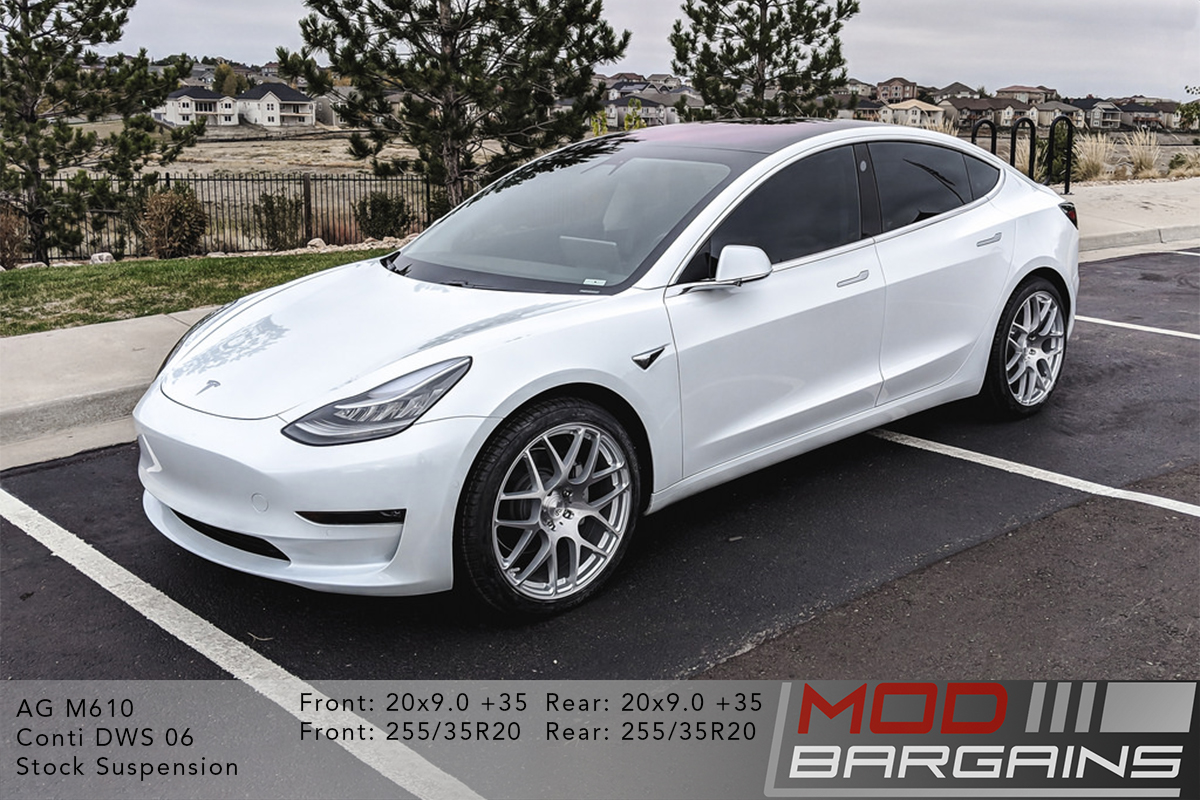
Avant Garde AG M610 – 20×9.0 et35 front and rear
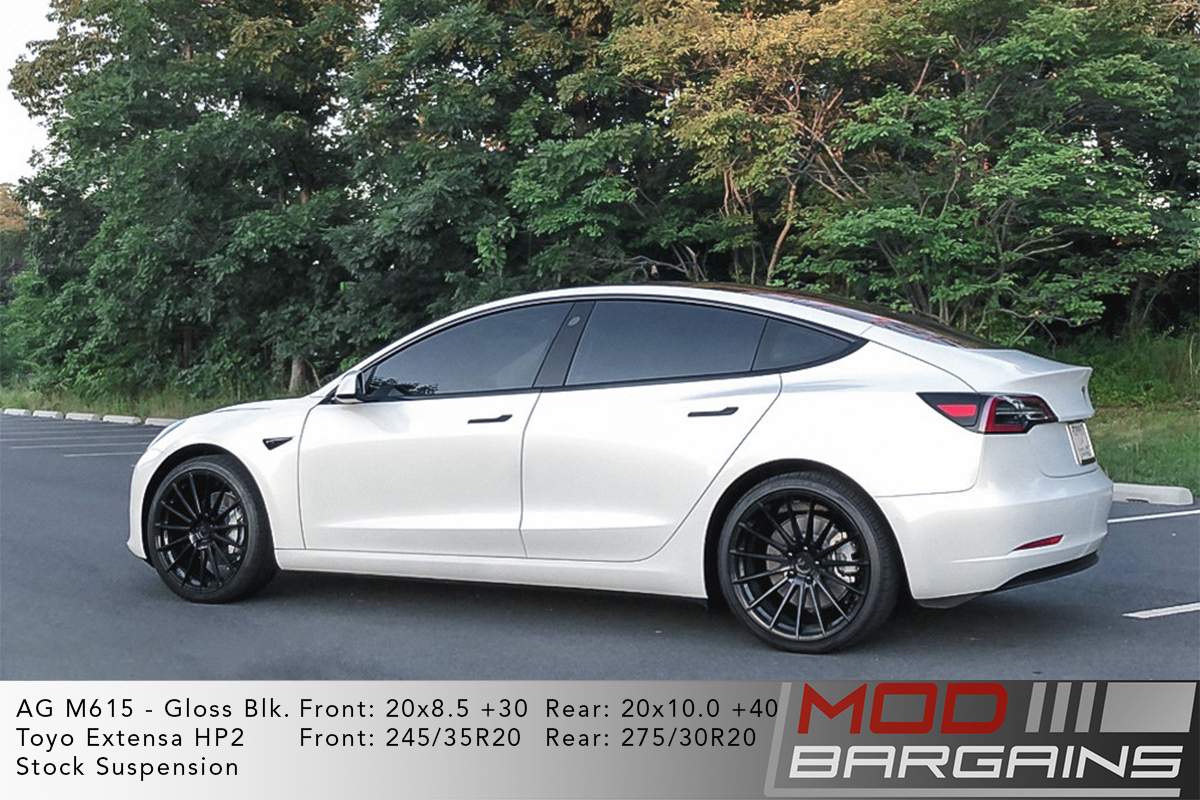
Avant Garde (AG) M615 – 20×8.5 et30 front and 20×10 et40 rear
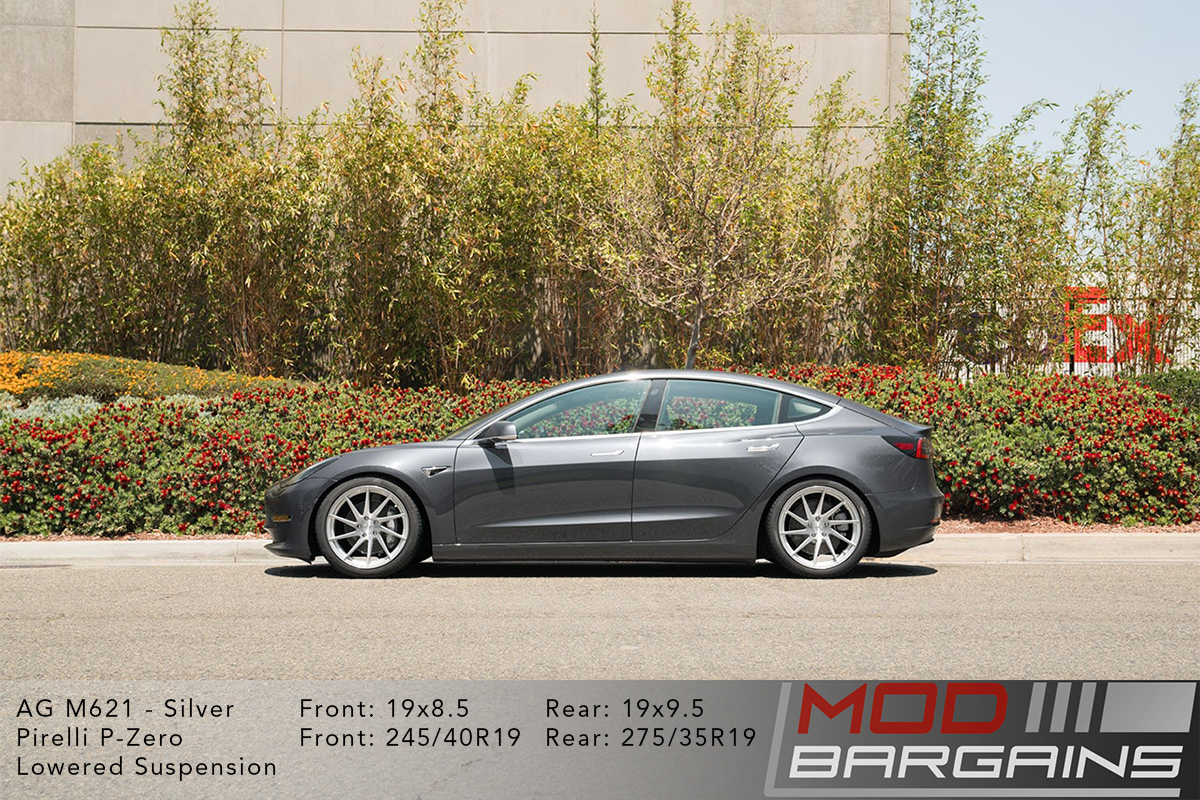
Avant Garde (AG) M6210 – 19×8.5 front and 19×9.5 rear
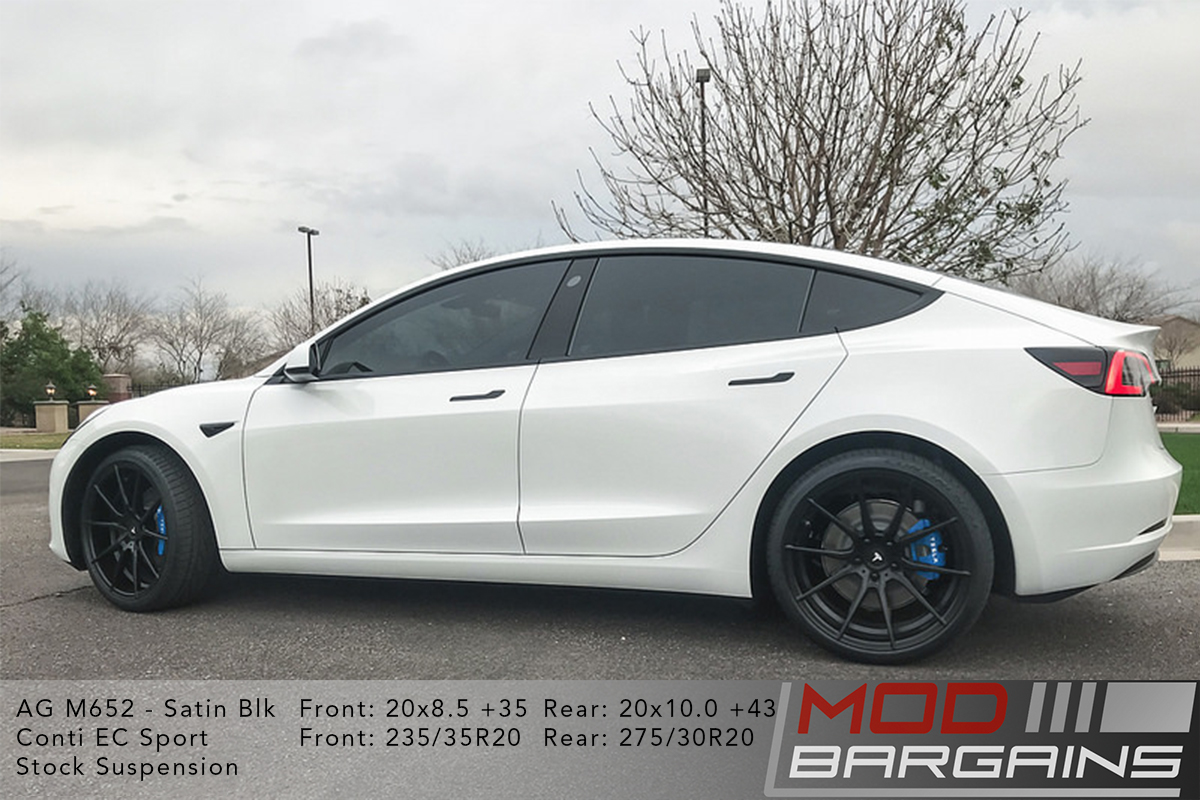
Avant Garde (AG) M615 – 20×8.5 et35 front and 20×10 et43 rear
Classic (Cast) Wheels:
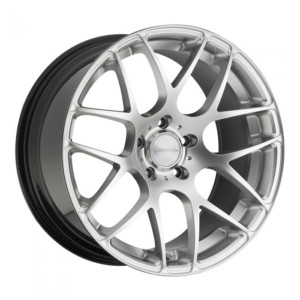
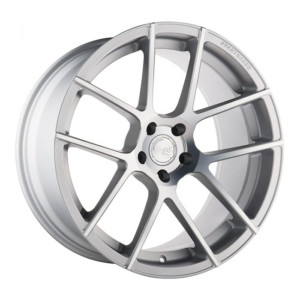
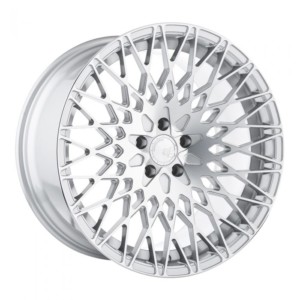
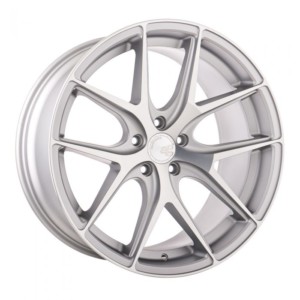
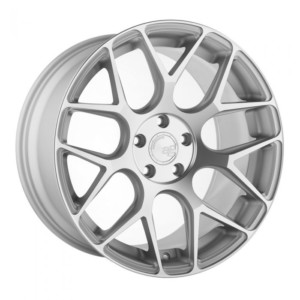
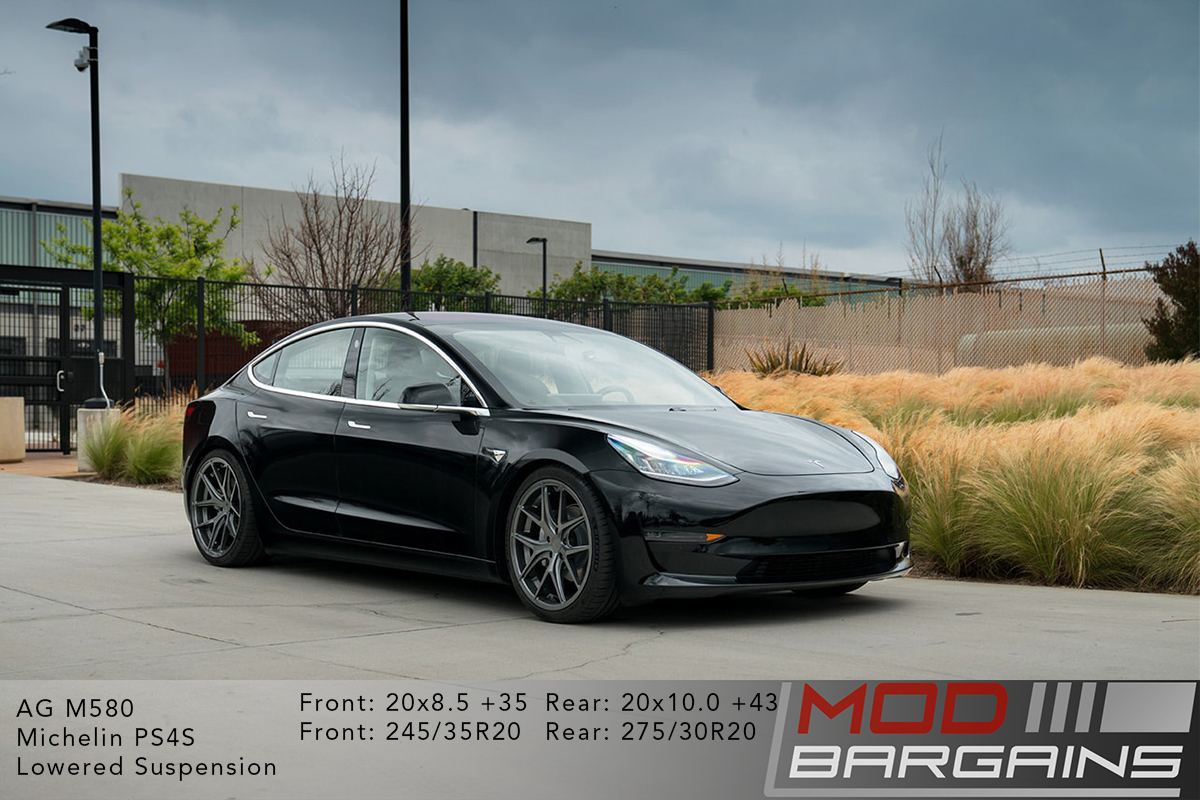
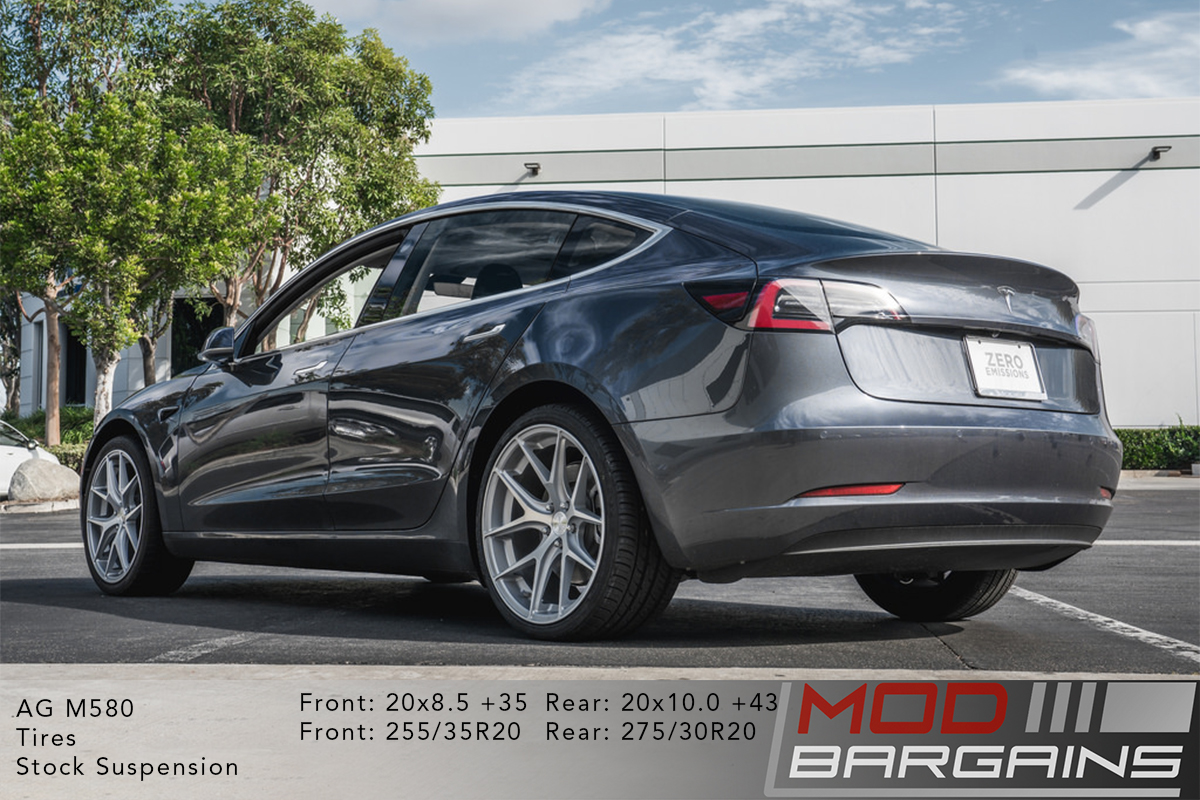
Avant Garde AG M580 – 20×8.5 front and 20×10 rear
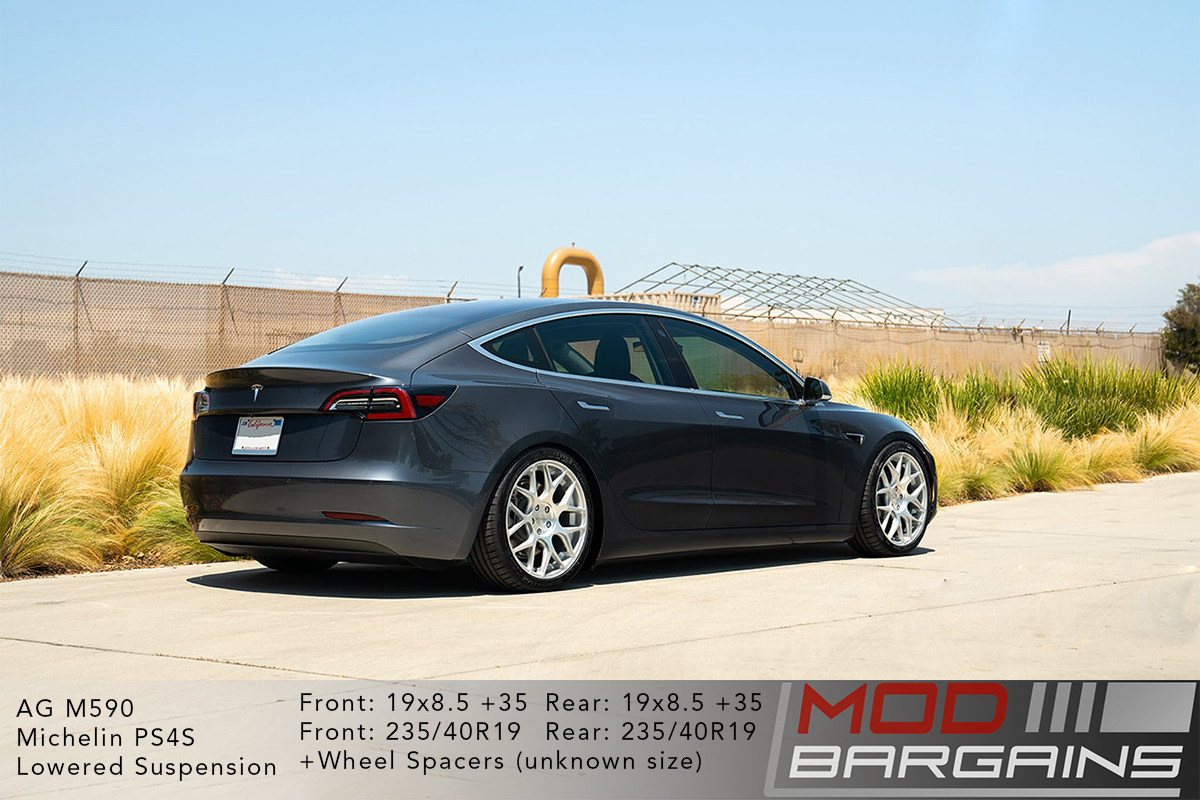
Avant Garde AG M590 – 19×8.5 front and rear
Rohana:
Rohana Wheels’ unique designs cater to high end luxury and performance vehicles. So it makes sense that the Tesla Model 3 would be a great fit for their wheels. Their RF (Flow Formed) series is the perfect balance of strength and style at a reasonable price. While we haven’t seen a ton of examples yet, we can tell you any of their wheels would look great on your Tesla. You can check out Rohana’s Rotary Forged (Flow Formed) line up for the Model 3 here: http://www.modbargains.com/rohana-wheels-tesla.htm
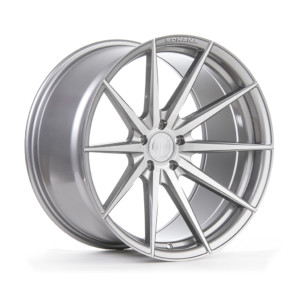
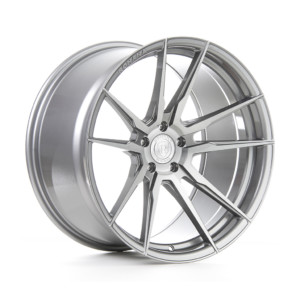
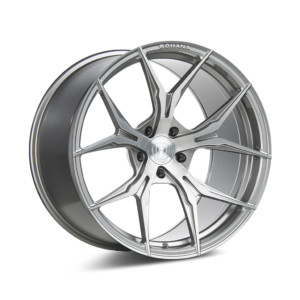
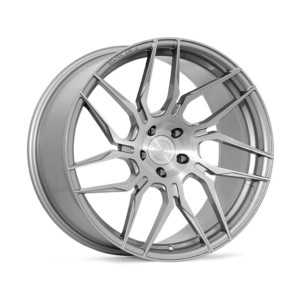
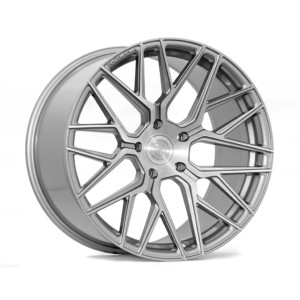
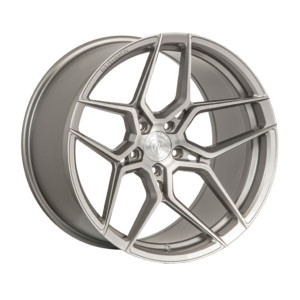
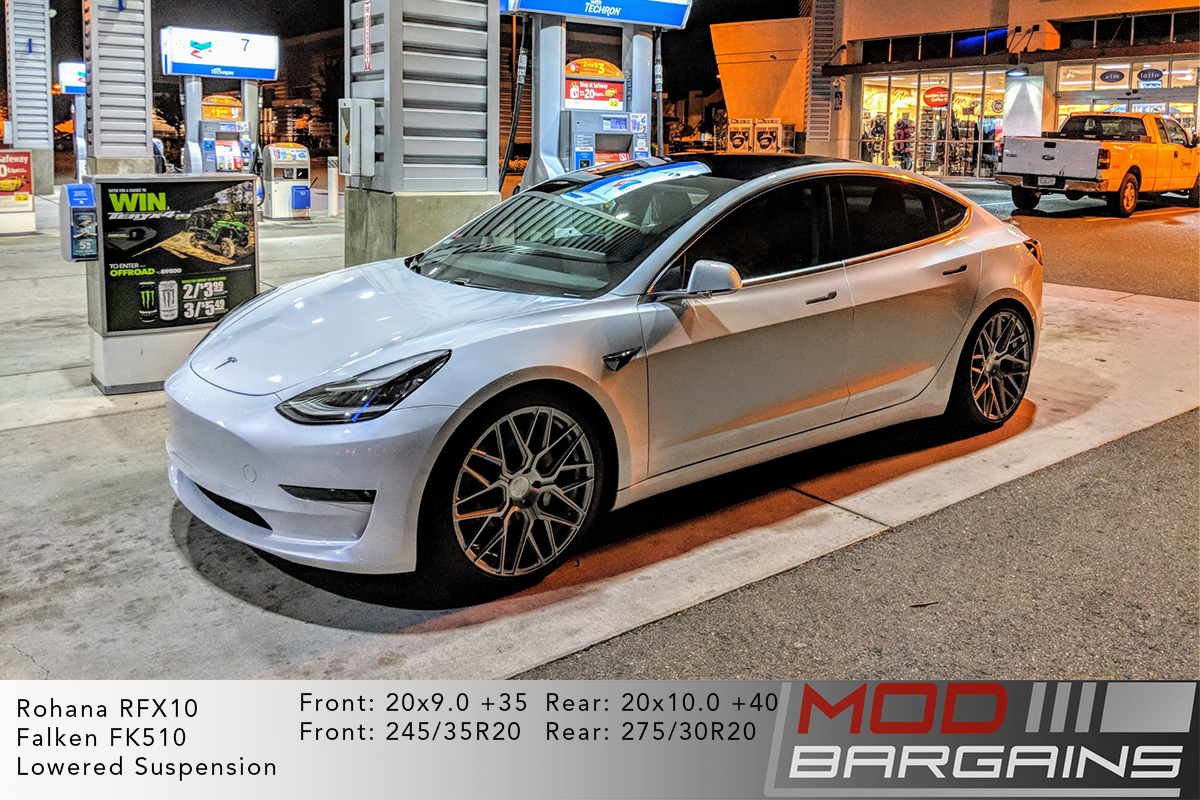
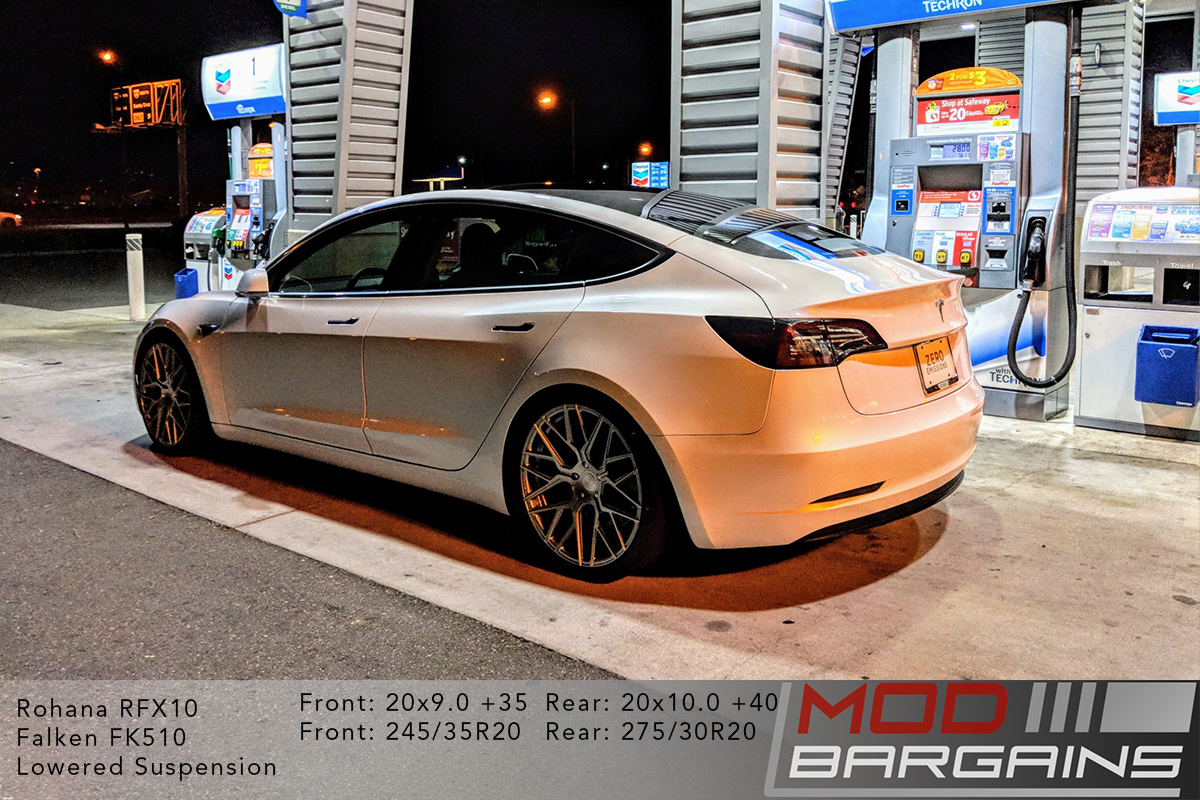
Rohana RFX10 – 20×9.0 et35 front and 20×10.0 et40 rear
We are very particular about the wheel manufacturers we work with but there are many great companies that didn’t make this short list. If you want to see more wheels that are available for the Model 3 feel free to browse here:
Flow Formed Wheels for Tesla Model 3
Forged Wheels for Tesla Model 3
Stock Fitments (Page 1)
Effects of lowering on fitments (Page 1)
How different setups will affect the Model 3’s Performance and Range (page 2)
Wheel Spacers (page 3)
Stock Height Fitments (page 4)
Lowered Fitments (page 5)
Aggressive (lowered) Fitments (page 6)
Recommended Wheel Brands & Models (page 7)
Tire sizing & types (compounds) (page 8)
[nextpage]
Tire sizing, types (compounds), and recommendations:
Tires are one of the most (if not the most) important components of your vehicle. It is your only attachment to the road so we feel like you should make an educated decision when choosing your tires.
Sizing:
Most of our size recommendations are paired with their perspective wheel sizes in the guide above. If you wish to deviate from these recommended sizes please do so with care. If you need help or are not sure how to calculate appropriate tires sizes outside of our recommendation please contact us:
Email – sales@modbargains.com | Phone – 715-582-3330 | Live Chat – modbargains.com
Types/Compounds:
Summer, Winter, All-Season? You’re probably wondering how to pick the right tire for your Model 3. Well, guess what, we have a blog completely dedicated to explaining how to choose the right type of tire: MODBARGAINS TIRE GUIDE: GET A GRIP
The quick summary of that article if you don’t want to read through it all:
Winter Tires – “Do you get moderate to heavy snow in the winter? You’re gonna need some winter tires, no question.”
All-Season Tires – “If you live in the right climate they (All-Season Tires) will be decent in every situation you will encounter. The “right climate” we speak of is one that does not experience severe winters, leaning more towards hot summers and moderate winters. If temperatures pretty much always stay above freezing in your area and you rarely encounter snow these will work very well for you.”
Summer Tires – “If you live in a more temperate climate you should reflect on your priorities before deciding if you want a set of all-seasons or summer tires for your car. Just to recap, all-seasons are going to generally be a bit quieter, last you a fair amount longer, and will be cheaper. Summer tires will give you more thrills but for more bills. Road holding, braking, and acceleration will all be better, but at the cost of faster wear and a higher price point.”
Winter Tires are pretty straight forward. The rubber used in winter tires is specifically engineered to remain malleable in sub-freezing temperatures. The tread is designed to provide traction on snow and ice. These weather focused elements make them unsuitable for driving in every other weather condition. You generally won’t buy these for a set of nice aftermarket wheels so we won’t talk about them much.
All-Season Tires tend to have some variety to them when it comes to compounds. The All-Season tires that come on the Model 3 equipped with 18 & 19 inch wheels are both “Grand Touring” meaning they are engineered for a balance between Handling, Noise, Comfort, Longevity, and decent versatility of traction in Dry, Wet, and Light Snow conditions. They all the jack of all trades, master of none tires that are fine if you aren’t looking for excitement when it comes to your driving experience. We find most of our customers lean towards improved performance so the “Grand Touring” category is generally not something we recommend. Though if you are purchasing wheels of the same diameter as your factory wheels in a square setup there is a good chance you can reuse your stock tires which will serve you fine and be cost effective. The “Performance & High Performance” All-Season Tire categories are kind of a weak middle ground and we generally don’t recommend them. The most popular All Season Tires we see customers order are from the “UHP (Ultra High Performance)” category. When you need an All-Season Tire (or just want more miles out of your tires) but don’t want to sacrifice much performance these tires strike a decent balance. Our two top sellers are the Continental DWS06 and the General G-Max AS-05.
Continental DWS06
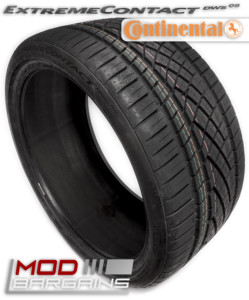
Based on an evolution of the previously highly acclaimed DWS series, Continental further improved the breed with a focus of even longer tread life and side wall strength while also improving on Dry Wet and Snow traction.
General G-Max AS-05
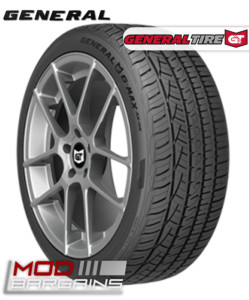
Summer Tires we could talk about for hours, but we will try and keep this brief. The name can be a bit misleading. Summer tires are not solely good in hot weather. They actually tend to perform better than All-Season tires in the wet and even cooler temperatures, so don’t be scared off if you live somewhere that rains a lot. Just remember that if you encounter snow at all where you drive, we recommend All-Season or dedicated Winter Tires.
Summer tires have 5 different categories: “Grand Touring”, “High Performance”, “Ultra High Performance (UHP)”, “Max Performance”, and “Extreme Performance”. We generally don’t recommend Grand Touring or High Performance Summer Tires because you’re getting similar performance to a UHP All-Season tire without the versatility and often don’t last as long. It is also important to note that Extreme Performance tires are not typical for anything outside of pure performance cars that see a lot of aggressive driving and typically regular track time. They wear out very quickly but give you the best handling and traction at the cost of longevity (you’d be lucky to get more than 10-15k miles out of them driving conservatively). Knowing this and that most of you out there reading this are enthusiasts, we are going to mainly recommend UHP and Max Performance Summer tires.
Ultra High Performance (UHP) Summer Tires:
When it comes to UHP tires there is no shortage of options. Within this category you have a wide variety of tread patterns and Uniform Tire Quality Grade (UTQG*) ratings which encompass treadwear & traction grades. Typically higher treadwear means your tires will last a bit longer, though treadwear numbers vary between manufacturers because of the testing procedure.
*UTQG Treadwear Grades are open to some interpretation by tire manufacturer rating is determined after the tire has only experienced “a little treadwear” as it goes through the 7,200 miles test phase. Because of this, manufacturers can extrapolate their raw wear data when they are assigning Treadwear Grades. In truth, all treadwear ratings need to be taken with a grain of salt because some testing departments are more optimistic than others. However, it is safe to compare treadwear grades between tires from the same manufacturer as they will be internally consistent with their testing procedures and processing of the data results.
Just keep that in mind when considering any set of tires that have a higher or lower rated treadwear grade as a 220 treadwear tire could easily last as long as another brand’s 300 treadwear tire.
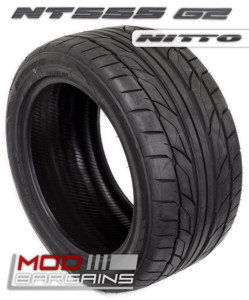
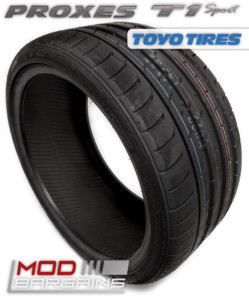
Our top picks for UHP Tires when looking for a great balance between performance and decent treadwear at a reasonable price are the Nitto NT555G2 and the Toyo T1 Sport.
Nitto NT555G2
Toyo T1 Sport
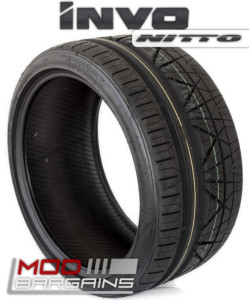
Nitto Invo
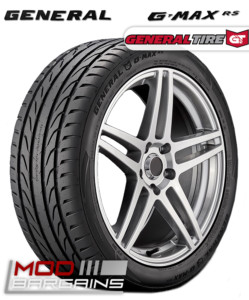
General G-Max RS
Max Performance Summer Tires:
Our favorite tire category is definitely Max Performance. With over 80% of our tire sales falling into this category, we’d consider ourselves fairly knowledgeable about them.
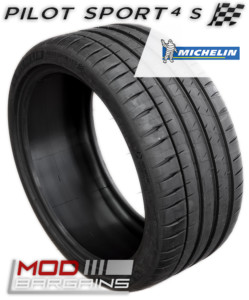
Michelin Pilot Sport 4S (PS4S)
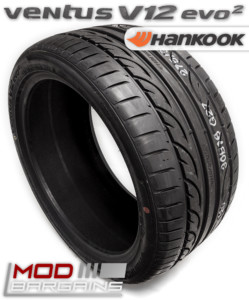
Hankook Ventus V12 Evo2
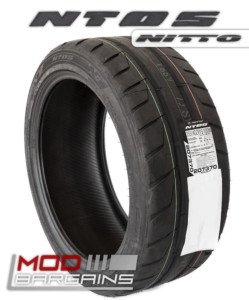
Nitto NT05
If you have any additional questions about wheels and tires for your Model 3 please free to reach out to us:
Email – sales@modbargains.com | Phone – 715-582-3330 | Live Chat – modbargains.com
If you would like to speak to our Model 3 expert specifically please contact Kevin McDonnell:
Email – kevin@modbargains.com | Phone – 715-582-3330 x8003
Stock Fitments (Page 1)
Effects of lowering on fitments (Page 1)
How different setups will affect the Model 3’s Performance and Range (page 2)
Wheel Spacers (page 3)
Stock Height Fitments (page 4)
Lowered Fitments (page 5)
Aggressive (lowered) Fitments (page 6)
Recommended Wheel Brands & Models (page 7)
Tire sizing & types (compounds) (page 8)
[nextpage]
Physics Reference Page:
Acceleration: There are two factors to consider when looking at a wheel’s effect on acceleration: Weight and Tire Size. Wheel & Tire weights play a big role in acceleration due to moment of inertia. Moment of inertia can be defined as:
“A quantity expressing a body’s tendency to resist angular acceleration. It is the sum of the products of the mass of each particle in the body with the square of its distance from the axis of rotation.”
This simply means it is harder to speed up and slow down the rotation of heavy things. The reason heavy tires have such an impact on performance is that the larger the concentration of mass further from the axis of rotation, the greater its tendency is to resist acceleration. In layman’s terms: More weight to the outside of a spinning object makes it harder to spin. Acceleration includes both speeding up and slowing down –
“An object’s acceleration is the net result of any and all forces acting on the object, as described by Newton’s Second Law.”
In summary, heavy wheels & tires will have a negative impact on your acceleration due to the added rotating mass (weight).
Width and Diameter greatly affect the weight of your wheels as well as the weight of your tires. As you can see from the factory wheels alone, the 20 inch option is around 7 lbs heavier than the 18 inch option. This doesn’t sound like much, but try holding 7 lbs straight out in front of you and you’ll get a decent impression of the extra energy expended by your car to move the extra weight. Now we aren’t saying to go for 18’s just because they weigh less, but we want you to keep this in mind as a factor. Now you may be thinking “now hold on a minute, wheels come in different widths, wouldn’t that affect the weight as well?” Good catch, you are absolutely correct! However, while a wider wheel can also be heavier, the weight difference is generally far less drastic (Example Below)
- VMR V710FF in 19×8.5 +45 = 22.6 lbs
- VMR V710FF in 19×9.5 +45 = 23.2 lbs
- VMR V710FF in 19×10.5 +45 = 24.2 lbs
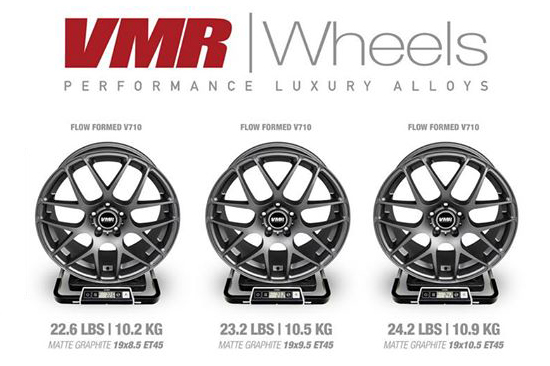
As you can see in this example, each inch of width adds around 1 pound or less to the weight. So the real impact on acceleration from wider wheels comes down to the tires. Tire’s impact on acceleration is a double edged sword though in some respects. On the positive side, a wider wheel allows you to run a wider tire which means a wider contact patch and better traction/more grip for acceleration*. However wider tires for acceleration benefits have diminishing returns. While you may get better traction the larger you go, you are also increasing the weight of the tire and the rolling resistance. For example, a 235/35R20 Michelin PS4S weighs 24 lbs while a 275/30R20 weighs 28 lbs. That 4 lbs difference has a significant impact on the moment of inertia. So while you are gaining traction, you are using more energy to spin the wheel. This trade off is more valuable for RWD models as their traction is significantly more limited than AWD models (we know this may be obvious but again, bear with us if you know the basics). With this we must also note that there are always limits and going too wide will simply hamper performance with no upside. We do not recommend anything over a 285 wide tire, and even that may be too wide.
*Note: We understand that there are a lot of factors when considering the traction of tires. We did not want to get into too many details, but as a general rule of thumb, a slightly wider tire will give you better traction to a point because roads are not perfectly flat or uniform.
Braking: The same rules apply to braking as acceleration because slowing a wheel down is simply “negative acceleration”. The only exception is the case of a wider tire impacting braking. On both AWD and RWD a wider tire will improve traction for braking.
Handling: While a lot of Model 3 owners may not have considered handling when purchasing their vehicle, we feel it is something important to discuss as it affects your driving experience every day. Similar to acceleration, the effects of wheels on handling is based on weight and tire size, but for different reasons.
In regards to weight, we will be looking at the effects of unsprung mass on the vehicle. Unsprung mass or weight is simply weight that is not supported by the suspension of the vehicle. This generally includes The Wheels, Tires, Brakes, Axles, and even parts of the suspension (control arms, struts, etc), but we will just be focusing on the first two. The weight of the wheel and tire’s impact on handing deals with acceleration, but this time in a linear way. Your wheel and tire accelerate up and down with the suspension travel as weight shifts while speeding up or slowing down, turning, or encountering road imperfections. More weight means more inertia that the suspension must cope with. This means the increase in unsprung weight from the wheels and tires make it harder for the suspension to maintain a consistent contact patch with the road. This translates to less traction when encountering road imperfections.
Tire size is very important for several reasons. Obviously it impacts weight which we went over the effects of above. A wider tire will generally give you a wider contact patch which is beneficial for lateral traction (the traction that is used when the vehicle is turning therefore exerting lateral forces on the vehicle and subsequently the tires). Again there are diminishing returns here due to factors such as vehicle weight, spring rates, and need for balance between acceleration, braking, and handling.
Tire size also incorporates sidewall height and subsequently sidewall stiffness. While sidewall stiffness varies from brand to brand and between types of tires (Ultra High Performance, Touring, etc), the general rule of thumb is sidewalls are stiffer as they become smaller/shorter. A stiffer sidewall impacts handling by improving turn in response and roll resistance (the tendency for the tire to deform and “roll over” under lateral g forces). There are downsides to stiffer sidewall which we will cover in the comfort section.
*Note: We understand that suspension and alignment factor into handling and lateral traction. These are more advanced topics for most people so we will not be going over them.
Comfort: Some of you care about this more than others, but I think we can all agree that if we had the choice between a smooth and comfy ride and one riddled with bumpiness and jarring impacts, we would choose the former. The main culprits when it comes to decreased ride comfort (aside from increased spring rates and aggressively tuned dampers) are unsprung weight and tire sidewall stiffness.
Reducing unsprung weight (or at least not increasing it) will yield a smoother ride because the suspension does not have to deal with as much mass (and subsequently inertia). So when you hit a bump the dampers (struts/shocks) have an easier time absorbing the force and returning to their normal state. So when looking at wheels and tires, considering the weight will improve both performance (acceleration, braking, and handling) as well as ride comfort.
Inversely, a tire with stiffer sidewall will have a negative impact on ride quality. Because some of the road imperfections you encounter are absorbed by the tires as well as the suspension, a stiffer sidewall will transmit more of those small bumps and dips directly to your posterior.
Range: While some of you might not care, that extra 10 miles of range can mean the difference between reaching a charging station or having to call roadside assistance. Wheel weight and tire size again both come into play. For the same reason heavy wheels and tires hamper performance, they also negatively affect range. Wider tires also offer more rolling resistance which will also decrease range. So if you are going for maximum range on your Model 3 while still looking good, pick something that keeps a stock size tire and ideally a lighter weight wheel. Tire compounds also factor into rolling resistance but that is a simple factor of stickier tire = higher rolling resistance. If a tire is made for performance driving (for example an Extreme Performance Summer tire) then it is a safe bet that it will negatively effect your range in exchange for better performance. If range is your concern stick with low rolling resistance economy tires.
Stock Fitments (Page 1)
Effects of lowering on fitments (Page 1)
How different setups will affect the Model 3’s Performance and Range (page 2)
Wheel Spacers (page 3)
Stock Height Fitments (page 4)
Lowered Fitments (page 5)
Aggressive (lowered) Fitments (page 6)
Recommended Wheel Brands & Models (page 7)
Tire sizing & types (compounds) (page 8)