
Prologue: The E46 M3 in 2019
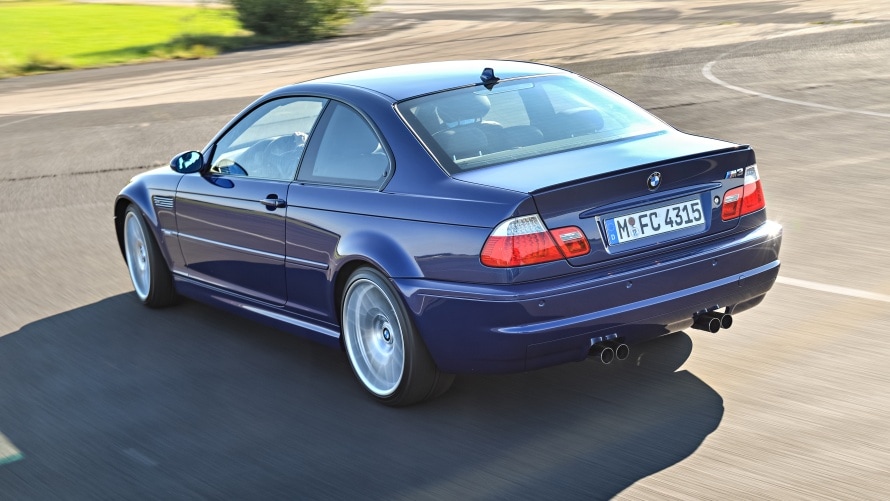
The year is 2019, and you are on the hunt for excitement. You’re looking for something fun, striking, and not too hard on the wallet. You shop around, check out what your favorite manufacturers have to offer, maybe take a few test drives, but nothing is clicking. You’ve nearly resigned yourself to just buying something you thought was ok and learning to love it. Then, one week while you’re out shopping, you see it. Maybe it was driving down the highway. Maybe it was parked at the gas station. Doesn’t matter where you see it, something about it evokes a childlike sense of wonder and excitement. Suddenly, you know exactly what you want, you’re going to fulfill a dream you forgot you’ve had since 2001. You’re getting an E46 M3.
Table of Contents:
Introduction / Maintenance…(page 1)
Show Section:
Wheels…(page 2)
Tires…(page 3)
Suspension…(page 4)
Making an Entrance…(page 5)
- Intake
- Exhaust
Visual Mods…(page 6)
- Engine Bay
- Exterior
Track Section:
Handling Part 1…(page 7)
- Driver
- Tires
- Wheels
Handling Part 2…(page 8)
- Alignment
- Suspension
Performance and Safety…(page 9)
- Brakes
- Power
- Interior
- Exterior
Introduction
Whether you are a fan of BMWs or not, if you are any kind of enthusiast there’s probably a little (or massive) wish in the back of your mind that says “I’d love to own an E46 M3”. When you’re at a meet and a clean E46 M3 rolls up there’s always that short conversation of “Man, I still want one of those” followed by a chorus of “Oh for sure” and “yeah same”. We’ve never really met anyone who has owned or currently owns an E46 M3 who truly regretted it beyond maybe being unable to afford the maintenance on it (which can be a little steep depending on how well the car has been cared for). It’s something you’ll find most enthusiasts admiring on some level. It’s just a solid car with a good heritage, impressive engineering, and a timeless design.

Maintenance:
This subsection is intended for new M3 owners or those who are worried they may have forgotten something major. If you have had yours for a while and have addressed a lot of the M3’s common issues then just skim it to make sure you have been properly maintaining your vehicle.
The E46 M3 was produced from late 2000 up to mid 2006. This means that if you buy the absolute newest one you can find, you’re still purchasing a 12 year old vehicle. While this is not particularly old, it is not new by any stretch of the imagination. This means that in most cases you’ll be looking at well over 100,000 miles, sometimes closer to or surpassing the 200,000 mile mark (less likely with a performance vehicle like this vs a common commuter car). A lot can happen in that amount of time and over that kind of driven distance. The first thing you should do is make sure the car is mechanically sound before you dig into the heavy modification.
-Basic Maintenance:
First you’re gonna want to get yourself an OBDII scanner and check your car for codes. Do this even if your check engine light isn’t on. This is to check two things: 1) it will tell you if your car has any trouble codes, and if it does then that also tells you 2) the bastard who sold you the car removed the check engine light bulb or something of the sort. If you have any fault codes hopefully you got yourself a scanner that is nice enough to tell you what they mean. If it just gives you a P#### number then pull up the ol’ web browser and do a quick search for that code along with E46 M3 or 2001-06 BMW M3. You’ll be greeted by plenty of people with the same code and what they did to fix it. If you’re not very confident in your tinkering abilities take it to a shop, but we still recommend checking the codes first and looking over the car thoroughly beforehand so if someone tries to sell you something you don’t need you can tell them to shove it.
After checking all the codes you should check for mechanical faults not indicated by the engine codes. Gaskets will leak over time so check your engine bay for oil residue. It is usually a good idea to change gaskets on a motor that is new to you just so you can be confident in how long they’re going to last.

-Preventative Maintenance:
Once you’ve addressed any issues present with your car you’ll want to think about some preventative maintenance. In other words this is stuff you should repair or replace so it doesn’t fail on you when you’re driving it. Good things to check include:
-Full oil change and new oil filter
This should be done regardless of how recently it was done by the previous owner for various reasons. What if they’re a liar? What if they used cheap oil because they knew they were selling the car soon? Unless you have a dated invoice from a reputable shop that shows when the maintenance occurred and what oil/filter were used, you should be changing the oil immediately regardless of what the previous owner says.
-Air Filter
If you’re not buying an aftermarket intake we recommend inspecting the filter in your factory intake box to see if it’s dirty. Replacement filters are very cheap to replace and your engine will be much happier if it can breath freely.
-Brake Rotor Condition / Pad Thickness / Fluid
Your brake system is the one of the most important things to maintain on any vehicle. If your engine dies or your battery fails you can still coast yourself to safety, but if your brakes fail while you are driving you are in for some trouble no matter where you are. Therefore it is prudent to properly maintain your brake system for your own and others’ safety. Check that your rotors are not cracked and do not have a lip at the edge (a telltale sign that they are pretty worn down). Check that your pads have plenty of thickness left (gauges can be purchased to test pad thickness, or you can eyeball it if you know what you’re looking at). Finally, get rid of that old brake fluid. Depending on how old it is it can have lost a good deal of its heat resistance or developed bubbles (more info in track section). In the interest of not crashing your M3, at the very minimum do the safe thing and change out the fluid. At the very least bleed the system to get out any bubbles, but a full flush with some new DOT4 brake fluid is recommended. If you want an easy all in one brake tune-up/upgrade we do have full brake packages available that come with pads, rotors, fluid, and even stainless steel brake lines (for improved heat resistance and pedal consistency. These kits are available in variants depending on if you want blank, drilled, or slotted rotors.
-Drivetrain
Depending on how many miles are on the car you probably want to check on your clutch, pressure plate, and flywheel. This particular part is hard to gauge wear on because it is highly dependent on the skill of the driver and/or the conditions the car was driven in. If you get an E46 M3 with over 100k miles and no record of a clutch change then you should definitely plan on changing it very soon, that is nearing the high end of clutch life even taking conservative driving into account. Your clutch should give you a fair bit of warning when it needs to be replaced so keep an eye out for the following:
Higher engage point – you’ll have to release the clutch pedal further than usual before the car starts moving
Clutch slip – if your engine’s revs increase without an increase in speed while your clutch is fully engaged
Judder – vibration when engaging the pedal (unless the car is equipped with a 6 puck clutch or similar, then that is just natural behavior)
If your car is experiencing any of these symptoms you should consider replacing it. An OEM style replacement won’t cost you too much and will give you peace of mind knowing that’s something you don’t have to worry about for a while. If you want more of an upgrade you could consider something like the ACT HD clutch kit which gives you the option to choose between several clutch disk options depending on your desired clamping force. If you aren’t going to be adding much power to your M3 we suggest just going with a street clutch (or solid street clutch if you’re some kind of masochist). At the very least get your clutch diagnosed at a shop if you’re worried that your it is on the verge of failure.
Other signs of necessary drivetrain maintenance:
Spongy clutch pedal feel – may feel fine initially but become spongy as the car heats up, indicating a failing clutch line (assuming you’ve bled the system already)
Constantly spongy pedal – may indicate master cylinder issues or air in clutch fluid
Clutch doesn’t fully disengage with pedal to floor – clutch linkage may need adjusting
-Rubber hoses in engine bay
Over time heat from your motor will dry out various rubber hoses and lines in your engine bay. If you’re super thorough, best practice is to replace every coolant hose and vacuum line you can find. If you don’t have that kind of time or patience we recommend a thorough inspection of the rubber components and replacing those that feel dry or stiff.
-Coolant Expansion Tank
On the E46 M3 it is common for the plastic coolant expansion tank to crack from old age/engine bay heat. You can replace it with a new factory piece or if you want to spend a bit more a few companies make aluminum versions which will be much more durable, and look pretty cool as an added bonus.
-Chassis Reinforcement and Repair
This is covered more in-depth in the “Performance Maintenance” subsection below, but it is not uncommon for chassis damage to occur even when the car is driven conservatively. We suggest at least inspecting or getting your car inspected for subframe, trailing arm mount, and strut tower cracking. Better to find the problem early and address it than to have a huge failure later on.

-Performance Maintenance:
If you’re going to be driving your M3 as it was intended (fast) there are certain things you’re going to want to address. This subsection covers components that affect the car’s performance but aren’t included in our Preventative Maintenance subsection due to their spirited nature.
-Bushings
Bushings are little bits of rubber used to reduce the transfer of vibrations between certain parts of your car. On the E46 M3 there are 4 sets of bushings in total and each of them is a potential point of annoying issues. Factory bushings will, over time, deteriorate and start allowing more flex in the suspension. This gives steering and road feedback a dead feel and will hamper your car’s responsiveness, as well as causing issues with your rear subframe. When replacing your bushings you can either use new factory rubber bushings or you can opt for stiffer but much more durable polyurethane bushings. Polyurethane bushings allow less flex than normal rubber factory bushings so your ride quality will suffer slightly but the benefits are tighter handling feel, better alignment consistency, and more information being relayed to you through the chassis and steering wheel. If you’re tracking your car these will make your life better in so many ways, we can’t say they’re required but they are highly recommended.
Front control arm bushings are your main connection between the chassis and the front wheels. They are responsible for isolating vibrations from the front suspension. When these bushings get old they will allow for more flex which means during braking or hard cornering your suspension arms will flex too much, meaning your dynamic camber and toe settings can get thrown off (see alignment subsection for more details about the importance of a proper alignment). With a new set of polyurethane bushings you get consistent road feedback and suspension geometry so you only have to worry about your own driving skills and not whatever weird stuff your suspension may do when you brake or hit a bump mid corner.
Much like the front control arm bushings, the rear trailing arm bushings help to keep your alignment geometry consistent so you get clear and solid feedback from the rear suspension. This keeps your car from making unexpected lurches under acceleration or cornering. Ideally you’ll have both sets installed so you get more consistent alignment at all four corners.
The differential mount and rear subframe bushings kind of go hand in hand as both sets interact with one another. The subframe bushings connect the subframe to the chassis, and the differential bushings connect the differential to the subframe. Both together are the connection between the differential and the chassis. The reason you would want polyurethane versions of the bushings is that they will reduce amount of flex induced by acceleration so you get better power transfer to the wheels. The other more important reason you’d want to change these out is that excessive flex from the drivetrain is tied to the dreaded subframe cracking that plagues the E46 chassis (see “Weld-in Chassis reinforcement” subsection later on this page for more details). Just be aware that these will increase NVH due to having a more solid connection between the engine and the chassis through the subframe. Also note that both sets should be the same compound (e.g. 75D subframe bushings pair with 75D differential bushings).

-Bolt-in Chassis reinforcement
One of the biggest problem areas of the E46 M3 is definitely its chassis. The rear subframe, strut towers, etc. can all experience failures from normal driving and are very likely to experience issues if the car has been driven aggressively (and sometimes even if it hasn’t). If you’re going to be tracking be aware that you will have to fix these things eventually, generally it is better to do so before they fail. We know what you’re thinking and yes, this chassis has issues. Luckily they’ve been discovered over the years and solutions have been developed for them so you are at least forewarned.
These two sets of reinforcement plates are preventative maintenance items which help to reinforce your front and rear strut towers against the common cracks and failures that occur with this chassis. Each is designed to distribute pressure more evenly onto the strut towers to prevent the mushrooming and cracking (see above) that is likely to occur when the car is driven aggressively (and sometimes even when it is not). These plates just help to give you peace of mind that your car will be able to handle the strain of being driven as it was intended. The rear plates are especially recommended if you are going to be running a “true coilover” in the back, which will be covered in our track suspension subsection.
Finally, a front strut tower brace might sound like more of a “performance” type thing but it actually plays an important role in chassis reinforcement. Because you are adding this big plate to the top of the strut towers and connecting them with a large rod, you are simultaneously strengthening them and redistributing pressure between the two towers. And hey, bonus, they look cool as hell!
-Weld-in Chassis reinforcement
These chassis reinforcement plates are a bit more difficult to install than the strut tower reinforcements as they require welding. However, if you are driving the E46 M3 aggressively they are essential for maintaining or repairing the integrity of your chassis.
The front subframe has to deal with a fair amount of stress during day to day driving due to the constant stress the motor is putting on them. As you accelerate or decelerate you engine will twist which puts strain on the mounting points for the subframe and the motor mounts. This is further aggravated by aggressive street and/or track driving, so generally it is best to address the issue with some front subframe reinforcement plates before it becomes a problem.
The E46 rear subframe is especially famous for its failures. When the subframe and differential bushings deteriorate it allows for a lot of flex of the subframe, which then leads to the sheet metal of the chassis being twisted and jolted under acceleration. A rear subframe reinforcement kit helps to strengthen the subframe and redistribute the twisting forces across a wider surface area. Replacing your differential and rear subframe bushings will help keep the problem from rapidly worsening, but it should be addressed ASAP for safety, especially if you are going to be tracking your car.
Another common area of failure when tracking the E46 M3 is the rear trailing arm mounting point. This RTA reinforcement kit strengthens the mounting point and distributes pressure more evenly along the mounting location much like the subframe reinforcement kit. These are a good idea to do at the same time as the subframe kit as they are in the same area. This would probably you money on labor as everything will be out of the way already.
If your rear strut towers are already experiencing cracking and light failure, rear shock tower repair plates can be used to fix the damage so you have a fresh surface to mount the rear shocks to. If you are running a true coilover in the rear you may want to install these even if your strut towers look ok just to ensure they can handle the pressure.
Pages:
Introduction / Maintenance…(page 1) – Current
Show Section:
- Intake
- Exhaust
- Engine Bay
- Exterior
Track Section:
- Driver
- Tires
- Wheels
- Alignment
- Suspension
Performance and Safety…(page 9)
- Brakes
- Power
- Interior
- Exterior
[nextpage title=”ShowWheels”]

E46 M3 Show Section:
Wheels:
On this page you’ll see the term “CSL Style” referenced quite a few times. For those unfamiliar with the M3 CSL, it was a special edition of the E46 M3 that was made to improve upon the already exquisite design. The CSL was lighter, faster, and had several unique styling touches that made the car look even more aggressive than it already did. Things like the single air inlet front bumper, carbon fiber roof, duckbill trunk lid, and its trademark wheels are all parts that are unique to the CSL M3. This is why you will so often see parts advertised as “CSL Style” because everyone wants their car to look more like the limited edition model.
For a “show” car, wheels are the single most important modification on your vehicle, followed very very closely by suspension. If you’re running around on stock wheels (or worse, cheap aftermarket wheels) you’ll either go completely unnoticed, or you’ll be met with looks of disgust. Get yourself some decent wheels and avoid all that awkwardness. Wheels can be divided into three tiers: cast, flow formed, and forged. We’ve picked out a few of our favorites that come in the correct sizes and offsets for the E46 M3, but ultimately you should pick a wheel that you like the design of.
-Cast:
Cast wheels are going to be your most affordable option when looking to improve your car’s fitment. The way cast wheels are made is basically molten metal is either poured or pumped into a press (gravity vs low pressure cast respectively). Low pressure casting is probably the most common these days but either way the result is similar, the wheel will be relatively heavy and not as strong as a flow formed or forged wheel. However, if you’re not going to be driving this car aggressively then that’s perfectly fine, the car can look great with cast wheels and as long as you’re happy with how they look.

-VMR V703 VB3
The VMR V703 VB3 wheels are a CSL style design that gives you that OEM performance look from the CSL E46 M3 without the large price tag. Popular sizes for the M3 are a 19×8.5 ET40 front with a 19×9.5 ET22 or 19×10 ET25 in the rear. These sizes will fit very nicely in the wheel wells and look quite a bit more aggressive than either factory size. Also available in 18″ diameter (popular sizing being 18×8.5 ET35 front – 18×9.5 ET22 rear) if you’re looking for a little more comfortable ride and cheaper tires. Just be aware that this is an OEM+ look so if you want something that looks more aggressive (mainly in the front, rear is pretty flush) you should check out our other options/custom wheels. Available in both Hyper Silver and Gunmetal.

-Avant Garde M359
The AG M359 is great if you’re looking for more of a mesh design for your E46 M3. The split spokes give an almost CSL look to the M3 and with a 19×9 ET35 front and 19×10 ET25 rear they fill out the fenders very nicely. You may want a 5mm spacer in the front depending on your camber settings and what suspension you’re running. If you’re feeling ambitious there is also a 19×9 ET18 available but you’ll want to be running a decent amount of front camber for that one. If 18″s are more your style the we suggest an 18×8.5 ET35 front with an 18×9.5 ET22 rear (should sound pretty familiar).

-VMR V710
The VMR V710 is a split 7 spoke design that looks great on a wide variety of European vehicles, the E46 M3 included. It is available in very similar sizes to the previously mentioned VMR VB3. Good 19″ fitment would be 19×8.5 ET35 front – 19×9.5 ET22 or 19×10 ET25 rear. The 18″ fitment would be 18×8.5 ET35 front – 18×9.5 ET22 rear. There are more sizes available of course but you will have to be careful if you want to try a lower offset in the front, most aggressive front fitments will require camber adjustment. If you like the look of this wheel but don’t want it cast there is also a Flow Formed V710 called the V710FF available (read more about flow formed wheels below) as long as you’re ok with matte graphite for the color. Suggested sizes are 19×8.5 ET35 front – 19×9.5 ET22 rear.
-Flow Formed:
Flow formed wheels are your mid-tier of wheels. The manufacturing involves a combination of casting and cold rolling to achieve the final wheel shape. The face of the wheel, along with enough material to form the barrel, is low pressure cast. The raw wheel is then placed over a special mandrel and the material is slowly stretched out and rolled over the mandrel until it reaches the desired barrel width and shape. This rolling changes the molecular properties of the barrel metal to have stronger bonds along the circumference. The end result is a wheel that is both lighter and stronger than a cast wheel but is only slightly more expensive to produce (see our Track Wheel subsection for the benefits of reducing rotating mass).

-Sportline 8S
The Sportline 8S is a flow formed wheel with a classic CSL Style split 8-spoke design. With these you get that sought after CSL look at a great price with a wide range of sizing. We recommend going with a 19×8.5 ET35 front with a 19×9.5 ET22 rear which will fit with factory alignment and look very sleek. If you want a similar fitment but in 18″ we suggest a 18×8.5 ET32 front with an 18×9.5 ET22 rear. More aggressive fitments can be had of course (something like a 19×9.5 ET22 front with a 19×10 ET20 rear) but they may require fender rolling, and they will definitely require front camber plates at the very least.

-Forgestar F14
The Forgestar F14 is one of the most popular wheels we offer for a number of reasons. Their flow formed construction makes them strong and lightweight of course, and the design is very attractive. However, what makes them so popular is the freedom Forgestar gives you to make these wheels exactly how you want them, they are custom made to order. The downside of this is you have to wait 6-8 weeks for your order which is unfortunate, but the benefits are that you get the exact color, diameter, width, offsets, and concavity you want for your car. They come in 17″, 18″, and 19″ sizes so you get the entire range of options (also available in 20″/ 22″ but 19″ is about as big as you’d want to run on an E46 M3).

-Momo RF20
Momo recently released their new RF20 wheel for those who are looking for a more mesh design. This wheel is available in 18″ and 19″ sizes so you should not find your options lacking. Pick your ideal size, color, offset, and concavity so your E46 M3 looks exactly how you want it to.
-Forged:
Forged wheels are currently the best wheels you can get for the E46 M3 unless you’ve got way more money than sense. The method of manufacture is not particularly complex, rather the methods by which it is achieved requires the use of very expensive machinery and raw material, thus the added cost. Essentially each wheel start as a raw block of aluminum. This raw metal is then shaped into the shape of a wheel using extreme pressure. Once a wheel shape is apparent, CNC machines are used to shave off excess materials. In some cases the wheel will be milled out of the aluminum completely. In other cases the barrel is rolled out, much like with flow forming. Except in this case the rolling is occurring with an already solid billet aluminum piece, so the rolled barrel has even stronger molecular bonds and circumferential strength. Either way these wheels are going to be very strong and very light because of their mechanical properties.

-Volk TE37
The Volk TE37 is iconic. It is the aftermarket wheel, period. If you’ve seen more than a few modified cars in your life you’ve undoubtedly seen one with TE37s. They are present at every car show, every track day, even random car meets held in deserted parking lots. Don’t think this is just a fad, the TE37 has been around for over 20 years and in that time it has grown into one of the most widely used and admired wheels of all time. The keys to its success are its strength, lightness, simplicity, and affordability. It was one of the first wheels of racing quality that was realistically affordable for average enthusiasts. There’s also beauty in the simple six-spoke design which works well on almost every vehicle whether it be JDM, Euro, or USDM. We offer three TE37 variants: the Super Lap, Saga, and Ultra. Each has subtle variations to the design but retains the spirit of the original design.
–Suggested Sizing
18×9.5 ET22** front, 18×10.5 ET20 rear (aggressive)
18×8.5 ET35 front, 18×9.5 ET22 rear (OEM+)
18×9.5 ET20** front, 18×10.5 ET20 rear (aggressive)
18×8.5 ET36 front, 18×9.5 ET20 rear (OEM+)
19×9.5 ET36*** / 19×9.5 ET23** front, 19×10.5 ET23 rear (aggressive)
19×8.5 ET36 front, 19×9.5 ET23 rear (OEM+)
Note: Aggressive fitments will require camber plates (to achieve -2.5 to -3.5 degrees camber) and in some cases a bit of fender rolling for proper fitment.
If you want a simple install-and-go setup we suggest an OEM+ fitment.
**Camber plates required, -3 to -3.5 degrees of negative camber necessary for fitment (depending on tire choice)
***5mm spacers may also be necessary depending on your choice of suspension, along with -2 to -2.5 degrees of negative camber.

Fitment Pictured: 18×10 front w/ 245/35R18 and 18×11.5 rear w/265/35R18
-BC Forged
BC Forged isn’t a wheel model, it is an entire wheel brand, but we can’t really pick out any one or two designs to showcase here because there are literally dozens of fantastic designs to choose from each with their own variants, colors, sizes, etc. for you to peruse. They are fully customizable so almost any design you see can be selected and customized to your exact specifications (with one or two exceptions that are limited to smaller sizing or specific bolt patterns). Of course you don’t need to specify down to the exact offset you want, our Mod Experts are always happy to help you determine the correct sizing to get the fitment you want so don’t be scared to give them a call or email. The best part? The prices are extremely reasonable. For example, a set of RZ05 Monoblock Wheels (pictured above) in an 18×9.5 front 18×10.5 rear would come out to $2950 shipped. With that price you get 19 colors to choose from in whatever offsets you damn well please. If you want 19″s instead it’s just $200 more, simple as that. Of course there is a drawback, these are fully custom forged wheels so there will be a wait time similar to Forgestar and Momo, but some things in life are worth waiting for.
<<Previous Page … Next Page >>
Pages:
Introduction / Maintenance…(page 1)
Show Section:
Wheels…(page 2) – Current
- Intake
- Exhaust
- Engine Bay
- Exterior
Track Section:
- Driver
- Tires
- Wheels
- Alignment
- Suspension
Performance and Safety…(page 9)
- Brakes
- Power
- Interior
- Exterior
[nextpage]
Tires:
If you’re going more for looks rather than performance your choice of tires is completely down to personal preference. We will go over different levels of tire giving some examples of what you can expect from each level, then you can hopefully make a more informed decision on your next set. Factory tire sizes are 225/45R18 front, 255/40R18 rear for the 18″ stock wheels and 225/40R19 front, 255/35R19 rear for the 19″ stock wheels. If you purchased wider wheels already you will probably want to run a bigger size, even if you are going for a stretched tire look. There is such a wide variety of fitments and possible tires sizes that we could not hope to list them all here, so if you’re having trouble figuring out a tire size that will work with your wheel we encourage you to contact our Mod Experts for assistance by Phone Email or Live Chat on our website.

-Max Performance Summer tires:
Just because it’s a more show oriented car doesn’t mean you can’t have a little fun with it. If you like to carve canyons or take on the occasional autocross/casual track day then you should consider a set of Max Performance tires. This category offers you a high level of street oriented performance, you’ll get great dry grip, wet grip, and responsiveness, along with modest tire wear (not great, but not awful). Please note, wet performance is determined by a wet surface only, for low temperature conditions an all-weather compound is advisable.

-Michelin Pilot Sport 4S – UTQG: 300 AA A
Here at Modbargains we’re big fans of the PS4S. To see all the fine details and third party testing check out our PS4S blog article or watch our Know Your Mods episode. Put succinctly for those who just want a quick summary: this tire is immensely versatile due to its brilliant dual compound construction by Michelin. The inside edge of the tire is a harder compound to improve longevity while the outer edge is a softer compound that improves grip in corners. Just be aware that they are oriented towards comfort so they do have a softer sidewall than some other tires in their performance category.

-Nitto NT05 – UTQG: 200 AA A
If you want a more performance oriented tire that sacrifices a little longevity the NT05 is a great choice. The main complaints we see on these tires are their lower treadwear and their straight-line acceleration grip, but as the E46 M3 has a very linear power band the second should not be a big issue. These tires make up for these shortcomings with excellent lateral grip for hard cornering. They are also about 20-30% cheaper than the PS4S so the cost evens out, just depends on what you’re looking for.

-Hankook Ventus V12 Evo2 – UTQG: 320 AA A
Very solid tire for those looking for a high performance tire that will last a decent amount of time but will also be inexpensive to replace when the time comes. The Ventus V12 Evo2 sports a high treadwear rating, good wet traction and solid dry traction. They also cost about 40% less than the PS4S. Just something to keep in mind.
-Ultra High Performance Summer tires:
UHP Summer tires are a step below Max performance, but they have a respectable amount of grip and will be more friendly towards your wallet. For the driver who likes a performance feel but doesn’t push it too the limit frequently. The trade-off for this is that tires are both cheaper to purchase, and will last longer due to higher treadwear.

-Nitto NT555G2 – UTQG: 320 AA A
Much like the previously mentioned Nitto Nt05s, the Nitto NT555G2 are great for cornering. Their lateral grip is superb for their performance category and these won’t set you back too much for a full set. The 320 treadwear rating means you’ll get a decent amount of life out of these tires so you can enjoy them longer than you might a set of max performance tires. Straight line grip is a little lacking like the NT05s so just keep that in mind if you have a heavy foot out of corners.

-General G-Max RS – UTQG: 360 A A
The G-Max RS is a very budget friendly performance option for the casual performance enthusiast. They come with a grippy compound, a wet weather optimized tread pattern, and a strong center rib for crisp steering response. If you like to take the occasional canyon drive and just want enough grip to have a little fun, these tires are a great choice that won’t set you back an arm and a leg.
-All-Season tires:
If you don’t really care all that much about hard cornering and prefer to have a tire that you don’t have to worry about replacing then an all-season tire isn’t a bad option for you. Their compounds sacrifice some wet and dry traction for treadwear and temperature benefits. In more extreme climates all-weather tires do a bit better job of retaining traction than their summer counterparts because their compounds and tread designs are designed to stay more flexible in the cold.

-Continental ExtremeContact DWS06 – UTQG: 560 AA A
If you’re in the market for all-seasons then the top contender would have to be the DWS06 from Continental. These tires have excellent performance, 560 treadwear rating, and a ridiculously generous warranty. The Continental “Total Confidence Plan” features: a 60 day trial period, 1 year of road hazard coverage, 3 years of roadside assistance, and a 6 year/50,000 mile limited warranty (25,000 if you run a staggered setup). If that doesn’t sound good well then we don’t know what does.

-General G-Max AS-05 – UTQG: 500 AA A
Finally, we have our “yes I’d like tires please” option. The General G-Max AS-05 is not top tier by any means but it is still an impressively stout tire with good treadwear and a nice warranty (45,000 miles). They’re your budget option after the DWS06 and will perform admirably for their price level.
-Understanding UTQG Treadwear, Traction, And Temperature Ratings:
Treadwear – A standardized test of how quickly a tire wears down over 7200 miles (with tire rotations, alignment checks, and pressure checks every 400 miles). The tire is tested against a standardized “Course Monitoring Tire” and its grade is assigned based on the relative wear. 100 would indicate it would last as long as the test tire, while 200 would indicate that it would last twice as long as the Course Monitoring Tire. This still only tells us so much because we don’t know exactly how long the “Course Monitoring Tire” lasts. Also, treadwear is subject to some interpretation as the wear experienced on the tire being tested is open to interpretation by the manufacturer. In general though, the higher the number, the longer it will last.
Traction – UTQG traction tests do not evaluate traction in relation to dry braking, dry cornering, wet cornering, or high speed hydroplaning resistance. The test is simply a representation of the tire’s ability to stop on wet pavement as the tire skids. So this test really only applies to those without ABS in wet conditions.
Temperature – The temperature grades are a scale that indicates a tire’s ability to resist the heat buildup produced by speed. A is good enough for speeds over 115 mph, B is between 100-115 mph, and C is between 85-100 mph.
No matter what tire you decide to buy, we recommend not letting the UTQG Rating have much influence on your purchase.
<<Previous Page … Next Page >>
Pages:
Introduction / Maintenance…(page 1)
Show Section:
Tires…(page 3) – Current
- Intake
- Exhaust
- Engine Bay
- Exterior
Track Section:
- Driver
- Tires
- Wheels
- Alignment
- Suspension
Performance and Safety…(page 9)
- Brakes
- Power
- Interior
- Exterior
[nextpage]
Suspension:
Before you pick out a suspension, you have to consider what you want out of it. Do you want mild lowering and a near factory ride? Do you want to have freedom to change your ride height to your exact specifications? Do you want your dampers to be adjustable? These are all things you should take into account, along with the most important factor, your budget. A set of lowering springs and replacement dampers can be one of the cheaper routes, but if you want sportier dampening you’ll have to shell out for some upgraded dampers. If you want height adjustability and more aggressive dampening you’ll want to consider coilovers, some of which also include multiple levels of dampening adjustment. If you’re going for a pure show car just get a cheaper coilover kit that will let you lower the car to your desired level. If you’re building more of a hybrid fun/show car we have some other great options for you to consider.

-Lowering Springs:
Lowering springs are one of the simplest mods you can do on your car that makes a world of difference. Lowering springs are shorter and stiffer than factory springs which brings the whole body of the car closer to the ground. Cars in general look a bit ridiculous with factory suspension. Factory ride height is determined by the manufacturer to meet the needs of the average consumer meaning compliance with all bumps, dips, and irregularities that might be faced in day to day driving. Obviously one of the first things we should do is fix this affront to the otherwise gorgeous body of the E46 M3. Even basic lowering springs will make a huge difference in the look of your car, and if you’ve just spent all your money on wheels then these are a great budget option for you.

-Eibach Pro Kit
The Eibach Pro Kit is for people who just want a reasonable amount of lowering and sportier handling. The ride is firm but still comfortable so your car will look and feel a whole lot better without giving you anxiety every time you go near a steep driveway or a speed bump.

-H&R Sport Springs
The H&R Sport Spring Kit, along the same lines of the Eibach Pro Kit these are simple springs designed to just lower your car and firm up the ride. You may be wondering why we included both but Eibach and H&R springs are tailored towards different people. The Eibach kits are generally a bit softer and more comfortable. On the other hand the H&R kits will give you better handling and responsiveness. All depends on what you’re looking for.

-Shocks/Struts:
If your shocks haven’t been changed recently then you are probably driving around on blown shocks. Here’s an easy way to tell:
1. Walk up to one corner of your parked car, near one of the wheels.
2. Start bouncing the car up and down with your hand, pushing down in a rhythm on either the front or rear fenders where you can get the best leverage.
3. Once you have the car bouncing up and down at a distance of more than a few inches, let go and let the car settle itself.
If the car settles itself quickly in about a bounce and a half then your shocks are still ok. If it takes more than that your shocks are on their way out or have completely blown. If that is the case we recommend replacing your shocks. New factory shocks will work fine, or if you want a bit of a sporty upgrade we recommend something like the Koni Yellow Adjustable Shocks or similar. Shocks like these are designed to be used with aftermarket springs and will work with them better than the factory dampers.

-Coilovers:
If you’re looking to have a bit more control over your ride height than with lowering springs, consider coilovers. Coilovers are nice because you get both springs and shocks in the kit, and you get the ability to finely tune your ride height via adjustable spring perches or shock bodies. Of course the more you spend on coilovers the more little features you get, we’ll try to make sure you leave with an understanding of what each “tier” of coilover offers.

-Solo-Werks
Solo-Werks S1 Coilovers are like a basic In-N-Out Hamburger (for those not familiar with In-N-Out insert your favorite burger place). Are they the best thing on the menu? No, of course not. Are you gonna enjoy them anyways? You’re damn right you will. Solo-Werks Coilovers are height adjustable, have E46 M3 specific spring and damper rates, and that’s pretty much it. However, if you’re paying less than the price of lowering springs+shocks for a full coilover kit, are you gonna care? Probably not. Be aware that these coilovers are tuned more for comfort, if you’re looking to carve canyons or attend the occasional track day maybe consider one of our other options.
Note: this kit utilizes Gold Zinc Plated Housings so they are corrosion resistant but are not suitable for areas where you will be encountering salted roads. If you will be driving your vehicle on such roads we suggest a stainless steel coilover kit.

-BC Racing Coilovers
If the Solo-Werks Coilovers are your Hamburger, the BC Racing Coilovers are your Cheeseburger (again, pick a burger place you’re familiar with) they’re the same base, but with that little bit extra. With these coilovers you get a ton of fun features at a still reasonable price. The usual height adjustability is present, but it is joined by damping adjustment knobs, pillow ball mounts, and front camber plates. These are great for the enthusiast who wants a decent coilover at a good price with some fun bonus features. Hell if you’re in the mood for it you can even get custom spring rates or substitute in some swift springs while ordering. Customization is one of the main draws of BC coilovers.
Note: this kit utilizes Painted Aluminum Housings so they are corrosion resistant but are not suitable for areas where you will be encountering salted roads. If you will be driving your vehicle on such roads we suggest a stainless steel coilover kit.

-KW Variant 3 Coilovers
In keeping with our burger analogy, KW V3 coilovers are like a Double-Double. Same ingredients, but more satisfying. With the Variant 3s you get height adjustability and separate rebound/compression damping adjustability. You might be thinking to yourself “wait but BC came with camber plates.” Yes, you are correct, but KW doesn’t care about throwing in extra features like that to entice buyers. Instead they focus on putting out a high quality suspension, and they succeed. KW coilovers are a cut above the rest, from their use of Stainless Steel shock bodies for extreme corrosion resistance, to the quality of their springs and dampers. Of course it’s hard to take the word of a disembodied voice on the internet, but if you are able to, try to find someone with KW Coilovers and take a ride with them. You’ll see what we mean.
If you want KW quality but are intimidated by fiddling with both compression and rebound separately KW also offers the Variant 2 coilovers which have fixed compression and adjustable rebound. If you don’t care about either or are going “what the heck are rebound and compression?”, the Variant 1 coilovers are height adjustable only with fixed damping. As the factory settings are selected after extensive driving and stress testing this is honestly your best choice unless you really enjoy tinkering.
Note from the author: I personally have KW V3 Coilovers on my own vehicle. While it is very nice to have so much control over my ride quality and handling I would have probably chosen a V2 or V1 if they were available for my vehicle. For people like me who like to tinker, that sort of freedom is a curse in a way because I’m never 100% satisfied with a setting. If that sounds like you, heed my warning, trust in the KW engineers.
<<Previous Page … Next Page >>
Pages:
Introduction / Maintenance…(page 1)
Show Section:
Suspension…(page 4) – Current
- Intake
- Exhaust
- Engine Bay
- Exterior
Track Section:
- Driver
- Tires
- Wheels
- Alignment
- Suspension
Performance and Safety…(page 9)
- Brakes
- Power
- Interior
- Exterior
[nextpage]
Making an Entrance:
Part of showing off your car is in the arrival. You don’t want to drive up and have no one turn around because your car sounds stock do you? An aftermarket intake + exhaust will make your car growl with every rev so you won’t have trouble grabbing attention. Just make sure you car already looks the part before worrying about how it sounds.

-Intakes:
If you’re going to be popping your hood to show off your engine bay why not give it an extra touch of style with a nice looking intake? Nothing looks more boring than the factory intake box. As an added bonus, if you’re taking your car out to have a little fun, you get to enjoy a little bit of extra power as well as a nicer sound from your engine bay.

-Injen
Injen intakes are fantastic. The wide piping and high flow filter will give you extra airflow while the included heat shield helps ensure that your engine is getting nice cool air. This Injen intake for the E46 M3 is carb certified (CARB EO# D-476-5) and is sure the make your car more fun to drive and nicer to look at when you’re showing off that sweet S54.

-Eventuri
The Eventuri intake for the E46 M3 is your top of the line option. Eventuri makes all their intakes using a combination of their signature Carbon Fiber Intake Housing, their proprietary inverted cone filter, and CNC machined Aluminum heat shielding/MAF housings. Basically this intake will give you amazing airflow, look great, and sound absolutely incredible. One note of caution, because of the filter design you will need to be diligent about cleaning this intake, otherwise your power will suffer due to poor airflow.

-Exhausts:
If you’re buying an exhaust for a “show” car, your number one priority is obviously going to be looks. However, keep in mind that the E46 M3 is a performance car, and part of the fun of driving a performance car is getting hard on the throttle every once in a while. As such, you do want an exhaust that will produce a nice exhaust tone to give you tingles while you drive…and to turn some heads when you pull up to the show venue. Oh and you’re going to saving a decent amount of weight whichever exhaust you end up buying as an added bonus. The factory muffler is actually really heavy (54+ lbs).
Honestly, listing a bunch of exhausts here and telling you all about how much power they’ll give your car and the deep aggressive tone they make would just be a waste of time, both yours and ours. Below we’ve listed a few of our top picks just based on our experience with the manufacturers’ products overall, but this list is not comprehensive and we encourage you to explore other options if you don’t like any of the exhausts we list. Feel free to peruse our assortment of exhaust options. If one works well with your budget then do a bit of research onto forums and YouTube and you’ll find more examples of how the exhaust looks and sounds. We can only provide so much information on our listings and you deserve to have a complete idea of how an exhaust will look and sound on your car before buying.
Please note, some exhausts shown in the videos below also have modified midpipes and/or headers. The tone of the exhausts will remain pretty constant but the volume will change depending on what other parts are installed.
-Remus
Remus is one of the most respected exhaust manufacturers in the world, we can always safely recommend their products because of the insane level of design and testing that goes into every single piece they manufacture. Remus’s production is so refined that they are trusted by several car manufacturers to produce their OEM exhausts. If you’re interested in knowing a little more about the company we recently posted a blog article about the Remus manufacturing and testing facility. There’s also a video at the top of each page (episode 1 and 2) if you’re not in the mood to read. Essentially, Remus manufacturing utilizes the very best in materials and machinery, but the real testament to their dedication is their testing room. Their testing chamber is a temperature controlled Semi-Anechoic chamber (walls and ceiling have sound deadening material) with an in-ground dynamometer, so they can do sound testing in a consistent controlled environment. This chamber paired with their huge array of microphones gives them ridiculous amounts of information on even the tiniest of irregularities or undesirable vibrations which they are then able to isolate and determine their cause. The E46 M3 exhaust by Remus is no exception so if you like the sound you should feel confident in fitting a Remus on your vehicle.
-Rogue Engineering
One of our more popular offerings for the E46 M3 is definitely the Rogue Engineering Diablo exhaust. This axleback is priced very competitively and offers a rich sound without feeling too shouty. You don’t get as much of the E46 M3’s common “rasp” with this exhaust but you also don’t get some of the top end grunt that goes with it. Overall it’s a great choice if you want a reasonable sound at a reasonable price.
-Eisenmann
Another manufacturer that produces OEM exhausts for some big names in the industry, Eisenmann exhausts are top quality and have a very distinct personality. Their exhaust for the E46 M3 enhances the factory sound without feeling too coarse or unrefined. At the top end it has an awesome tone that still sounds like signature S54 but a little cleaner. It has a slightly deeper tone to it than some others so for anyone who is worried about their M3 sounding like a rice rocket this exhaust is a good countermeasure.
-Staff pick: Supersprint Race Exhaust
Our resident E46 M3 owner Allison has the Supersprint Race Muffler on her M3 (along with midpipes and such) and we can confirm firsthand that it sounds incredible. It has a bit more muscle to it than some others if that makes sense, the tone feels a bit more aggressive than the deeper tone of the Eisenmann. This is a very popular option among M3 owners strictly because of the insane sound, which is reasonable given that sound is the main factor for most people buying an exhaust. Supersprint also a “street” option available if you’re looking for a similar tone but just a little quieter.
<<Previous Page … Next Page >>
Pages:
Introduction / Maintenance…(page 1)
Show Section:
Making an Entrance…(page 5) – Current
- Intake
- Exhaust
- Engine Bay
- Exterior
Track Section:
- Driver
- Tires
- Wheels
- Alignment
- Suspension
Performance and Safety…(page 9)
- Brakes
- Power
- Interior
- Exterior
[nextpage]
Visual Mods:
On this page you’ll see the term “CSL Style” referenced quite a few times. For those unfamiliar with the M3 CSL, it was a special edition of the E46 M3 that was made to improve upon the already exquisite design. The CSL was lighter, faster, and had several unique styling touches that made the car look even more aggressive than it already did. Things like the single air inlet front bumper, carbon fiber roof, duckbill trunk lid, and its trademark wheels are all parts that are unique to the CSL M3. This is why you will so often see parts advertised as “CSL Style” because everyone wants their car to look more like the limited edition model.
-Engine Bay:
In this first subsection you’ll see quite a few parts that seem performance oriented, but if you actually care about performance you should probably be reading our “Track” section and not the show section. What you’ll find here is a lot of parts that will look really cool in your engine bay but their real impact on your car’s performance will depend greatly on your abilities and needs as a driver.

-Cleaning
This should be common sense, but if you’re going to be showing off your engine bay, clean it up first. Over the years a lot of dust and grease will have settled inside and the most cost effective way to make it look better is to give it a good cleaning. Degreaser may be necessary if the car has had a leaky gasket in the past.

-Intake
We already kind of covered this earlier on page 5 but an intake is great for dressing up your engine bay, and you get the added benefit of your engine sounding cooler. A stock airbox doesn’t necessary look bad, but it’s definitely boring to look at in an otherwise beautiful car.

-Pulleys
Power pulleys are pretty inexpensive, and they look very cool in your engine bay. The performance benefit of the pulleys is a reduction in drag produced by the accessories on your car (AC, Power Steering, etc.), essentially freeing up horsepower. The visual benefit of the pulleys is that they look dope as hell. They come in both Street and Race versions depending on how much power you want to free up, just be aware race versions are not usually well adapted to street driving so unless you plan to track with them we suggest sticking with the street version.

-Strut Brace
You know what else looks cool? A big ol’ strut brace! Strut braces are designed to keep the chassis from flexing under heavy cornering and are very common for a wide variety of enthusiast vehicles. Track enthusiasts use them for their cornering and chassis reinforcement benefits. Show cars use them because they look cool and they help give you that three-wheeling look when you’re going up driveways. Ok yes, enthusiasts are little weird sometimes, but it’s all in good fun. This large “Racebrace” by Rogue Engineering will probably look the most impressive in your engine bay, but if you don’t like the tubular design we have other braces available in the suspension section of our website if you want to check them out. We recommend running some kind of strut brace even if it’s a simple one because the large mounting plates act as an additional strut tower reinforcement and pressure distribution system.

-Exterior:
As for body mods (kits, bumpers, wings, etc.), go nuts. If you’re building for looks then just throw on whatever makes you happy. Some people might not like it but that’s just because they have different tastes than you do. It’s impossible to build a car that every single person will love, someone will always have a problem with the way you’ve done something and that’s ok, just build your car the way you want to. Life is too short to care what some stranger hates about your car.
Below we will list some suggestions of things we like to see on these cars but if you hate them all that’s cool too, cars are an expression of yourself so make it look how you want. Friendly suggestion though, lower your car and get some nice wheels before worrying about carbon fiber trim or spoilers. A car that is lowered on wheels will be more visually appealing than one with stock wheels/suspension, even if the latter has thousands of dollars of exterior parts installed.

-Lighting
Lighting is a big eye catcher at a show, but your lights can also be a big eyesore on an otherwise clean car if you haven’t taken the time to clean and restore all the lights on your car. To start, the plastic on your headlights have probably been exposed to years of various weather conditions and will be scratched or hazy. Some replacement headlight lenses are one of the easiest ways to bring them back to looking good as new. If your car came with halogen lights instead of HIDs we have an easy conversion kit that replaces the whole housing if you want to upgrade to HIDs, upgrade your angel eyes, and replace your lenses all at the same time. If your fog lights are broken or fading as well we do have LED replacement fog lights available which match the tone of HID lights better than halogen bulbs, just something to think about.
If you look at most of the E46 M3s pictured in this article you might’ve noticed that the amber corner lights on most have been replaced. It is very common for E46 owners (not just M3) to replace their amber corners with clear or smoked corner lights. This is a personal preference thing but we feel getting rid of the amber lights makes the car look a little bit more impressive. Finally, since your tail lights are probably in a similar condition to your headlights, it wouldn’t hurt to replace the factory piece with some clear or smoked LED taillights, whichever matches your corner lights better.

-Front Lip/Splitter
If you’re going to a show, you’re backing into your spot, meaning the front of your car is the first thing anyone is gonna see. You need to draw them in to see the rest of the car with a bold introduction. A front lip and/or splitter will help give your front bumper a bit more personality and make it look extra low. There are all different styles to choose from so if you look around you’re sure to find something that you like. For example a Hamann Style front lip is going to look a little more traditional and give a wider profile to your bumper. For a more OEM look some CSL Style Splitters might be more to your liking. For something sort of in the middle, DTM Fiber Werks makes a great front lip that draws styling cues from the CSL Splitters but merges in the middle for a more full look.

-CSL Style Front Bumper
The E46 M3 CSL came with a different front bumper than the standard M3, doing away with the symmetrical fog lights for a single asymmetrical air inlet. If you’re a fan of this look you can equip your M3 with an aftermarket CSL style front bumper. This bumper comes with the signature carbon fiber side splitters (pictured above). If that’s not really your style we do have a carbon fiber full front lip available for this bumper, very similar to the DTM Fiber Werkz lip mentioned previously.

-CSL Style Trunk
The CSL Style Trunk Lid is one of the more common exterior modifications you’ll see on E46 M3s (and later generation M3s as well). Why? It looks freakin amazing. Don’t really need any better reason than that. The ducktail gives the rear of the M3 a more aggressive angle than you see with the stock trunk. It’s subtle, but other enthusiasts will give you “the nod” cause they’ll know. We have versions in both carbon fiber or fiber reinforced plastic. Carbon fiber gets you a little more of the “oooh” factor but if you’re painting it to match your car’s color it doesn’t really matter which you get. Also note, it looks pretty amazing with a GT Wing as well.

-CSL Style Diffuser
You’re probably sensing a theme here. A CSL Style Diffuser is a fantastic addition to the rear of the E46 M3 thanks to its OEM look and the subtle accentuation of the exhaust. This piece looks especially good if you have an aftermarket exhaust because it hugs larger exhaust tips nicely. Honestly just look at the stock rear bumper and you’ll see why it’s so appealing to give it a little more character.

-Trim Pieces
Other than the bigger pieces, there are some nice small trim pieces that you can change out to make your M3 look a little more aggressive. Some matte black kidney grilles are a good way of giving your front end a little more class. The chrome kidney grilles looks really ugly and out of place on the car so replacing them with black versions makes the car look much cleaner. Additionally, some matte black fender grilles will have a similar effect on the side of the car and will look better when paired with the kidney grilles. We also offer gloss versions of both the kidney grilles and the fender grilles if matte isn’t your style. If you want to completely eliminate all chrome on the car but don’t want to debadge it completely, a black M3 emblem will help finish off the look nicely (options for matte, gloss, and black chrome finishes).

-Interior
People will always take a peek inside of your car at a show or meet. Interior mods are a good indication of how thorough someone is with their modding so you don’t want to neglect it. And hey, as an added bonus you get to enjoy it more when you’re driving! Some simple modifications you can make that will elevate the look of your interior are things like a carbon fiber steering wheel trim or a new shift knob to replace your worn OEM knob. Colored seat belts can make your car stand out even more because they are easily visible through the windows. If you’re after something that looks good and can make driving a little more fun, Pedal Haus makes some Aluminum pedals for the E46 M3, and bigger paddle shifters if you have the SMG transmission.

-Where do I start?
As we stated at the beginning, always start with maintenance. After that, well that’s kind of up to you. We’ve stated already that we prioritize wheels/tires and suspension first but everyone is different. Would you rather focus on performance? Be sure to check out then next few pages where we go over extracting the most performance out of your M3. If you know where you want to start but are unclear on what your options are, or are interested in options not covered in this article, definitely consider contacting our team of Mod Experts. They can be reached at (714) 582-3330 or by email at Sales@Modbargains.com. We also have live chat available at Modbargains.com during normal business hours.
<<Previous Page … Next Page >>
Pages:
Introduction / Maintenance…(page 1)
Show Section:
- Intake
- Exhaust
Visual Mods…(page 6) – Current
- Engine Bay
- Exterior
Track Section:
- Driver
- Tires
- Wheels
- Alignment
- Suspension
Performance and Safety…(page 9)
- Brakes
- Power
- Interior
- Exterior
[nextpage]
E46 M3 Track Section:
This section will be a little different, and most of it will not apply to only the E46 M3. The majority of the advice given in this portion of the article can apply to any car you will be taking to the track. Please keep in mind however that any part recommendations are selected solely for the E46 M3.
The first thing you have to understand about tracking is that it’s not really a race against anyone but yourself. Sure if you’ve got a buddy with an E46 M3 you may compete for best lap time but even between the same model of car there can be variances you may not account for, the only thing you can be 100% sure of is what your own car can do from day to day. This is why your mission is initially going to be just learning the track you’re driving. Once you’ve done that, drive it hard a few times and you’ll naturally produce a fastest lap time. Congratulations, you have now set a personal best. Now your goal is simple, try to beat it. The nice thing about that is you can literally spend zero money on mods (but please for the love of God perform all the proper maintenance) and have yourself a ton of fun on the track. You set your own goals. Therefore this isn’t a guide on how to build your track car per se, it is more of a “what to change to tackle certain situations” so you can break through that plateau you’ve hit or fix a weird behavior you’ve discovered in your car.

Handling Part 1:
You, The Driver:
First and foremost let’s discuss you as a driver. You are hands down the most important part of your track car. You can dump thousands of dollars into your car but none of it is going to make you a better driver or inherently improve your lap times, that comes with time after a lot of practice and a conscious desire to improve. You know the saying “Practice makes perfect”? Well forget that saying, it’s stupid and wrong. Some have rephrased it into “Perfect practice makes perfect”, but that doesn’t quite work either because how are you to know what perfect practice is without first discovering your imperfections? There’s no simple way of putting it, to become proficient you have to have a strong desire to improve, and you have to know how to recognize your own flaws in order to remedy them.
Have you ever met someone who thinks they’re doing something right just because they’ve been doing it for a long time? We’ve probably all met one of those people either socially or professionally. Don’t be that person, a desire to improve and a willingness to adapt are fundamental in discovering your own flaws and you should never lose that desire. Before you start modding consider some driving lessons, or if you feel that is not the best way for you to learn at least run a few sessions with your car as it is. In doing so you’ll get a good sense of your own car control abilities (given that you have a certain level of self awareness) and a better understanding of your own car’s shortcomings. Then you can start switching out parts and seeing how they affect your times.
Tires:
One of the first things you’ll want to look into upgrading is your tires. Your tires are literally your only physical connection to the road, so it makes sense that they would have the biggest impact on your performance. In addition to affecting your car’s road-holding capabilities tires also affect braking and acceleration. If you’re losing traction in turns or your ABS is kicking in super easily you should check your tires. They are either a crappy compound or they’re balding. Either way, it’s time for a replacement if you’re getting serious about tracking.
Tires are a wear item, so if you buy a set of tires it’s not like you’re stuck with them forever, don’t be afraid to try out something cheaper before moving on to the expensive options.
Please be aware that tires generally need to be heated up steadily to avoid hotspots and promote even wear. You don’t have to go at a snail’s pace initially but don’t go full throttle right at the start. Take a lap or two at a calmer pace to get heat in the tires and then you can go full beans. Some tires warm up quicker than others but we’ll make note of that individually.
-Tire Pressure:
Tire pressures vary from person to person for a given car they usually stay within a range of 2 or 3 psi. For the E46 M3 most people run between 32-36 psi hot. Now be careful, this doesn’t mean you’re going to just inflate your tires to 34/35 psi and leave them. Track tire pressures are measure when the tire has reached operating temperature (air will expand when it gets hot), so you’ll want to set them to around 30 psi to start with then get them warmed up. Once you’ve run your laps for your 20-25 minute session go ahead and check your tire pressures and make sure they’re not getting too high.
We highly recommend getting yourself a tire pyrometer of some sort. An infrared temperature gun, while less accurate, is cheaper than one with a probe so if your budget is tight it is a good option. However a probe will give you internal temp of the rubber so you get the most accurate reading. The reason why we measure tire temperatures is to check that your tires are contacting the track evenly. If the temperature at the center of the tire is higher than the sides then your pressure is too high. If it is too high at both edges then your pressure are too low. If it is too high at the inside or outside edge then your negative camber settings are too high or low respectively.
The reason a probe is preferable for reading temperatures is because it reads internal temperatures instead of surface temps. As you drive back to the pits your tires are in contact with colder pavement which will slowly absorb heat from your tires. Because you will be running a fair amount of camber your tires will not be in full contact with the pavement all the way back to the pits, meaning the surface on the inner edge of your tire will have cooled off more than the outside edge. Just keep that in mind if you are using a surface infrared temperature gun.
-Max Performance Summer:
If you’re just getting into tracking your car you probably don’t want to be immediately spending over $1000 on a set of tires you don’t really know the full benefits of yet. A set of Max Performance Summer tires will give you a good amount of performance but will still have a feeling of familiarity in terms of treadwear and pricing.

-Nitto NT05
The Nitto NT05 is a tire that has an impressive amount of grip for a strictly street oriented tire. They are great for if you’re just getting into tracking and you’re curious what a stickier tire can do for you. They won’t last very long at all if you’re used to normal street tires with 300+ treadwear, but that’s something you’ll have to get used to if you’re going to be tracking your car. The stickier the tires, the faster they’ll wear out.
-Extreme Performance Summer:
Extreme Performance Summer tires are a step up from Max Performance tires and are, for most, the ideal blend of performance and longevity. You’ll get superb lateral grip while maintaining decent wet performance and enough treadwear to get you through at least a few track days. We’ve listed a couple of the favorites from the enthusiast community below, but there are so many options out there you should not limit yourself to only these choices. A big part of tire choice is personal preference, you won’t perform as well with a tire you don’t like the feel of.

-Hankook Ventus R-S4
The Ventus R-S4 is a solid performer in this category. Its dry performance is extremely good but what really makes it stand out is its longevity. Users report superb treadwear, with the R-S4 lasting a significant amount longer than some of the higher performing tires in this category. Water should also be avoided if possible with this tire as its tread pattern makes it a little prone to aquaplaning so maybe keep your stock wheels and tires around for use when driving on normal roads.

-Falken Azenis RT615K+
Like the Hankooks these Azenis RT615K+ are a very solid performer with good tread life and excellent grip. We’d say try either these or the Hankooks first, then switch and see which you like better. They are priced so very similarly so there’s really no reason not to give each a fair try, and driving on different types of tires can only do good things to the development of your driver skills.

-Bridgestone Potenza RE-71R
The RE-71R is a standout in this category due to its impressive levels of grip but comparably low tread life. It is designed and manufactured with the intent of being used in autocross driving (short sprints) rather than full track days so they heat up faster than most but can overheat faster as well. They won’t be completely destroyed after a normal track session, but if you’re driving at your absolute limit for the whole 20-25 minutes you are going to be within the upper end of their heat tolerance and will be losing grip steadily near the end.

-BF Goodrich g-Force Rival S
The BFG Rival S is a solid tire. Excellent grip and very good tread life. We just have trouble recommending them right off the bat because they are also significantly more expensive than all the other options listed here. It’s a case of “you get what you pay for” of course, but the extra performance will be marginal while the initial money out of pocket will be noticeable. We suggest trying some other tires first and if you’re itching for something new and different give these a go.
DOT Competition Tires:
These exist, and will give you insane levels of dry grip, but we hesitate to recommend any because they are a heavy investment and behave a little differently than normal tires. A normal tire will give you a fair amount of warning before losing traction. A racing tire on the other hand, while having much higher limits, also has a much smaller grace period before letting go completely. However, if you’re at the point where you’re buying racing tires you hopefully don’t need advice from us and know the benefits/risks of them.
Wheels:
For a track car aftermarket wheels are not 100% essential, but they will allow you certain benefits such as fitment of wider tires and/or reducing your unsprung weight. If you’re running stock wheels then you’re dealing with either a staggered set of 18×8.0/18×9.0 wheels or 19×8.0/19×9.5 wheels. Both of these sets have their drawbacks but either will work for you initially as you get accustomed to the car. However, once you are feeling a little more confident you’ll definitely want to consider upgrading. The factory wheels are cast (see page 2 for details on cast wheel construction) so not only are they not made to withstand the punishment of repeated track days, they are also quite heavy which hampers performance. If you’re looking to replace them you have a few options. If you are completely attached to the factory handling characteristics you can get a staggered set, or if you want more of a neutral feel you can go with a square setup (all four corners the same size wheel). This is a very popular option with E46 M3 track enthusiasts and will be highly recommended by most.
-Rotating Mass and Unsprung Weight:
Reduction in rotating mass is the main benefit of equipping your vehicle with lightweight wheels. Your engine produces a set amount of power that is transmitted through the drivetrain to the wheels to make the car accelerate. It is important to reduce rotating mass because the more of it you have then the more engine torque is wasted on spinning the wheel and tire, meaning less is available for the job of propelling the vehicle forward. For anyone who doesn’t know how torque works: torque is simply a force at a distance, which is why it is measured in foot-pounds. Imagine you had a wrench with a 1 foot handle and you are turning a bolt with it. If you exert 1 pound of pressure at the very end of that wrench, the bolt is being turned with 1 ft-lb of torque.
Now think about the mass of a wheel and where most of the weight is. The face of the wheel is relatively void of material, but the barrel is solid metal, meaning most of the mass is a decent distance from the center-point. When a tire is installed then you have even more weight at the outside edge of the wheel. This means that to turn the wheel you need more torque to spin that whole mass. Reducing the weight of the wheel therefore frees up engine power that can then more freely accelerate the car itself. Furthermore, this affects your brakes’ effectiveness at stopping your car as well. Higher rotating mass means that while the wheel is spinning it has more inertia, which requires more force from your brakes to reduce its speed. Reducing the rotating mass means your brakes are less burdened with the job of stopping the wheels themselves and can work harder against your vehicle’s inertia.
In addition to reduction in rotating mass, lighter wheels reduce your vehicle’s unsprung mass. Unsprung mass is the mass of your vehicle that moves with the wheels when you hit a bump. The more unsprung mass you have, the more inertia that has to be handled by the suspension. This directly affects your vehicle’s compliance with road irregularities. If your wheels have a lot of inertia they will not be able to keep up with every bump and dip you encounter so your vehicle will feel “floaty”. A lightweight wheel reacts more quickly and therefore helps you keep a consistent contact patch with the road.
-Rotating Mass Exercise:
If you would like a real world test you can perform on your own vehicle, we have an easy process that can be used in your own garage.
- Jack your vehicle up and place the front of the car on jack stands.
- Your front wheels should be hanging in the air.
- At this point we recommend putting on some thick gloves because you’re going to be touching your tires and they are usually not very clean.
- Gripping the passenger side tire with both hands, spin the wheel in a clockwise direction as hard as you can.
- Make note of the effort it took to spin it.
- Now try to bring the tire to a stop with your gloved hands
- Once you get the wheel stopped, make note of the effort needed to stop the wheel spinning.
- Now spin the wheel again, this time gripping as close to the center of the wheel as possible, you should notice that the effort required to spin the wheel increases drastically.
- Do not try to stop the wheel in the same manner, that’s a good way of injuring yourself by catching a finger in the spokes of your wheel.
Now we will go over why you did all this. First, spinning the wheel from the tire gives you an idea of the effort needed to get a single wheel going. Next, stopping the wheel gives you an idea of the amount of force required to bring just the wheel to a stop. Finally, spinning the wheel from the inner edge of the spokes should give you an idea of how much more effort is required to accelerate a wheel when force is applied closer to its center. It’s too dangerous to try, but if you were to try to stop the wheel spinning by grabbing the inner edge of the spokes you would see that this also takes a great deal more effort. If you have a lighter wheel available or a wheel without a tire, repeat the test and you’ll see that it takes noticeably less effort to manipulate the speed of the lighter wheel.

-Sizing:
There are a lot of wheels that can fit the M3, we’re not going to cover all of them, we’re just going to cover the upper end of sizes. For example, if we say a 17×9.5 square setup with an offset of ET35 using 255/40R17 tires will fit (with the use of a spacer in this case) with -2.5 degrees of camber in the front, it can be deduced that a 17×9 of the same offset will also fit. The smaller size may not need the same spacer for clearance, but it also will not fill out the fender as much so you are not fully utilizing the space available to you.
-Square Setups
A square setup is very beneficial to the E46 M3’s handling characteristics because of the car’s inherent 50-50 weight distribution. For anyone who is unaware, a 50-50 weight distribution means exactly half of the car’s weight is supported by the front axle and half is supported by the rear axle (it is almost never exactly 50% on each axle but it is within a small margin of error). The benefit of this weight distribution when combined with a square tire setup is that you get very balanced handling characteristics. There is also the added convenience of being able to rotate your tires from front to back, so you get the most out of them as opposed to a staggered setup where they’re stuck where they are. You also have a choice between 17″ and 18″ diameters (19″ would be a bit too large and would also make for more expensive tire purchases). 17″ will be a little bit lighter and the taller sidewalls will give a much more compliant ride. 18″ will be more responsive because of the shorter sidewall, and a bit more expensive. Furthermore, in the future as vehicles move towards bigger and bigger wheel sizes you’ll find 18″ tires more readily available, so that’s also something to consider.
Note from the author: Take it from someone who has 16″ wheels on his own vehicle, it is a huge pain to find a good selection of tires in smaller sizes, especially for a staggered set of wheels.
17×9.5” ET35 – 255/40-17 or 275/40-17 (5mm front spacer and up to -2.5 degrees front camber)
This is a more conservative fitment typically used with a 255/40-17 tire which will fit without any aggressive camber settings. A 5mm spacer may be required depending on what aftermarket suspension you choose (see our track suspension subsection for more details), but this spacer should not adversely affect your vehicle. If you want it a little more aggressive you can fit 275/40-17 tires but to do so you will need to have around 2.5 degrees of camber on your front wheels.
18×9.5” ET35 – 265/35-18 or 275/35-18 (5mm front spacer and -2 to -2.5 degrees front camber)
18×9.5” ET22 – 265/35-18 or 275/35-18 (-3 to -3.5 degrees front camber)
These two fitments kind of go hand in hand. They are both 18×9.5″ and take the same tire sizes, the difference is their requirements for fitment. To fit a 265/35-18 on an 18×9.5″ ET35 you only need about 2 degrees of negative camber and to fit a 275/35-18 you need about 2.5 degrees. However, like with the 17×9.5” ET35, you may need a 5mm spacer on your fronts depending on your choice of suspension. On the other hand, a 18×9.5” ET22 will fit either tire without the need for a spacer, you will just have to make sure you have camber plates that can give you up to 3 degrees of negative camber in the front for a 265/35-18 or 3.5 degrees for the 275/35-18.
18×10” ET25 – 275/35-18 or 285/30-18
A very popular fitment for E46 M3 owners is the 18×10” ET25. This is a tiny bit more aggressive than the fitments above but you really don’t need that much more negative camber to fit them, maybe half a degree front and back. You can run the same 275/35-18 as the previous two fitments, or you can go with slightly bigger 285/30-18. To fit the 285s you’ll need a little over 3.5 degrees of negative camber, and you may even need to roll your front fenders a tiny bit depending on what tire you get (widths can vary). If you have a set of the camber plates we mention later on page 8 you should be totally fine. Oh and if you want the rear to fit a little more flush you can run a small spacer back there (3-5mm).
-Staggered Setups
A staggered setup will feel the most familiar if you’ve been driving the car a long time with the stock wheel setup. This is not the recommended setup but if you are strangely attached to the stock handling behavior of the M3 then either of these setups will allow for very aggressive tire sizing while requiring no extra camber or spacers. Keep in mind that your tires will wear faster with this kind of setup because they cannot be rotated from front to back.
F: 17×9” ET30 – 245/40-17 or 255/40-17
R: 17×10” ET25 – 275/40-17
F: 18×9″ ET30 – 245/40-18 or 255/35-18
R: 18×10″ ET25 – 275/35-18
Not much explanation needed, you can fit either a 245 or 255 in the front of both fitments depending on if you want a little bit more grip up front. Otherwise it’s pretty straightforward, just install and have fun.

-Flow Formed Construction:
If you’re buying new wheels for the track, just leave cast wheels out of consideration, spend a little bit extra and go flow formed, you’ll be happy you did. Eventually you’ll want a fully forged wheel for the best in strength and lightness but you can work your way up to that. Investing in forged wheels right off the bat is going to cost you quite a bit more so unless you have deep pockets it’s not advisable.
-Sportline 8S
The Sportline 8S is one you might recognize from our show wheels subsection. It’s a wheel that looks great while performing well. Its flow formed construction gives it a good deal of strength and low weight which is perfect for an affordable track wheel. Currently the only fitment that the 8S meets is the 18×9.5 ET22 so if you want one of the other more aggressive or conservative fitments you should consider one of our other wheel options.
-Forgestar F14
We can’t really have a flow formed wheel subsection without bringing up the Forgestar F14 again. All the things that make it a great show wheel also make it a good pick for a track wheel. You can choose between 17″ diameter and 18″ diameter, select your desired width, and choose your ideal offsets (or leave it to Forgestar to determine proper offsets for your vehicle and chosen width/diameter). You also have a bunch of color options so you can make your track car look as fun as it feels. F14s are capable of being built in any of the fitments mentioned above so you really have a lot of options with this wheel.

-Forged Construction:
Forged wheels are what you want to aim for once you’ve decided you’re going to go pretty hardcore into tracking your car. They’re the lightest and strongest wheels you can get without selling organs (forged magnesium and carbon fiber wheels are a thing if you happen to be a Rockefeller). With a set of forged wheels you can drive with confidence knowing your wheels can deal with all the punishment you can dish out. Just be aware that all wheels, no matter the construction, will eventually fail after repeated track abuse, wheels should be inspected after every session for cracks or signs of impending failure.
-BC Forged
While the custom nature of BC Forged does make them more suited for show cars, they are still fully forged so they can of course handle their fair share of track days. There is also the added bonus that you can go straight from the track to a show (maybe hit up a car wash on the way), or vice versa. Most designs are available in both 17″ and 18″ sizes and there are enough customization options on each wheel to satisfy even the pickiest of customer. We recommend sticking with monoblock wheels rather than multipiece due to the lighter weight and better air retention of a monoblock wheel, but if you’re really feeling multipiece wheels go for it, we’re not your mother.
-Volk TE37
This is the definitive track wheel. It’s built to put up with the punishment of repeated track days with the perfect blend of strength and lightness. The design also has the added benefit of excellent brake cooling. You’ll see these everywhere at enthusiast events, and given Volk’s excellent track record (hehe) with the community it should come as no surprise. We carry the TE37 Super Lap in the 18×9.5 ET22 or the TE37 Saga in an 18×9.5 ET20 (there will be no real notable change in fitment from the 18×9.5 ET22, it’s a difference of 2mm further outward so if anything your inner clearance will improve). The Saga is a tiny bit more expensive but is designed to fit bigger brakes than the Super Lap so if that is a concern of yours you should go for the Saga. Also note that it is possible to get a standard TE37 in an 18×10 ET25 if you look for a group buy on the E46 M3 Forums and other social hubs for M3 owners.
<<Previous Page … Next Page >>
Pages:
Introduction / Maintenance…(page 1)
Show Section:
- Intake
- Exhaust
- Engine Bay
- Exterior
Track Section:
Handling Part 1…(page 7) – Current
- Driver
- Tires
- Wheels
- Alignment
- Suspension
Performance and Safety…(page 9)
- Brakes
- Power
- Interior
- Exterior
[nextpage]
Handling Part 2:

Alignment:
It is hard to place this subsection properly because while it is very important to your car’s handling characteristics, it is also semi-dependent on your choice of wheels and tires and your suspension mods. There are certain wheel and tire fitments that require pretty aggressive camber settings to even fit on the M3 but you probably should not be running those fitments if you as a driver are not ready for an aggressive alignment. Likewise there are certain settings you have little control of without some suspension mods. This is more to inform you of the importance of each aspect of a proper alignment so you will be able to judge what changes your car might need later on.


-Caster:
Caster is the angle between the steering axis (imaginary line between the center of the strut mount/upper ball joint and the lower ball joint) and the vertical axis of the wheel. Positive Caster (above, top) angles the top of the strut backward or the bottom of the strut forward, giving the a car’s steering a self-centering characteristic. The principle is similar to how casters (above, middle) work on furniture, the pivot point is forward of the vertical axis of the wheel which will then naturally follow the direction of motion. This means that while driving straight ahead your wheels will naturally return to the straight ahead position. Naturally this makes the steering a little heavier because there is more force pushing it back to center. However, the benefit of positive caster on a track car is not related to steering effort or centering, although both are nice to have. The real benefit is that because your steering wheels are angled back at the top, you get more dynamic camber. Dynamic camber is the additional camber gained while turning. Because the struts are angled towards the rear of the car, as you are turning, the outside wheel will gain camber and the inside wheel will lose camber. Imagine the E46 pictured above was turning normally, the driver’s side front tire would be the inside tire and the passenger’s side front would be the outside tire. See how the inside tire has gained positive camber? That is due to an aggressive caster setting. Positive camber on the inside wheel works on the same principle of negative camber on the outside wheel, it compensates for the weight transfer and roll of the vehicle so your tires get the best contact patch possible (less important on the inside wheel due to weight transfer, but it doesn’t hurt).

-Camber:
Camber is the angle difference between the centerline of the wheel and true verticality. Negative camber is denoted by the bottom of the wheel sitting further out from the vehicle than the top of the wheel (when viewed from the front/rear of the vehicle). Positive is of course the opposite, top further out than bottom. The benefit of a reasonable amount of negative camber is an improved contact patch while turning. Better contact patch = more grip. More grip = happy you.
Camber adjustment is a careful balancing act between wanting maximum grip in turns and keeping enough of a contact patch in the straights for sufficient braking and acceleration. This can also change over time as you grow in confidence and start carrying more speed into corners. At that point you’d want to increase your front camber to account for the increased lateral load. Similarly in the rear you want a reasonable amount of camber so you remain planted but not so much that you lose grip when accelerating. And worse still, it also semi-depends on the track you’re at! The fewer turns at the track the less camber you’ll effectively use. You’ll kind of just have to get the feel for it. Easy way to tell if you have too much camber is if the inner edge of your tires is significantly more worn than the outside edge so if your tires look like they came off of your friend’s hellaflush show car you should probably consider easing up on the camber.

-Toe:
Toe refers to the angle at which the front or rear wheels are pointed in relation to the centerline of the vehicle. Positive Toe or “Toe In” is when the wheel is angled inward towards the vehicle. Negative Toe or “Toe Out” is the opposite, wheel angled away from the vehicle. This setting has, by far, the biggest effect on tire wear out of the three. You might be thinking “well why don’t we just point them all perfectly forward and have done with it?”. That is of course the most moderate approach and will give you very neutral handling but there are benefits to small changes in either direction if you are looking to tweak your car’s handling characteristics. Just keep in mind any amount of toe will affect your tire wear as you are essentially scrubbing the tire sideways slightly as you drive.
First let’s talk about front toe and how it affects handling. Front toe in will give the car more straight line stability because the wheels are pushing inward from both sides. It is common for road vehicles to have a bit of toe in for safety and predictability. Front toe out on the other hand will give the car a certain amount of agility to your steering, giving the car an immediacy in steering feel and low effort to initiate a turn.
However, once you are mid-corner each setting actually behaves completely differently. Because the car’s weight has shifted primarily to the outside front tire at this point on the turn, the toe settings have an inverse affect on handling. Toe in will have your outside tire pointing further into the corner which makes mid-corner steering more responsive and less prone to understeer. Similarly, toe out mid-corner will be more prone to understeer and less immediate steering. As such, it is not advisable to go to crazy with your front toe settings in either direction, a small amount of toe out on a tight course or a small amount of toe in on a wide track will do you fine, experiment a bit and see what you like.
In the rear of the car toe has similar effect that translates differently due to the inertia of the vehicle and the more static nature of the wheels’ direction. A bit of toe in at the rear will give your car a tendency to follow the front wheels more closely and give better stability under cornering and braking, but you’d also be more likely to induce push understeer when accelerating out of a turn. Toe out on the other hand would make your car pivot around its center and give it the tendency to oversteer in turns and under acceleration after a corner. Common practice on the M3 is to set your rear for a tiny bit of toe in and zero toe in the front, so give that a try and then tweak it to your liking.
-Side Mentions: Thrust Angle and Steer Ahead:
Thrust angle is the angle between the difference in left to right toe settings divided by 2 and the centerline of the vehicle itself. Ever see a truck on the freeway that looks like it’s driving crooked? It probably had a messed up thrust angle so it has a toe bias to one side. Steer ahead is the angle (measured from the centerline of the vehicle) at which your car will move when driving on a flat road with the steering wheel straight. These settings aren’t really subjective at all, just make sure they’re as close to zero as possible, ideally both zero if your frame/suspension is undamaged and your alignment shop is thorough.
-E46 M3 specific settings for spirited driving:
Caster: To taste. Roughly 7 degrees is a common setting (requires caster adjustable camber plates)
Camber: Front: -2 (conservative) up to -3.6 – Rear -1.8 (conservative) up to -2.5.
Toe: Front: 0 degrees – Rear: .08 – .15 degrees

Suspension:
Drive it stock first if you can. A large majority of M3s will already have had some suspension work done and that’s fine, but the best way to get an understanding of the car is to drive it as close to a factory setup as possible. If it has stock springs still throw on some new dampers (if the existing dampers are blown) and give it the beans. This will give you the best sense of how the car was designed, what the limits are of the factory suspension, and most importantly it will give you a baseline for the car’s handling characteristics. That way, you know if something you change later actually makes the car feel/perform better or worse. And above all else remember, you could have a $10,000 professionally tuned racing suspension, but if you don’t know to drive with it it’ll be worse for you than a cheaper and more forgiving setup.
-Camber Plates:
As mentioned in the wheel subsection, front camber plates are absolutely necessary for fitment of a lot of the larger tire sizes. Also, as mentioned earlier on this page in the alignment subsection, negative camber is necessary for keeping a proper contact patch while cornering. Having the freedom to adjust your camber is an essential part of modifying your vehicle for the track and we recommend it to anyone.
-Vorshlag
We recommend a set of Vorshlag Camber Plates due to their versatility. These camber plates not only give you all the camber adjustment you’d ever need, they also adjust caster, and can be used with almost any suspension setup (must be specified at time of purchase).
-Strut Brace:
As mentioned earlier on page 6, a strut brace is not all about looks, it serves an important purpose on the E46 M3. We recommend running some kind of strut brace whether it’s a simple one or a big race brace. The large mounting plates act as an additional strut tower reinforcement and pressure distribution system. As you might remember, the strut towers are a potential point of failure on this car so they can use all the help they can get. Furthermore a strut brace will benefit you on the track by reducing chassis flex allowing for more immediacy in steering response, so the benefits are two-fold.

-Coilovers:
Lowering springs are a thing of course, and if you want to track on them go ahead, but you’re going to be leaning everywhere with spring rates that low. If you’re going to get yourself a track suspension setup just save your money until you can get something relatively nice. Lowering springs will not help you much in track conditions due to their focus on ride quality.
Choosing a set of coilovers for the track is actually harder than it sounds. Do you want stiffer custom spring rates? Well BC BR Coilovers will offer you pretty high spring rates with their custom swift spring option, but their damping is not the best. KW V3 Coilovers will give you some pretty solid damping but their spring rates are generally lower and more geared towards comfort. You can buy KW springs separately in higher spring-rates but you can only go up maybe 1-2kg/mm before you stare over-stressing the dampers. If you want a combination of much higher spring-rates and high damper rates, you’ll want to look into one of our options below. Please note, the coilover kits listed below are very expensive and are in no way required for a track car, they are just the most suited for track use.
–True Coilover Rear
Before we get into some of the specific coilovers, we’re going to go over a term that needs some explaining. “Coilover kit” is the general term used to describe an aftermarket suspension that is purchased as a set and designed specifically to work as a unit and most commonly offer ride height adjustment. A bog standard “Coilover Kit” will come with a set of springs and matching dampers. Additional items may include: top mounts, sway bar end-links, wheel hubs, camber plates, etc. but this will vary by manufacturer and coilover model. This is what the term has evolved into currently. Originally the term was very literal, a coil spring encircling a shock absorber = coil over. This is why when we use the phrase “True Coilover” when we are discerning between a coilover kit that has a coil spring over a shock vs one that uses a factory configuration of a separate spring and shock.
While this distinction is hardly worth mentioning if you buy suspension just to lower your car, it is actually a very important topic when it comes to tracking. This is due to different types of springs having different behaviors. A “linear” or “constant pitch” spring is one that has a constant rate throughout its range of motion. In the case of a 100lbs/in spring (very soft for a car suspension but makes a good example spring), if it is compressed with 100 lbs of pressure it will contract by 1 inch. 100 more pounds of pressure = 1 additional inch. 1000 pounds = 10 inches and so on. This behavior is desirable because you get very predictable behavior from the suspension. A “progressive” or “variable pitch” spring on the other had is a spring that will progressively react differently depending on how much pressure is exerted on it. It may start out as 5 pounds = 1 inch and then work its way up to 10 or 15 pounds = 1 inch, so the way it responds is inconsistent depending on the frequency and amplitude of the surface you are driving on.


We’re getting to the point don’t worry. You see, when a rear suspension has a separate spring and shock, that means the spring is sandwiched between the chassis and the lower control arm and does not have a shock in the middle to support the spring. If you use a linear spring in this position (see image 1 left) you run the risk of the spring eventually warping with the arc of the suspension arm because more pressure will be exerted on the inner edge of the spring. With a Convex Barrel Spring (see image 1 right) we see a spring design that telescopes in on itself as it compresses giving it self centering properties, which is why we typically see this type of spring used in a separate spring and shock setup. However the downside of this design is that, because the outer coils are smaller diameter than the inner coils, the spring is inherently progressive and therefore not as desirable for aggressive cornering. Tapered/conical springs (see image 2) are, for the same reason, not as desirable on a track suspension because a tapered spring is essentially a convex barrel spring cut in half.
Another benefit of the coil over shock configuration is that by combining the spring and the shock you get 1-to-1 motion between the two. This means that the damper can be tuned more accurately for the spring without having to deal with more minute movements of the spring translating to large movements of the damper. And last but not least, this spring placement allows for use of lower spring rates to achieve a specific target wheel frequency due to the reduced motion ratio between the wheel and the spring. More pressure is exerted on a spring closer to the pivot point so a higher spring rate is required to counteract that pressure (think how a nutcracker works, it multiplies pressure at the handles into huge pressure at the pivot point). Essentially this allows for greater freedom in choosing spring rates. With a separate spring and shock setup an 8kg/mm spring in front calls for about a 12kg/mm spring in the rear. Once you start getting into the 10-12kg/mm range in the front you’re getting into pretty ridiculous rates in the back (15kg/mm+). With a true coilover rear you’ll be around a 10kg/mm spring with a 12kg/mm front, much more attainable.
However, it’s not all sunshine and rainbows, if you’re going to be running a true coilover in the back of your vehicle you need to be aware that it will put more stress on your rear shock mounts. As such we advise use of shock tower reinforcement plates at the very least, as well as weld-in reinforcement plates if you want to be as safe as possible. If you’re also going to be installing a roll-cage in your car you can have the strut towers welded to the cage for added strength.

–Twin-Tube vs Monotube
Whole articles have been written about Twin-Tube shocks vs Monotube shocks, it’s a very well documented subject so we’ll try so summarize the important points. Monotube is just better for several reasons, none of which are really debatable. With a twin-tube setup (above, left) you have an inner tube and an outer tube, with gas and oil mixing within the outer tube. This mixing of gas and oil can exacerbate a condition called aeration, which is essentially foaming of the oil inside the shock body. In a monotube shock (above, right) you have a piston separating the gas and oil, meaning you are less likely to experience aeration. The monotube design also allows for 1) a bigger piston, meaning more fine tuning of valving, 2) higher oil capacity, meaning better heat dissipation, and 3) separate gas reservoir provides a damping effect when the oil shifts rapidly under compression, meaning you’ll have and overall smoother compression stroke. There isn’t really a debate about it, but don’t just assume because a shock is monotube that it’s better than another. Monotube just provides a better base to build off of than a twin-tube, but you can still have an inferior monotube shock.

-KW Clubsport
The KW Clubsport is KW’s more track oriented line of coilovers. They feature higher spring rates and adjustable damping for both rebound and compression. The valving in this kit will be a lot more aggressive than with their normal V1-V3 kits because it is built for tracking. This kit utilizes a twin-tube configuration, however KW’s setup combats some of the inherent drawbacks of the design. External reservoirs are mounted to each shock which allows for more fluid to be stored in the shock body, promoting better head dissipation and discouraging aeration. KW has furthermore proven that they can utilize the valve space given in a twin tube design to great effect with their V1-V3 coilovers so you can feel confident that they have done the same with their Clubsport Kit.

-AST / Moton
AST & Moton are world renowned in the world of motorsports. They offer the same technology used in their race winning suspension systems in their street and track focused systems. This kind of technology does not come cheap, but these are going to be some of the best coilovers you can get for your E46 M3. Every AST and Moton coilover is a monotube design so you don’t have to worry too much about aeration or overheating. Most come with remote reservoirs for even more oil capacity and heat dissipation, they are engineered to be used in the most extreme conditions so your average track day will be like child’s play.
The AST 5100 series is a great option if you’re really interested in the previously mentioned true coilover rear setup. The good: true coilover rear option, super high quality damper tuning, and free customization of spring rates. The less good: top mounts cost extra, and you only get rebound adjustability. Honestly however rebound adjustability is plenty to work with and you would in no way be disappointed having the AST 5100s on your car. AST also make the 5200 Series but it is priced so closely to the Moton 2-Ways that we would recommend just spending the extra on the Motons as their valving is superior.
Once you make the jump to Moton, your cheapest option is going to be their Moton 2-Way “Clubsport” coilovers. With this kit you get 15 levels of rebound and compression damping adjustment. The damping on Moton coilovers is hands down some of the best you’ll ever experience, but the cost of entry is understandably high. For example, springs are not included in the base price of this already expensive kit. This does give you the option of sourcing your own from your favorite spring company or using a set you already own which is a plus, most companies won’t give you a discount if you don’t want their springs. If you choose to buy them from Moton you of course have the option of choosing your own custom rates and your dampers will be tuned to match them. Oddly enough however, top mounts are included in the price so the not-including-springs thing balances out a bit.
The Moton 3-Ways add low-speed compression adjustment on top of the adjustments on the 2-ways, and the top model 4-Way kit adds low-speed rebound adjustment. This allows for ridiculous amounts of fine tuning to the suspension that is beyond most individuals. We recommend the 2-Way Clubsports as they are the most affordable and 2-Way adjustability is already plenty of freedom for customization. On every version of these coilovers you’ll get a choice between a factory configuration or paying a bit extra for a true coilover rear. We have of course given our opinions on the benefits of a true coilover but, given the drawbacks, a separate shock and spring will still work well for you in the case of a coilover kit as nice as Moton.

-Sway Bars:
These are a bit tricky, they affect spring rate but also do not, depending on what your car is doing at the time. Sway bars go by several other names: anti-roll bar, roll bar, anti-sway bar, and stabilizer bar. From these names you may have been able to deduce a sway bar’s function, it reduces body roll. Reducing body roll can of course be achieved by increasing the rate on your coilover springs, but that doesn’t always produce your desired results. Too high of a spring rate can lead to skipping over road imperfections and overall instability in corners.
Sway bars compliment your suspension by adding additional spring rate to the suspension only while cornering. The twisting force of the bar applies force to the outside wheel at a progressive rate, so while cornering you can stay level without the use of spring rates that cannot cope with normal road irregularities. Generally you’ll want to pair softer springs with relatively aggressive sway bars. If you’ve custom ordered your suspension with higher spring rates (around 10kg/mm front, rear will vary depending on if you have true coilover rear) you will not need to worry as much about an aggressive sway bar. Some M3 owners will run a slightly higher spring rate in the rear, paired with a thin sway bar or no sway bar at all. This keeps your rear inner tire from lifting in the middle of a corner so you can keep on the throttle.
This is all down to personal preference, some people find they like a little more oversteer, some like a little more understeer, it varies. We recommend fitting your car with both a front and rear sway bar if your suspension has relatively soft spring-rates. If you already have higher spring rates our best advise would be to try getting a front sway bar first so you can test aggressive front + stock rear, and aggressive front + disconnected rear. Once you give both setups a try you can see if the behavior of the rear suspension is to your liking or if you want a little more oversteer, at which point you’d then replace the rear bar with a thicker version. H&R makes both a front and rear sway bar for the E46 M3, and both are adjustable via the end-link mounting holes. It would also be a good idea, while you’re testing suspension setups, to purchase a set of springs that are 1kg/mm stiffer than your current rates. Then you can swap around springs to test the balance of different setups.
<<Previous Page … Next Page >>
Pages:
Introduction / Maintenance…(page 1)
Show Section:
- Intake
- Exhaust
- Engine Bay
- Exterior
Track Section:
- Driver
- Tires
- Wheels
Handling Part 2…(page 8) – Current
- Alignment
- Suspension
Performance and Safety…(page 9)
- Brakes
- Power
- Interior
- Exterior
[nextpage]
Performance and Safety:
Now that we’ve discussed proper cornering and car control, we can go a little more in depth about improving your car’s acceleration, in both directions. Confusing? Technically in physics when you bring a body in motion to a stop you are simply accelerating it in the opposite direction to its motion, so when you are braking in your car you are technically accelerating in reverse. Just a fun fact, not really important. What is important is making sure your car can slow down properly before you try to make it go any faster. This can be achieved by two things, better brakes, or weight reduction.

Brakes:
Brakes are one of the most important systems on your vehicle. If you’re going hard on the track you are frequently going to be braking late and aggressively. This results in heat, lots of it. Some heat is good (promotes proper friction between pad and rotor), but too much of it is very very bad. Heat can do all sorts of fun stuff to your brakes, most notable of which is hampering their ability to stop the car. As many of you will probably know, that is the brakes’ only job, so you can see why this would be a bit of an issue.
First and foremost, as we covered in the maintenance subsection you should be changing out your brake fluid asap after buying your M3. It’s relatively inexpensive and will give you much more peace of mind when braking. The reason you want new fluid in there is because over time glycol based liquids (like brake fluid) absorb moisture from the air, which can lead to an effect called Vapor Lock. Vapor Lock is the result of accumulated water in the brake system boiling, leading to vapor pockets within the system under hard braking. This causes increased pedal travel and a loss in braking force, which is both scary and dangerous. Put simply: fluids don’t compress, gasses do, and hydraulic systems work on the principal of pedal gets pushed -> fluid gets pushed -> caliper pistons get pushed. If there is gas in the system (vapor) then you’re going to get a spongy pedal, because science. Unlike the show section, here we are going to insist that you do a full fluid flush, it’s not that much more work that bleeding the system and you don’t want any old fluid in your lines if you’re putting the brake system through the rigors of a track day.
Another problem heat can cause is a loss of proper friction between the pads and rotors. As the pads and rotors heat up (super hot, not normal hot) the resin in the friction material begins to break down (essentially boiling), creating a gas layer between the pad and rotor that reduces contact between the surfaces. This effect is what you’ll hear referred to as “brake fade”, you’ll feel like you’re braking normally, but you car won’t slow down like you’re used to. Scary stuff.
To battle this effect you would want to equip your car with brake pads that have a higher heat rating and rotors which have better cooling fins. Some popular pad choices among track enthusiasts include the Carbotech XP series, the G-LOC R series, Endless “Sprint Race” Pads, or Performance Carbon (PFC) Racing Pads. However, we don’t recommend upgrading to racing pads immediately. As with our suspension recommendation, we suggest keeping the factory pads until you’ve become familiar with it (still replace the fluid), learning what the pads feel like at their limit and how to preserve them over the course of a session. That way when you finally do upgrade you’ll be able to feel the difference the new pads are making and will appreciate their heat resistance and pedal feel.
We recommend not upgrading your brake fluid to a super high boiling temp race fluid until you have upgraded your brake pads. While boiling brake fluid can be bad, boiling brake pads are even worse. A high temp racing fluid will be able to withstand heats that a street pad will not, therefore your brakes could fail suddenly and without warning. Sticking with factory BMW DOT4 brake fluid (or equivalent) while on street pads will give you an early warning of a lightly squishy pedal, letting you know to maybe take it easy on the brakes until they cool down so you can avoid vapor locking them.

Power:
You have an M3, you have plenty of power already. That being said, if you really want your car to be faster (and you’ve already improved your tires, wheels, suspension, and brakes) everything in this category will give you some improvement in horsepower/torque. This will help with your straightaway speed and post-corner acceleration. Brakes are especially important to tend to before modding for power because the faster you are going the more braking force is required to slow you down. Keep in mind that more power means harder braking, and finer modulation of the throttle during and after corners. Just something to remember before you throw on a lot of power mods, it will affect a lot of things you might not think about. That being said, here is our small list of suggested power mods that you can use to give your car that bit of extra power you crave.
-Intake:
An intake will give you small increases in both your horsepower and torque, giving you more power at your disposal. This will translate to small gains in speed on the straights and a slight increase in acceleration coming out of corners. While this will not be a mind-blowing difference in itself an intake will not set you back much in the long run and when combined with other small upgrades can make a decent difference. If you just want something better than the stock air-box something like an Injen intake or a K&N intake is a good basic option. If you are after every marginal increase in performance you can get, the Eventuri intake has some of the most impressive airflow and intake air velocity we’ve seen out of an intake. However just be aware that with the inverted filter design it acts as a sort of dust shovel so you’ll be cleaning it quite a bit more often than you would a normal cone filter.
-Exhaust:
Surprisingly exhausts are not just about making your car sound good (although that is an added bonus for a track car), they have real benefits for your performance. You’ll hear a lot of claimed horsepower numbers but in terms of power gains your mileage may vary, generally 5-10hp give or take unless you’re doing the full headers to muffler. However one definite area that an exhaust can benefit you is weight savings. The stock muffler weighs around 54 pounds, so with an aftermarket exhaust you’re saving anywhere from 10-40 lbs (40lbs would be a full titanium muffler).
Note: We unfortunately do not offer headers on our website as modifying E46 headers involves removal or replacement of the factory catalytic converters. Modification or removal of the factory catalytic converters is against California Air Resources Board and Environmental Protection Agency regulations.
-Supersprint
If you’re looking to change out your entire exhaust and want parts that are all made by the same company then you’ll want to check out Supersprint’s lineup of E46 M3 exhaust parts. They have front pipes, connecting pipes, and both street and race mufflers. The race muffler section alone can save you over 20lbs versus the stock muffler. Of course that’s a lot of money to spend for 20lbs of weight and a few horsepower, you just have to decide if it’s worth it to you. And don’t worry, it’s ok to say “yes because I want my track car to sound awesome!” That is 100% a valid reason to get an exhaust. Just don’t get too weighed down (hehe) with the little details like saving a pound here or there or 5 extra horsepower, you’ll make more improvements to your lap times by practicing.
-Remus
If you’re looking for a little bit of a cheaper option that will still give you a bit of power and weight reduction, we always highly recommend a Remus exhaust. Remus is one of the most respected exhaust manufacturers in the world, we can always safely recommend their products because of the insane level of design and testing that goes into every single piece they manufacture. Remus’s production is so refined that they are trusted by several car manufacturers to produce their OEM exhausts. If you’re interested in knowing a little more about the company we recently posted a blog article about the Remus manufacturing and testing facility. There’s also a video at the top of each page (episode 1 and 2) if you’re not in the mood to read. In the case of the E46 M3 the Remus axle-back exhaust is one of the most affordable options available backed by one of the biggest names in the industry.
Interior:
-Weight reduction:
Gut it like a fish. The car will not be comfortable, it will not be quiet, and you might hate your life, but all that interior junk weighs a significant amount. You will be recouping a respectable amount of engine power that would otherwise be used to cart around your leather interior and electronically adjustable heated seats. Obviously seats cannot just be removed, you have to replace them with something. Companies such as Sparco make a wide range of seats to fit your needs. Something like the EVO QRT is great if you’re on the smaller side, the EVO II US for if you have wider hips, or the EVO II QRT if you’re a bit too tall and wide for a normal EVO QRT. See sizing charts to check dimensions and determine what would fit you best.
If you’re really hardcore you can even remove your air conditioning to save the weight of the condenser, lines, refrigerant, and compressor. However, if you’re going to be driving the car off the track consider just leaving it in. It doesn’t make that big of a difference and the benefits of not dying of heat stroke in the desert are rather enticing. If you live in a colder climate substitute that with the ability to defog your windshield in the winter, again avoiding possible death.

Speaking of possible death, do not remove your airbags without first installing a full harness and roll bar to anchor said harness to. Just because you’ll be wearing a helmet while you track doesn’t mean you’re suddenly invincible. Consider also purchasing a HANS Device to further protect yourself in the event of a crash, your safety is worth it. For those unaware, a HANS Device is a safety device that anchors your helmet to your shoulders and racing harness (pictured above). In the event of a crash it keeps your neck from being thrown forward while your shoulders are being held back by the harness. Similar safety devices are also available such as the Schroth SHR FLEX or the Simpson Racing Neck Collar, just make sure you’re using something to protect your neck. Before running any of these safety devices make sure your harness and seat properly accommodate them (HANS for instance calls for a HANS compliant seat and specifically a 2″ harness).
-Ergonomics:
Things like weighted shift knobs and/or short shifters are entirely to taste. Whatever makes you most comfortable while driving is what’s best for you. A lightweight bucket seat is preferred by most drivers for the weight savings and superior bolstering, but definitely shop around and see if you can demo seats in people’s cars before committing to one. If you buy a seat sight unseen you may get annoyed 6 months later when you’re struggling to extract yourself from it after thanksgiving. Make sure it’s something you can live with. Otherwise things like bigger floor pedals or bigger paddle shifters (if you own an SMG model) to make driving more comfortable for you are entirely at your own discretion. Your interior is the part of your car you see the most on the track so make it somewhere you want to be.
-Gauges:
Gauges are great, they provide you with important information about your car’s vitals that you otherwise would be unaware of. Important gauges to consider installing on your track car are: oil pressure, oil temperature, and maybe water temperature. These three gauges give you a great idea of the health of your motor at a given moment. If you’re full throttle on the track and your oil pressure starts to drop, or your oil temperatures spike, or all of a sudden your coolant is boiling, you’ll want to know right away.
Exterior Aerodynamics:
Normal front lips, side skirts, trim pieces, and dinky little trunk wings are completely useless, you’re just adding weight to your car. If you’re building a dedicated track car the only exterior mods you should consider are functional versions of: canards, a splitter, a wing, and a diffuser. Keyword: functional. These things are gonna be big and may look a little dumb to some (and freaking awesome to others), but they will do what they’re supposed to. Canards and a front splitter help with front end stability by reducing drag and adding downforce. A big wing will provide rear downforce for added traction on the driven wheels. A diffuser will reduce drag by channeling air behind the car. With the added downforce you will also need more aggressive spring rates on your coilovers so keep that in mind as well before . This will not be cheap, but it is kind of the last thing you can do if you want to go beyond the realm of normal track car modification.
Recap:
So, to quickly recap our list:
- Maintenance
- Your own driving skills
- Tires
- Wheels
- Alignment/Suspension
- Brakes
- Performance (Power/Weight Savings)
- Ergonomics
- Vehicle Monitoring Equipment (Gauges)
- Aerodynamics
After Maintenance and Driver skills there is no particular order in which you have to address each area of the vehicle, but we strongly suggest wheels and tires first as they have such a direct impact on your car’s performance. If you’re not quite sure where you want to start don’t be afraid to consult our team of Mod Experts who will gladly offer you advice on what your options are based on your priorities. They can be reached at (714) 582-3330 or by email at Sales@Modbargains.com. We also have live chat available at Modbargains.com during normal business hours.
Note from the Author:
While I have you here, if you’re interested, I wanted to share my priority list and why I would address them in this order. This is all personal opinion so your list of priorities might look completely different, this is just my thought process:
- Maintenance – Tending to proper maintenance is a given and the first thing you should attend to.
- Driver Skill – I’d run a few sessions focusing on learning the limits of the car and how to control it properly, you don’t just jump into a game before you know the rules right?
- Suspension – I personally love fiddling with suspension so to start off with I’d probably get some KW V1 coilovers or similar, just for a bit of lowering and better spring-rates. KW springs are available for purchase separately so I’d probably up the spring-rates by 1 or 2kg/mm. Their street kits are notoriously soft (as stated on page 8) and the dampers can handle the slight change in rate. I’d also purchase camber plates separately just to make future alignments and wheel fitment easier. BC coilovers come with camber plates and can be ordered with custom spring-rates so they are also a decent option although their damping is not my favorite.
- Weight Savings – I’d focus on getting rid of extraneous interior pieces (maybe keep the stock seats for now) because that’s basically free performance and better braking.
- Gauges – Oil pressure and temp gauges for safety.
- Wheels – solely so I could fit wider tires. A set of 18×9.5 ET22 Sportline 8S is pretty affordable and lighter than the factory wheels by a few pounds.
- Max Performance Tires – to get a feel for how the brakes and suspension react to higher stress. Brakes aren’t a bad idea to address before tires for safety reasons, but stickier tires help you assess the brake system’s limits better, just don’t go crazy trying to cook the system.
- Alignment – Since you have to get an alignment after installing new wheels and tires anyways, might as well fix the horrible factory configuration.
- Brakes – now that I have tires that can handle some extra braking force and I have driven with the stock pads for a while I’d feel confident that I could utilize the extra braking power and heat resistance. At this time if I hadn’t already I’d also upgrade to DOT 5.1 fluid. Racing pads can deal with much higher temps than street pads so it is ok to pair them with a very high temp fluid. Initially it is preferable to keep DOT 4 fluid in your car until you upgrade pads. If you pair DOT 5.1 fluid with stock pads your brakes could vapor lock with little to no warning at all. If you have a lower temp limit fluid you’re more likely to experience a squishy pedal as an early warning sign before the pads actually lose their friction.
- Ergonomics – The car would feel pretty good after wheels tires suspension and a good alignment so I’d chill with the big mods for a bit and focus on making the car better to drive by installing a short-shifter and a bucket seat.
- Extreme Performance Tires – by this time I’d have gone through at least a few sets of tires so I’d want to upgrade on the next set.
- Forged Wheels – Flow formed wheels are decently strong, but if you’re tracking hard they’re not going to put up with it for that long. A forged set is worth it to get if you’ve been tracking consistently and need the extra durability and lighter weight.
- Upgrade Suspension – at this point i’d feel ok investing in a more track oriented suspension setup.
- Intake / Exhaust – for fun, benefits are minimal.
- I don’t really care about big power or exterior mods so I’d probably leave it at that. I like to keep cars nimble and simple.
If you’ve read this far into this article, thank you. I put a lot of time and research into making it as informative as possible so if you found any of it helpful or learned something from it I consider that a success.
Pages:
Introduction / Maintenance…(page 1)
Show Section:
- Intake
- Exhaust
- Engine Bay
- Exterior
Track Section:
- Driver
- Tires
- Wheels
- Alignment
- Suspension
Performance and Safety…(page 9) – Current
- Brakes
- Power
- Interior
- Exterior